 Blaine Siding
 New-Construction Windows Built for Grandview's Coastal Climate
Grandview sits close enough to Semiahmoo Bay and the Strait of Georgia that every window on a new build is doing real work from day one. Salt-laden air, wind-driven rain off the water, and a moss season that can run from October well into May are not abstract concerns here — they're the conditions your windows have to perform in for the next 20-plus years. New-construction windows give a builder or homeowner the chance to get the water management, flashing, and product selection right the first time, before siding and trim close everything up. That's the whole advantage of new-construction over a retrofit: you're not working around an existing rough opening, you're building the opening and the window system together.
Blaine Siding Contractors installs new-construction windows on homes throughout Blaine and Whatcom County, and Grandview is one of the neighborhoods where we regularly work alongside builders and general contractors during the framing-to-siding phase. We know what the local building department expects for flashing and drainage details, and we know which window and installation approaches actually hold up against this stretch of coastline.
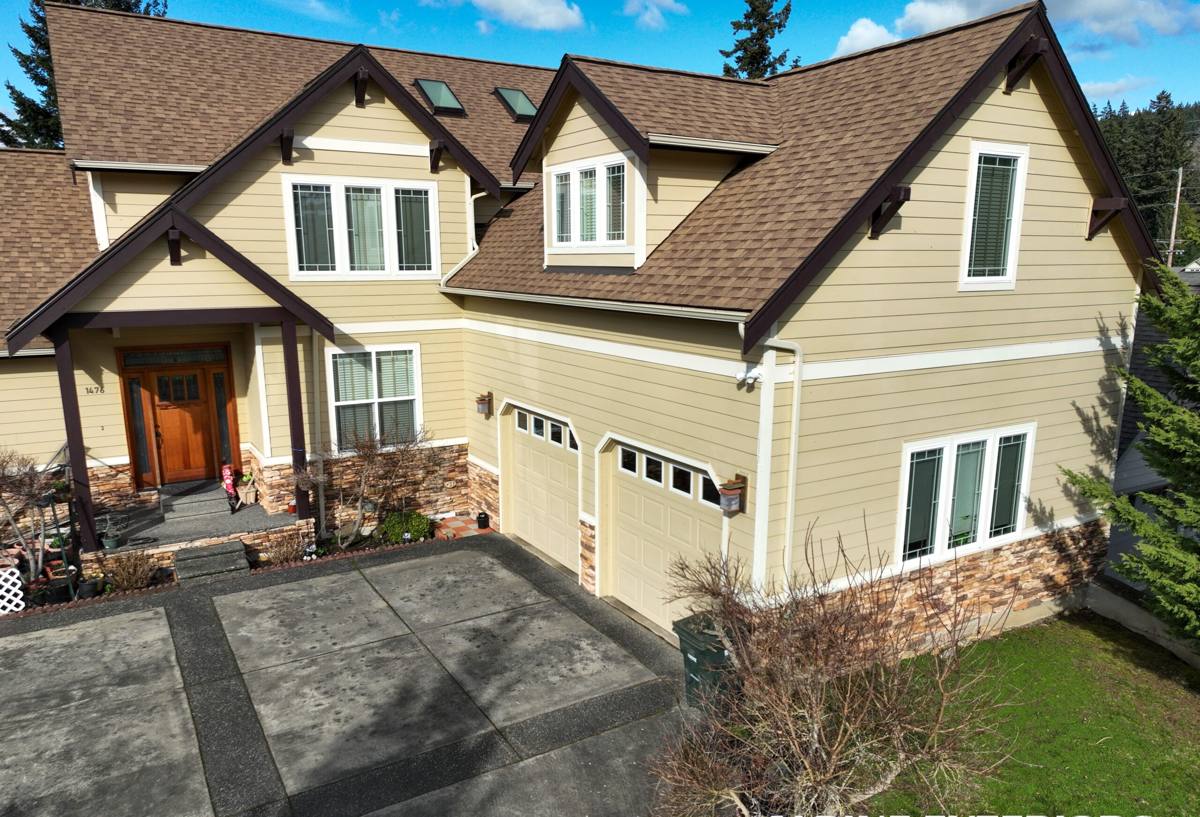
Why Grandview's Climate Changes the Window Conversation
Salt Air and Metal Components
Proximity to the water means airborne salt settles on everything, including window hardware, screen frames, and cladding. Cheaper mill-finish aluminum or unprotected steel components corrode faster here than they would twenty miles inland. We steer clients toward window lines with corrosion-resistant hardware and finishes rated for coastal exposure, and we pay attention to how fasteners and flashing metals are specified so dissimilar metals aren't corroding against each other over time.
Driving Rain and Wind-Driven Moisture
Storms coming off the Strait don't just drop rain straight down — wind pushes it sideways and up under trim and sills. A window that's watertight in a calm rain test can still leak in a real Whatcom County wind event if the flashing and sill pan aren't detailed correctly. This is where new-construction installation really earns its keep: we can integrate the window flange, sill pan, and weather-resistive barrier into one continuous drainage plane before siding goes on, which is far more reliable than trying to seal around an existing window later.
Moss, Algae, and Prolonged Damp
Blaine's long wet season keeps north- and shade-facing surfaces damp for months at a time, and that's exactly the environment moss and algae favor. On windows, this shows up less as growth on the glass itself and more as trapped moisture at sills, tracks, and the wood or composite trim around the frame if drainage paths are blocked or undersized. Correct slope-to-drain detailing at the sill and clear weep paths matter more here than in drier parts of the state.
What a Correct New-Construction Window Install Actually Involves
"New-construction window" refers to the window's nail-fin flange design, but the flange alone doesn't make the installation weathertight — the sequence around it does. Here's what we consider non-negotiable on a Grandview job:
- Sill pan flashing installed and sloped to drain outward, before the window ever goes in the opening
- Weather-resistive barrier integrated with the window flange in proper shingle-lap order — never taped on as an afterthought
- Head flashing with a drip edge that sheds water clear of the wall assembly below
- Backer rod and compatible sealant at the perimeter, sized correctly rather than over-caulked as a substitute for proper flashing
- Shimming and fastening per the manufacturer's instructions so the frame stays square and doesn't bind or leak under seasonal movement
- Insulation of the gap between rough opening and frame, without over-packing, which can bow the frame and cause operational problems
Skip any one of these steps and you can end up with a window that looks fine for a year or two, then starts showing staining, soft trim, or interior moisture during the next heavy Whatcom County storm season.
Choosing Window Products for a Grandview Build
We don't push one brand for every job — new-construction window selection depends on the home's design, budget, and exposure. That said, a few general standards guide what we're willing to put our name behind in this climate:
| Factor | Why It Matters Here |
|---|---|
| Frame material | Vinyl and fiberglass resist salt-air corrosion better than unclad wood or bare aluminum; fiberglass holds up especially well against long-term moisture cycling |
| Glazing package | Dual-pane with a quality low-E coating handles Whatcom County's mild-but-damp temperature swings and cuts down on condensation risk |
| Hardware finish | Coastal-rated or corrosion-resistant hardware lasts longer than standard mill finishes this close to the water |
| Weep system design | Larger, less obstructable weep paths matter more in a climate with extended wet seasons and moss buildup |
| Warranty structure | Look for coverage that includes seal failure and hardware, not just glass breakage — coastal exposure stresses seals faster than inland installs |
We're upfront when a product looks good on paper but has a maintenance burden that doesn't make sense for this location — for example, unclad wood exteriors that need frequent refinishing to keep moisture out, or ultra-thin composite trims that don't hold paint well in prolonged damp. Those aren't defects in the product; they're trade-offs worth knowing about before you commit.
Our Process on Grandview New-Construction Projects
1. Coordination With the Build Timeline
New-construction windows go in after the home is framed and wrapped with a weather-resistive barrier, but before siding starts. We coordinate directly with the builder or general contractor so window install happens at the right point in the sequence — too early and the barrier isn't ready, too late and it holds up the siding crew.
2. Opening Inspection and Prep
Before any window goes in, we check that rough openings are square, correctly sized, and that the WRB is properly lapped above the opening. We flag framing issues before they become window problems.
3. Sill Pan and Flashing Installation
This is the step most likely to get rushed on a busy job site, and it's the one we won't compromise on. Sill pans, jamb flashing, and head flashing go in in the correct order, every time.
4. Window Setting and Fastening
Windows are shimmed level and plumb, fastened per manufacturer spec, and checked for square and smooth operation before we move to sealing.
5. Air and Water Sealing
Interior and exterior sealing follows manufacturer-specified materials and joint design — not a generic bead of caulk everywhere.
6. Final Check and Handoff to Siding
We walk each opening before siding crews close it up, because once trim and siding go on, flashing errors become expensive to fix. This is the point where new-construction installation pays off compared to a later retrofit.
New-Construction vs. Replacement: Why the Distinction Matters
Homeowners sometimes ask why we treat new-construction so differently from a replacement window job. The honest answer is that they solve different problems. Replacement (or "pocket") windows are designed to fit inside an existing frame with minimal disruption to siding and trim — useful for renovations, but limited in how much you can correct the underlying flashing and drainage. New-construction windows, installed with their full nail-fin flange integrated into the WRB, give you control over the entire water-management assembly from the framing out. For a Grandview build going up from the studs, new-construction is almost always the right call, both for performance and for long-term cost — redoing flashing later is far more disruptive than getting it right during the build.
A Practical Checklist Before Windows Go In
- Confirm rough openings match approved window schedule and manufacturer tolerances
- Verify WRB is installed and properly lapped at all upcoming window locations
- Confirm sill pan flashing material is compatible with both the WRB and the window flange
- Check that window products specified are rated for the exposure category of the elevation (south/west walls often see more driving rain here than north/east)
- Review hardware and frame finish against coastal corrosion expectations
- Confirm warranty documentation is registered with correct installer and address information
Why a Local Crew Matters for This Work
Anyone can install a window into a square opening on a calm day. What separates a lasting install from a callback in three years is understanding how a specific site's exposure — wind direction, rain load, shade pattern, proximity to salt water — should change the flashing and product decisions. A crew that works Grandview and the rest of Blaine regularly has already seen how these homes take weather across multiple seasons, not just how they look on install day. We also know the inspection expectations in Whatcom County jurisdictions we work in, which keeps projects moving without rework.
Beyond the technical side, working with a contractor who's local means someone is reachable if a question comes up after the siding is closed in — not a crew that installed windows once and moved on to the next region.
Get a Free, No-Pressure Estimate
If you're framing a new build in Grandview or working with a builder who needs a window installer who understands this coastline, we're glad to walk the plans or the site with you. Use the form below to request a free estimate — no pressure, just a straight assessment of what your project needs.