 Blaine Siding
 Why Lynden Decks Take More Punishment Than the Brochures Admit
Lynden sits inland from Blaine but still gets the full Whatcom County weather package: marine-influenced rain that can fall for weeks without a real break, humid air that never fully dries out the shade side of a house, and a moss season that runs long and thick from fall through spring. Add in the salt-tinged air that drifts inland off the Strait on a west wind, and you have conditions that are hard on any exterior surface — but decks take it worse than siding or roofing because they're horizontal. Water doesn't run off a deck the way it sheds off a wall. It sits, pools in low spots, and works its way into every gap, fastener hole, and board seam it can find.
Composite decking exists specifically to handle that kind of exposure better than wood, but "composite" isn't a single product with one set of rules. The quality of the board matters, and so does the build underneath it. A composite deck installed the same way you'd frame a wood deck will still trap moisture, grow moss, and fail early — just more slowly and more expensively than wood would have.
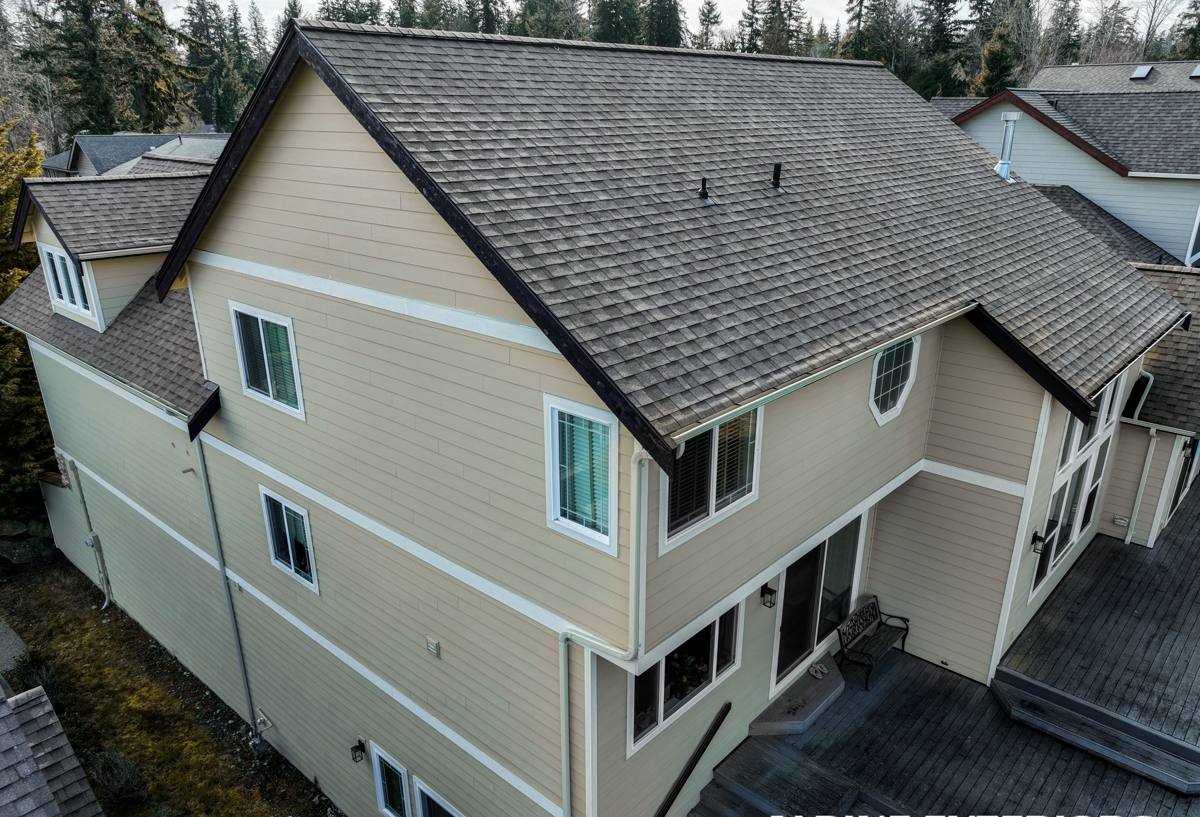
What Actually Fails on Composite Decks Around Here
We don't see composite boards rot the way wood does, but we do see a consistent set of problems on decks that weren't built with this climate in mind:
- Moss and algae film building up on the shaded side of the house where boards stay damp longest
- Fastener corrosion where builders used standard exterior screws instead of coated or stainless hardware
- Soft, spongy joists under boards that look fine on top, from ledger flashing that let water into the framing
- Standing water on flat or poorly sloped sections, which speeds up surface staining and mildew
- Warped or "potato-chipped" boards from cheaper uncapped composite that wasn't rated for constant wet-dry cycling
None of these are inherent flaws in composite decking. They're build-quality issues, and they're preventable with the right materials and sequencing.
The Substructure: Where Most Deck Failures Actually Start
Homeowners shopping for composite decking focus on the boards, but the framing underneath does more to determine how long a deck lasts in this climate. On a Lynden install, our substructure work includes:
Joist Protection
We wrap or tape the top of every joist before boards go down. In a climate this wet, an exposed joist top is the single most common place we find hidden rot on decks that are only a few years old, because fastener holes create thousands of tiny entry points for water over the life of the deck.
Ledger Flashing
Where the deck attaches to the house, proper flashing keeps water from tracking behind the siding and into the rim joist. This is a spot inspectors check for good reason — it's also one of the most commonly skipped steps on lower-bid deck jobs, and it's invisible once the deck is finished, which is exactly why it gets skipped.
Drainage Slope
Composite decks should carry a slight slope away from the house, generally around a quarter inch per foot, so rainwater actively moves off the surface instead of sitting in the board grooves. On a deck that sees Whatcom County's rainfall totals, that small slope is the difference between a deck that dries out between storms and one that stays damp for days.
Choosing the Right Composite Board for This Climate
Not all composite decking performs the same in wet, shaded conditions, and this is where we're honest with Lynden homeowners about trade-offs rather than pushing whatever's cheapest.
| Board Type | Moisture Behavior | Moss/Algae Resistance | Trade-off |
|---|---|---|---|
| Uncapped composite | Absorbs some moisture at the core | Lower — more prone to surface mildew | Lower upfront cost, shorter effective lifespan here |
| Capped composite | Polymer shell resists moisture absorption | Good, especially with a textured or streaked finish | Higher upfront cost, longer service life in wet climates |
| Cellular PVC decking | Essentially moisture-proof core | Very good | Highest cost, distinct look and feel underfoot |
For most Lynden homes, we recommend capped composite as the practical middle ground — it holds up to the region's wet-dry cycling far better than uncapped boards, without the premium price of full PVC systems. We'll walk through actual product lines and current pricing during your estimate rather than quoting numbers here that change by manufacturer and season.
Color and Moss Visibility
Lighter, single-tone composite boards show moss and algae staining faster than multi-tone or streaked colors, simply because the contrast is more visible. On shaded decks — under mature trees or on the north side of a house, both common in Lynden's older neighborhoods — we often steer homeowners toward mid-tone, variegated colors for that reason alone. It won't stop moss from forming, but it buys you more time between cleanings before it's noticeable.
Hardware and Fasteners: The Detail Salt Air Punishes First
Hidden fastener clip systems are standard on most composite decks now, and we use them for a cleaner surface with no exposed screw heads to trap water. But the clips, screws, and structural hardware underneath still need to be rated for coastal-adjacent exposure. Standard zinc-coated deck screws can start showing corrosion within a few years when they're regularly exposed to salt-laden moisture. We spec stainless steel or high-grade coated fasteners for structural connections and joist hardware on every Lynden project, because replacing a board is easy — replacing corroded structural hardware under a finished deck is not.
Footings, Frost Depth, and Permits in Whatcom County
New or rebuilt decks in Whatcom County typically require a permit, and footings need to reach below the local frost line — your building department can confirm current depth requirements for your parcel. We handle the permit application and inspection scheduling as part of the job, not as an add-on, because a deck that isn't permitted correctly can become a real problem when you go to sell the house. If your project also involves a setback question — decks close to a property line or within a shoreline or critical area buffer — we'll flag that during the estimate rather than after materials are ordered.
What Our Process Looks Like on a Lynden Deck
- On-site assessment of the existing structure (or ground conditions for a new build), drainage path, and sun/shade exposure
- Product selection walkthrough — board type, color, and railing system based on your budget and how the deck will be used
- Permit application and footing layout to current Whatcom County requirements
- Framing with joist protection tape and properly flashed ledger connection
- Composite board installation with hidden fasteners and correct drainage slope
- Final walkthrough covering care and what to expect in year one as the deck weathers in
Maintenance: What Composite Actually Saves You From (and What It Doesn't)
Composite decking cuts out sanding, staining, and re-sealing — that's the real value proposition. It doesn't cut out cleaning. In this climate, we recommend:
- A soft-wash or gentle pressure wash once or twice a year, more often on shaded sections, to keep moss and algae from getting a foothold
- Keeping planters, mats, and furniture legs from sitting in one spot for months, which traps moisture and stains the board surface
- Clearing leaves and debris from board grooves and between boards before the wet season sets in each fall
- Checking railing post bases and stair connections annually for any looseness, since freeze-thaw cycling can work fasteners loose over time
That's meaningfully less work than a wood deck, but it's not zero-maintenance — anyone who tells you otherwise is selling, not informing.
Why Local Build Experience Matters Here
Composite decking installation instructions read the same whether the manufacturer is picturing a dry Arizona patio or a shaded Lynden backyard that stays damp half the year. The framing, flashing, slope, and fastener choices that actually matter for longevity come from having built and serviced decks in this exact climate — seeing which details hold up after five wet winters and which ones don't. A crew that's worked Whatcom County knows where moss forms first, which hardware corrodes fastest, and how much slope a deck actually needs given local rainfall, not textbook averages.
If you're planning a new composite deck or replacing an aging wood one in Lynden, we're happy to take a look and walk you through your options. The estimate is free, there's no pressure, and you'll get a straight answer about what your specific site and budget call for — use the form below to get started.