 Blaine Siding
 Deck Repair Built for Whatcom County Weather
A deck in Lynden lives a different life than a deck in a dry climate. Whatcom County gets long stretches of steady rain, short winter days that never quite dry things out, and a moss season that can run from October clear through April. Add in the marine air that moves inland off the Strait, and you've got a slow, patient set of conditions working against every fastener, board, and post on your deck. None of it is dramatic. It's just constant. That's why deck problems out here tend to sneak up on people — a little softness in one board, a squeak that wasn't there last year, a railing post that's gotten a bit more give in it than it should have.
Our crew works out of Blaine and covers the surrounding Whatcom County communities, including Lynden. We're not flying in from Seattle or Bellingham for a one-off job — this is our regular service area, and we see the same patterns on decks here over and over. That familiarity matters when you're trying to figure out whether a deck needs a repair or a rebuild.
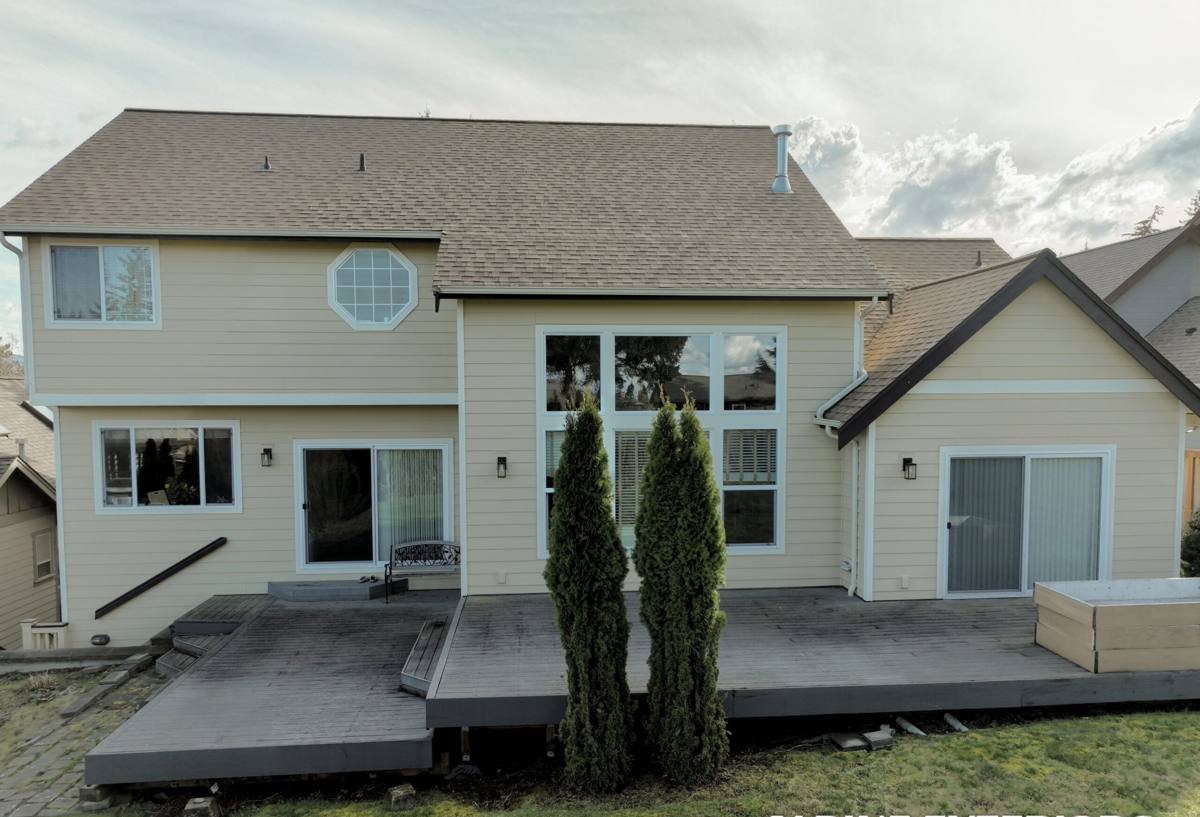
Why Decks Here Wear Out the Way They Do
Moisture That Never Fully Leaves
The biggest factor for most Lynden-area decks isn't any single storm — it's the cumulative effect of rain that falls often and dries slowly. Wood decking and framing need real drying time between wet periods to stay sound. When that drying window keeps getting cut short by the next front rolling through, moisture works its way into end grain, fastener holes, and any spot where two boards meet. Over years, that's what turns a solid deck into one with soft spots.
Moss and Organic Buildup
Moss doesn't just look bad — it holds moisture directly against the wood surface and blocks the deck from drying between rains. Left alone through a full moss season, it can trap enough dampness to accelerate rot in boards that would otherwise have held up fine. North-facing decks, and any deck shaded by trees or a fence line, are the first to show it.
Marine Air and Metal Fasteners
Being this close to the coast, the air carries more salt and moisture than you'd get further inland. That combination is hard on metal — screws, nails, joist hangers, and railing hardware corrode faster here than in a dry inland climate. A deck built with the wrong fastener grade, or one that's just old enough to have outlived its hardware, often shows corrosion-related failures well before the wood itself gives out.
Freeze-Thaw Cycling
Whatcom County doesn't get brutal winters, but it gets enough freeze-thaw swings to matter. Water that's worked into a crack or a fastener hole expands when it freezes, widening the damage a little more each cycle. It's a slow process, but it's a steady one.
Signs Your Deck Needs Repair — Not Just a Look
- Boards that feel spongy, springy, or noticeably softer underfoot than the rest of the deck
- Visible gaps opening up between decking boards or at the ledger board where the deck meets the house
- Railing posts or balusters that move more than they should when pushed
- Rust streaks running down from screw heads or joist hangers
- Persistent moss or dark staining that keeps coming back after cleaning
- Stairs that feel less solid than they used to, especially near the stringers
- Any sagging in the deck surface, even slight, particularly near the house connection
Any one of these on its own might be minor. Several together, or anything involving the ledger board or stair stringers, is worth having looked at before it turns into a safety issue rather than a maintenance one.
What an Honest Deck Repair Actually Involves
A real repair starts underneath the deck, not on top of it. Surface staining or a fresh coat of sealant can make a tired deck look better for a season without addressing what's actually failing structurally. We check the framing first — ledger board attachment, joists, posts, and footings — because that's where a deck's real integrity lives.
Ledger Board and Structural Connection
The ledger board, where the deck attaches to the house, is the single most important structural point on most decks and the one most prone to hidden water damage. Flashing that's failed or missing lets water track behind the ledger for years without any visible sign from the outside. We check this connection closely on every repair, since a deck can look fine on the surface while the connection holding it to the house is compromised.
Framing and Fasteners
Joists and beams get checked for soft spots, splitting, and fastener corrosion. Given the marine air here, we typically replace old fasteners and hardware with corrosion-resistant, coated or stainless-rated hardware rather than matching whatever was originally used — especially if the original hardware shows any rust.
Decking Boards and Railings
Individual boards get replaced where they're soft, cracked, or badly cupped rather than resurfacing the whole deck when it isn't necessary. Railings get the same structural check as framing — a railing that looks fine but has soft posts underneath is a liability we won't leave in place.
Moss and Surface Prep
Where moss and organic growth have built up, we clean it back properly before making repairs, since patching over a damp, moss-covered surface just traps the problem under new material.
Repair or Replace? What Actually Drives That Decision
| Factor | Leans Toward Repair | Leans Toward Replacement |
|---|---|---|
| Framing condition | Joists and beams are sound, damage is isolated | Widespread soft framing or repeated past patch jobs |
| Ledger board | Connection is solid, flashing intact | Water damage found behind ledger, flashing failed |
| Age of structure | Under 15-20 years, built to a reasonable standard | Original construction is older or was never up to current standard |
| Extent of moss/rot | Localized to a few boards or one area | Spread across most of the deck surface |
| Fastener condition | Hardware sound, isolated corrosion | Widespread rust on structural hardware |
| Your plans for the deck | Happy with current size and layout | Wanting a different footprint, railing style, or material |
We'll always tell you plainly which side of that table your deck falls on. There's no advantage to us in talking someone into a full rebuild when a targeted repair will hold up for years — and no advantage in patching something that's going to need redoing again in a season or two.
Our Process, Start to Finish
- Walk-through and structural check. We look underneath the deck, not just at the surface, and check the ledger connection, framing, posts, and footings.
- Straight assessment. We tell you what's actually wrong, what's causing it, and whether repair or replacement makes more sense — with reasoning, not a sales pitch.
- Written estimate. Scope and cost range in writing before any work starts, so there are no surprises.
- Repair work. Framing and hardware addressed first, then decking, stairs, and railings, using fasteners and hardware suited to this climate.
- Final walkthrough. We check the work with you before calling the job done.
Materials: What We Use and Why
For repairs, matching materials to what's already there matters as much as picking a "better" product. Mixing a modern composite board into an older pressure-treated wood deck, for instance, can create uneven wear and moisture behavior between old and new sections. Where a full rebuild or major repair section is on the table, we'll walk through the real trade-offs:
Pressure-Treated Wood
Lower upfront cost and easy to source and match for repairs, but it needs regular sealing and cleaning to hold up against the rain and moss pressure here — skip that maintenance for a few years and it shows.
Cedar
Naturally more rot- and insect-resistant than standard framing lumber and has a warmer appearance, but it's a softer wood that still needs periodic sealing and isn't immune to moisture damage over time.
Composite Decking
Lower long-term maintenance and doesn't rot, but it comes at a higher upfront cost, can still develop mold or mildew on its surface in a shaded, damp spot if not cleaned occasionally, and isn't always the right visual or structural match for repairing an existing wood-framed deck.
There's no universally "correct" answer here — it depends on your budget, how much maintenance you want to do, and what the rest of your deck is built from. We'll give you our honest read for your specific situation rather than steering you toward whatever's easiest for us to install.
Simple Maintenance That Extends the Life of a Repair
- Sweep leaves and debris off the deck regularly, especially in fall, so they don't trap moisture against the boards
- Clean moss off as soon as it appears rather than waiting until it's established
- Check for standing water after heavy rain and confirm the deck is draining as designed
- Reseal or restain wood decking on the schedule appropriate for the product — don't wait until it visibly needs it
- Look underneath the deck once or twice a year for early signs of rot, rust, or pest activity
- Keep gutters and downspouts near the deck clear so runoff isn't dumping directly onto or under it
Why a Crew That Already Works Lynden and Blaine Matters
Deck problems in this part of Whatcom County follow patterns — where moisture tends to collect, which fastener types hold up and which don't, how moss behaves on a shaded north wall versus an open deck in full sun. A crew that works this area regularly has already seen those patterns play out on other homes, which means less guesswork and a faster, more accurate read on what's actually going on with yours. We're not learning the local climate on your project — we're applying what we already know from working decks throughout Blaine and the surrounding Whatcom County communities, Lynden included.
It also means we're around after the job is done. If a repair needs a follow-up look, or you have a question a year later about how a section is holding up, you're calling a local crew, not chasing down someone who came through once and moved on.
Get a Free, No-Pressure Estimate
If your deck has soft spots, moss that won't quit, or just doesn't feel as solid as it used to, it's worth having a straight look before another wet season sets in. We'll walk the structure, tell you honestly what we find, and give you a written estimate with no pressure to sign anything on the spot. Use the form below to get started.