 Blaine Siding
 Roofing in Sumas: A Different Set of Demands
Sumas sits at the edge of Whatcom County, close enough to the Fraser Valley weather patterns and the Nooksack lowlands that homes here take on moisture in ways that surprise a lot of homeowners who moved from drier climates. It isn't one dramatic storm that wears out a roof in this part of the county — it's the accumulation. Driving rain off the valley, long stretches of overcast humidity, and a moss season that can run eight months out of the year all work on a roof slowly and steadily. A roof that would last thirty years in Eastern Washington might realistically give you twenty here if it isn't installed and ventilated correctly for this climate.
That's the core of what a "new roof installation" means for a Sumas property: it's not just laying new shingles over what's there. It's building an assembly — decking, underlayment, ventilation, flashing, and the roofing material itself — that's matched to a wet, moss-prone, temperature-swinging environment. Get that assembly wrong and you'll be dealing with moss growth, trapped moisture, and premature failure within a few years, regardless of how good the shingles themselves are.
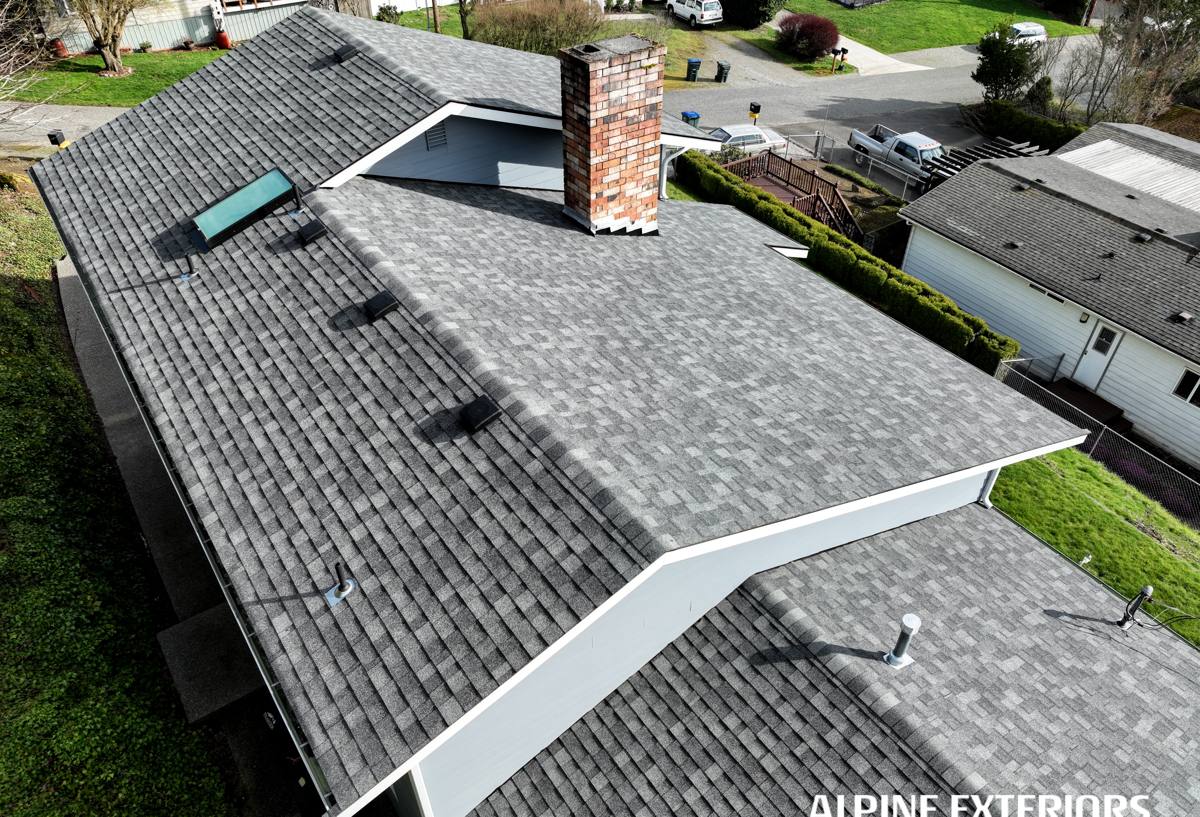
Signs a Sumas Roof Needs Full Replacement, Not Another Repair
Homeowners often call us for a repair quote and find out the roof is past the point where patching makes financial sense. A few honest indicators:
- Granules collecting in gutters or at downspout outlets — a sign the shingle surface is breaking down
- Moss or dark algae streaking that keeps coming back within a season or two of cleaning
- Soft spots or slight sagging when walked on, which usually means decking has absorbed moisture
- Daylight visible through the attic roof boards, or damp insulation below the roof deck
- Shingles curling, cupping, or losing their tab lines, especially on south- and west-facing slopes
- Multiple past repairs in different spots — a pattern that usually means the underlying material is at end of life
- A roof original to a home built more than 20-25 years ago that has never been fully replaced
If you're only seeing one or two of these and the roof is younger, targeted repair is often the right call and we'll tell you that. Full replacement makes sense when the roofing material itself — not just a flashing detail or a section of shingles — has reached the end of its service life.
What a Correct New Roof Installation Actually Involves
Tear-Off and Deck Inspection
We remove the existing roofing down to the deck rather than installing over old layers. This is the only way to see what's actually happening underneath — soft or delaminated plywood, old nail damage, or moisture staining that tells us where a leak has been active. Any damaged decking gets replaced before anything new goes down; skipping this step is one of the most common shortcuts that leads to early failure in wet climates like ours.
Underlayment
Underlayment is the roof's actual water barrier — the shingles or metal on top are the first line of defense, but the underlayment is what protects the deck if wind-driven rain gets past that first layer, which it will at some point on any roof. In a region with the kind of driving rain Whatcom County sees, we use synthetic or ice-and-water underlayment at eaves, valleys, and penetrations rather than relying on minimum-code coverage.
Flashing
Flashing around chimneys, skylights, vent pipes, and roof-to-wall transitions is where the majority of leaks actually originate — not from failed shingles. Correct flashing means new metal, properly lapped and sealed, not the old flashing reused to save a step. This detail work is where installation quality separates a roof that lasts from one that leaks within a few winters.
Ventilation
Proper intake and exhaust ventilation keeps the attic space at a temperature and humidity close to the outside air, which prevents condensation on the underside of the deck and reduces the moss and algae growth that thrives on a roof surface warmed unevenly by trapped attic heat. We size and balance ventilation to the specific roof, not a generic formula.
Material Installation
Whatever material is chosen, it's installed to manufacturer specification — correct nailing pattern and fastener depth, correct exposure and overlap, and starter and ridge details done properly rather than rushed. This is also where warranty coverage actually depends on the installer, not just the product.
Roofing Material Options for Sumas Homes
Most Sumas homes fall into a few practical categories. Here's how the common options compare for this climate specifically:
| Material | Typical Lifespan | Performance in Moss/Moisture | Best Fit |
|---|---|---|---|
| Architectural asphalt shingle | 25-30 years | Good with proper ventilation and periodic cleaning; algae-resistant shingle lines help | Most standard homes, best value |
| 3-tab asphalt shingle | 15-20 years | Fair; wears faster under sustained moisture and moss pressure | Budget-driven replacements, rentals |
| Standing seam metal | 40-50+ years | Excellent; sheds moisture fast, minimal surface for moss to grip | Homeowners planning long-term, steeper rooflines |
| Cedar shake | 20-30 years with upkeep | Requires regular treatment and cleaning; moss and rot risk if neglected | Homeowners committed to ongoing maintenance for the look |
We're honest about cedar shake specifically: it can look excellent, but in a wet, moss-heavy climate it demands a maintenance schedule most homeowners underestimate — regular cleaning, treatment, and closer inspection than asphalt or metal. If that upkeep isn't realistic for your household, we'll say so rather than sell you a product that becomes a maintenance burden.
Our Process for a Sumas Roof Replacement
- On-site inspection and estimate — we look at the current roof, attic ventilation, and any problem areas, and give you a written estimate with material options.
- Material selection — we walk through the tradeoffs above based on your budget, how long you plan to stay in the home, and how the roofline sits relative to sun and rain exposure.
- Scheduling around weather — roof tear-off exposes your home, so we plan the job for a stretch of workable weather and stage materials to minimize the time the deck is open.
- Tear-off, deck repair, and installation — completed as outlined above, with daily site cleanup so nails and debris don't end up in your yard or landscaping.
- Final walkthrough — we go over the finished roof with you, including flashing points and any ventilation upgrades made, before calling the job complete.
Ventilation and Moss: The Long Game
A new roof installed without addressing ventilation will grow moss again on roughly the same timeline as the old one, even with premium shingles. Moss holds moisture against the roof surface, and over a moss season that stretches through much of the fall, winter, and spring here, that trapped moisture is what shortens shingle life and eventually works its way into the deck. Balanced ventilation, correct underlayment at the eaves, and keeping trees trimmed back from the roofline are the three things that actually slow moss return — more effective long-term than periodic treatment alone.
What Affects the Cost of a New Roof in Sumas
Every roof is priced on its own specifics, but the factors that move the number are consistent:
| Factor | Why It Matters |
|---|---|
| Roof size and pitch | Steeper roofs take longer to work safely and use more material per square |
| Number of penetrations | Chimneys, skylights, and vents each need individual flashing work |
| Deck condition | Rotted or soft decking found during tear-off adds material and labor |
| Material choice | Metal and cedar cost more upfront than asphalt but shift long-term maintenance and lifespan |
| Ventilation upgrades | Adding or correcting intake/exhaust vents is a smaller cost during a full tear-off than as a separate job later |
| Access and layout | Steep lots or limited staging area can affect labor time |
We give a firm written estimate after seeing the roof in person — not a phone quote — because these factors vary too much house to house to price accurately any other way.
Why Hire a Crew That Already Works in Sumas and Whatcom County
Roofing crews that mostly work drier inland climates size ventilation and choose underlayment differently than crews who work Whatcom County day in and day out. We're used to building roofs for sustained rain exposure and a long moss season, not just an occasional wet week. That shows up in small decisions — how much ice-and-water shield goes at the eaves, how ventilation is balanced, how flashing is detailed at valleys — that don't show up on a spec sheet but do show up in how the roof performs five and ten years out. It also means we're a known, reachable crew if you ever need a warranty question answered or a follow-up look, not a company that did one job in the area and moved on.
Get an Estimate for Your Sumas Roof
If your roof is showing its age or you're planning ahead rather than waiting for a leak, we're happy to take a look and give you a straightforward, no-pressure estimate. Use the form below to get started, and we'll walk the roof, answer your questions honestly, and give you a written quote you can take your time with.