 Blaine Siding
 Siding Replacement for the Nooksack Area
Nooksack sits within the broader service territory we cover out of Blaine, close enough to the open, wind-exposed stretch of northern Whatcom County that homes here face the same steady mix of conditions that shapes exterior work all along this part of the coast: salt-laden air, driving rain that rarely falls straight down, and a moss season that can run most of the year on shaded walls. We work siding replacement jobs in this area regularly, and the approach we bring reflects what that combination actually does to a house over years of exposure, not just what looks fine on install day.
On siding, we install James Hardie fiber cement exclusively. It's the material we've settled on after watching, job after job, which products hold up under sustained Whatcom County moisture and which ones quietly turn into a maintenance burden a few years down the road.
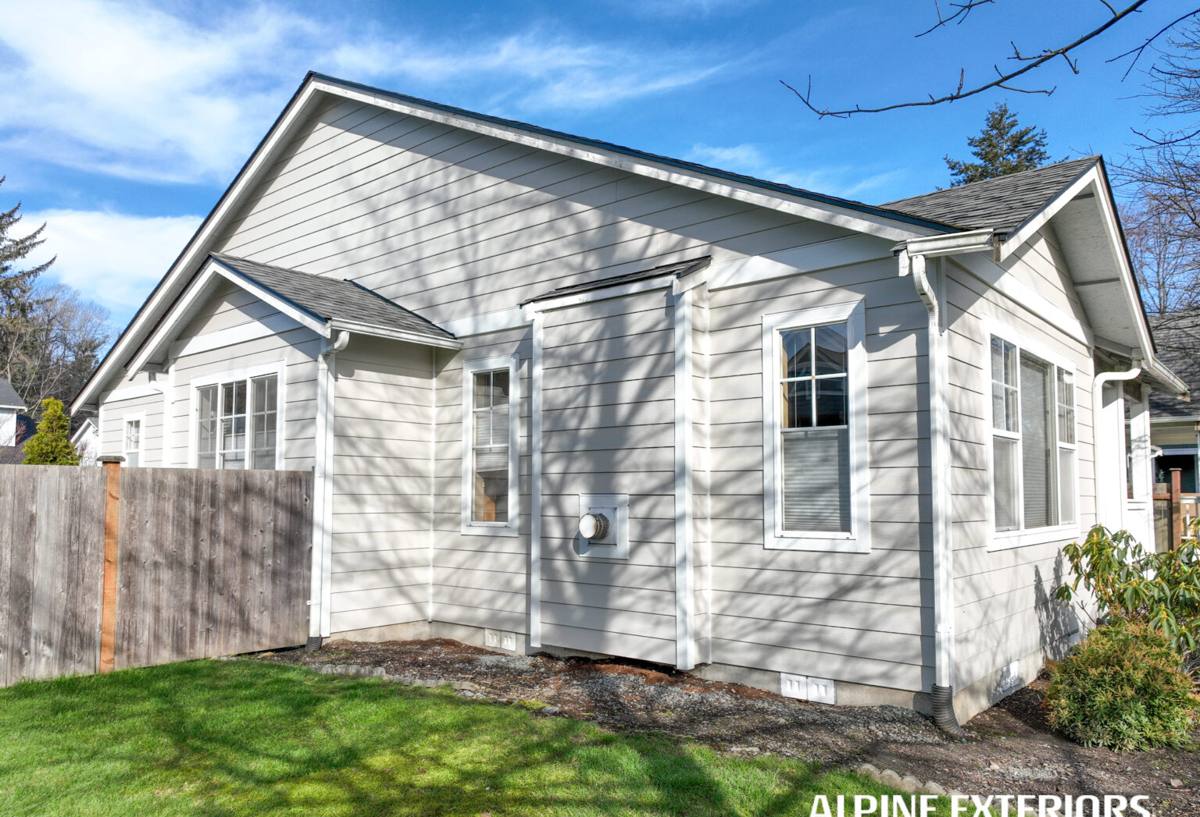
What Local Climate Does to Siding Around Nooksack
Salt Air and Steady Moisture
Homes in this part of Whatcom County live with air that carries more salt and moisture than a dry inland climate ever would. That steady exposure accelerates corrosion on fasteners, flashing, and any exposed metal trim, and it wears down lower-grade paint and coatings faster than homeowners often expect. It's a slow process, which is exactly why it gets overlooked until a wall or trim board is already failing.
Driving Rain, Not Straight-Down Rain
Storms moving through this area rarely just fall — wind pushes rain sideways into wall surfaces, window flashing, and the joints where trim meets siding. That sideways load is harder on a house than the same amount of rainfall would be in a calm, sheltered spot, because it finds gaps that a straight-down rain would never reach. Siding and flashing that aren't detailed for wind-driven rain tend to show water damage first at seams, corners, and butt joints.
A Long Moss and Mildew Season
Mild temperatures and near-constant regional dampness add up to a moss and mildew season that can stretch across most of the year on north-facing and tree-shaded walls. It starts as staining or a faint green film, but sustained growth holds moisture directly against the wall assembly underneath it, which is how a cosmetic problem turns into a structural one if it goes unaddressed for a few seasons.
Signs a Nooksack-Area Home Needs Siding Replacement
Most siding failures don't announce themselves all at once. They show up as small signs first, and catching them early is usually the difference between a straightforward re-side and a job that also involves sheathing and framing repair once the old siding comes off.
- Moss or dark staining that returns quickly after cleaning, especially on shaded or north-facing walls
- Soft, spongy, or crumbling siding, particularly low on the wall or around window and door trim
- Paint that's peeling, bubbling, or chalking well ahead of its expected service life
- Visible warping, cupping, or separation at siding seams and butt joints
- Rust streaking around fasteners or trim, a sign moisture is already working on the hardware
- Drafts or noticeably higher heating bills that suggest the wall assembly is no longer sealing properly
- Siding that flexes or feels hollow when pressed, a sign the substrate underneath has started to fail
Why James Hardie Is the Only Siding We Install
We didn't start out installing one product exclusively. That standard came from repeated service calls and tear-offs across this part of Whatcom County, where the same climate conditions kept showing up as the reason certain siding products failed early while others held up as intended.
- Non-combustible core: Fiber cement doesn't feed a fire the way wood-based siding products can, which matters for both household safety and insurance considerations.
- Factory-applied ColorPlus finish: The color is baked on under controlled factory conditions instead of brushed on in the field, so it holds up against fading, chalking, and moisture exposure far longer than site-applied paint.
- Climate-engineered HZ product lines: Hardie builds different formulations for different climate zones, including versions engineered specifically for regions with sustained moisture exposure — a real match for this stretch of Whatcom County.
- Dimensional stability: Fiber cement doesn't swell, cup, or warp the way engineered wood products can after repeated wet-season cycles.
- Strong transferable warranty: Hardie backs its products with one of the stronger warranty structures in the industry, provided the installation follows their spec.
We don't install LP SmartSide, vinyl siding, Cemplank, Allura, primed spruce, or cedar. Each has a place in the broader market, and plenty of homeowners elsewhere are satisfied with them. But we made a professional call to install one system we fully stand behind rather than offer something cheaper that quietly shifts maintenance risk onto the homeowner once the salt air and moss season start working on it.
What a Correct Siding Replacement Involves
Tear-Off and Substrate Inspection
A proper siding replacement starts by removing the old material entirely rather than covering over it, because that's the only way to actually see what's happening underneath. Sheathing that's stayed dry gets new siding installed directly. Sheathing that's soft, stained, or rotted gets repaired or replaced before anything new goes up — skipping that step just seals existing moisture problems behind a new wall.
Rain Screen and Drainage
A small drainage gap behind the siding lets any moisture that does get past the exterior surface drain and evaporate instead of sitting against the wall sheathing. On a property that sees this much sustained rain and humidity, that gap is one of the more important details in the whole installation, even though it's invisible once the job is finished.
Fastening and Flashing Detail
Hardie specifies fastener type, spacing, and placement for a reason, and loose spacing or the wrong fastener is one of the more common causes of early siding failure we find on tear-offs. Every seam, corner, and penetration needs flashing that's properly lapped to shed water downward and outward, especially on walls that catch wind-driven rain directly.
Choosing the Right Hardie Product for This Area
| Product Line | Best Use | Why It Fits This Climate |
|---|---|---|
| HardiePlank lap siding | Most standard single-family homes | Traditional lap profile sheds wind-driven rain effectively with proper overlap and flashing |
| HardiePanel vertical siding | Accent walls, gables, and modern designs | Clean vertical lines that pair well with farmhouse and craftsman styles common in this area |
| HardieShingle siding | Craftsman-style homes and accent sections | Textured look without the moisture absorption and upkeep of real wood shingle |
| HardieTrim boards | Corners, window and door casing, fascia | Factory-finished trim resists the same salt air and moisture cycling as the field siding |
Color and profile come down to the individual home and the homeowner's preference, but the underlying product family and installation approach stay consistent — we spec what fits a Nooksack-area home's actual exposure rather than defaulting to whatever's fastest to install.
Our Siding Replacement Process
- Walkthrough and assessment: We inspect the current siding, trim, and any visible moisture damage in person before talking numbers, because two homes that look similar from the street can need very different scopes once we're up close.
- Written estimate: You get a clear, itemized estimate that explains what the job involves and why, with no pressure to sign on the spot.
- Tear-off and substrate check: Old siding comes off, sheathing gets inspected, and any repairs needed underneath get identified and priced honestly before new siding goes up.
- Installation to Hardie spec: Rain screen, fastening, and flashing details get followed consistently, not just on the parts of the wall that are easy to reach.
- Final walkthrough: We go over the finished work with you directly so you know exactly what was done and why.
Cost Factors for a Nooksack-Area Siding Replacement
| Factor | What It Affects | Local Consideration |
|---|---|---|
| Home size and wall complexity | Material quantity and labor hours | More corners, gables, and trim transitions mean more flashing detail to get right |
| Substrate condition | Repair costs before new siding goes on | Long-term trapped moisture from salt air and driving rain can rot sheathing that isn't visible until tear-off |
| Tear-off vs. overlay | Whether hidden damage gets found and fixed | Overlaying old siding seals in any existing moisture problem, which we generally advise against here |
| Trim and product selection | Material cost per square foot | Factory-finished trim adds upfront cost but resists this area's moss and moisture cycling far longer |
| Site access | Labor time and equipment needs | Lot size, tree cover, and driveway access vary property to property in this area |
These are general drivers, not a quote. Every home carries a slightly different exposure and history, which is why we walk the property in person before putting a real number on the work rather than pricing off a phone call or a photo.
Why a Crew That Already Works Nooksack Matters
A crew that works this part of Whatcom County regularly, and not just occasionally, has actually seen how salt air, driving rain, and a long moss season behave on real homes over a full year, not just how a product performs on a spec sheet. That experience shapes practical decisions on install day: which walls stay wet the longest, where extra flashing attention actually pays off, and which fastening details are worth the added time so a homeowner isn't dealing with a callback after the next storm. A crew that already works the Nooksack area out of Blaine treats those details as routine rather than guesswork.
If your home in the Nooksack area needs a full siding replacement, or you're just not sure whether what you're seeing is a repair or a bigger problem, we're glad to take a look and give you an honest, straightforward answer. Reach out using the form below to schedule a free, no-pressure estimate.