 Blaine Siding
 Building New in Peace Arch? Get the Window Install Right the First Time
New construction is the one chance you get to build the window system correctly from the studs out. In the Peace Arch area of Blaine, that matters more than in most inland Washington towns. This stretch of Whatcom County sits close enough to the Strait of Georgia and Semiahmoo Bay that salt-laden air is a constant, wind-driven rain off the water is routine for months at a time, and the shaded, damp winters that follow give moss and algae plenty of time to take hold on anything that stays wet. A window that's installed correctly here will handle all of that quietly for decades. A window that's installed even slightly wrong will show it early — usually as a stain, a draft, or a soft spot in the framing that nobody notices until it's expensive.
This page is specifically about new-construction window installation for homes going up in and around Peace Arch — not replacement windows in an existing wall, which is a different job with different flashing logic. If your project is new-build or a full-tear-down rebuild, this is the work that determines whether your windows perform for the next 30-plus years or start causing problems in year five.
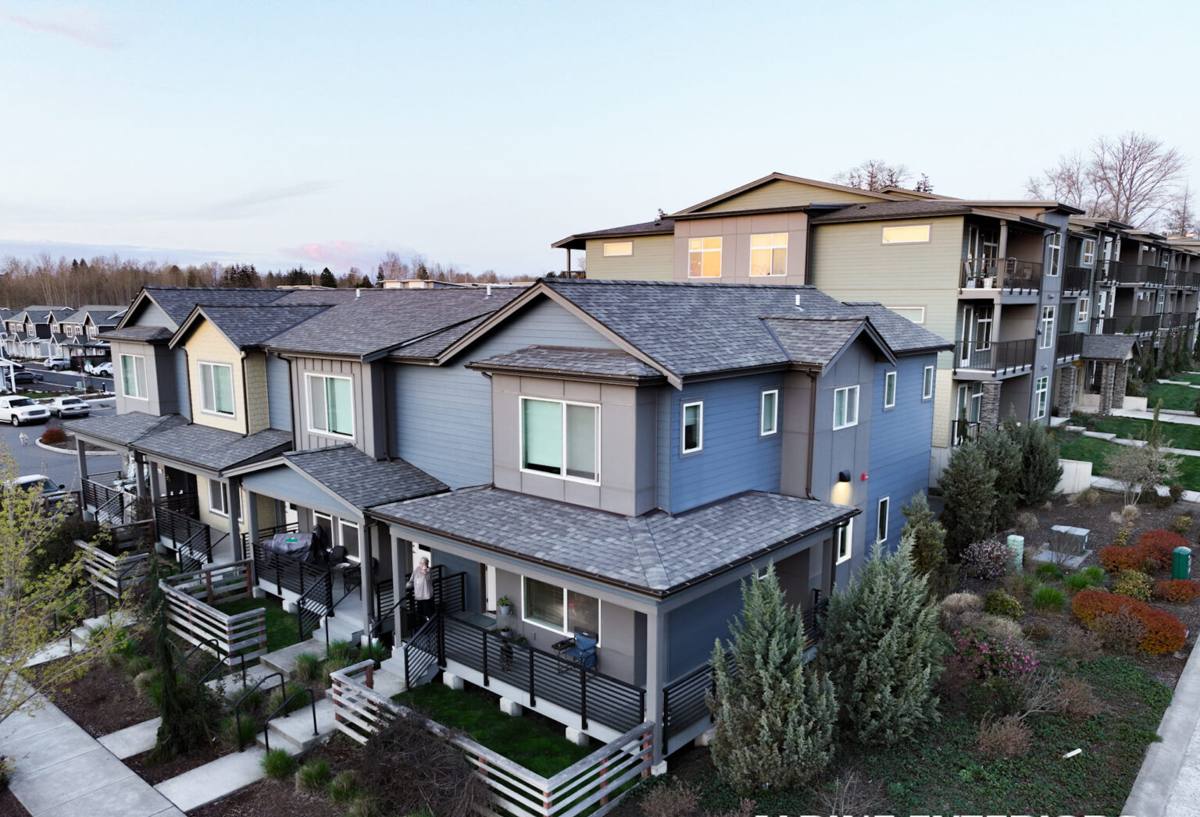
What Peace Arch's Climate Actually Demands From a Window System
Three regional factors drive almost every decision we make on a new-construction window install this close to the water:
Salt Air
Airborne salt accelerates corrosion on fasteners, flashing, and hardware, and it degrades certain sealants faster than manufacturers' generic warranty language assumes. On new construction we get to choose corrosion-resistant fasteners and compatible flashing metals from the start, instead of retrofitting around a mistake later.
Driving, Wind-Driven Rain
Rain in this part of Whatcom County frequently comes in sideways off the water, which means water is pushed against and around the window opening under pressure — not just falling on it. A window can be perfectly watertight in a lab test and still leak on a new build if the flashing and drainage plane behind it weren't sequenced correctly. This is where the vast majority of "mystery leaks" in new homes actually originate.
A Long Moss and Algae Season
Shaded elevations, north-facing walls, and anywhere airflow is restricted around a window opening will stay damp for extended stretches through fall, winter, and spring. That doesn't damage the window itself as much as it damages whatever trim, sill, or siding detail surrounds it if those details weren't built to shed water and dry out between rains.
None of this means Peace Arch needs exotic or unusual windows. It means the installation — the flashing, the sealant selection, the fastener choice, and the drainage path behind the window — has to be done correctly for this specific climate, not just to a generic code minimum.
What a Correct New-Construction Window Install Actually Involves
New-construction installation means the window is set into a rough opening before the exterior wall covering (siding, stone, stucco, etc.) is finished, using a nailing flange and integrated flashing system rather than the "insert" method used in retrofit replacement work. Done right, this is the strongest, most weathertight way to install a window — but every step has to happen in the right order.
- Rough opening inspection. Confirm the opening is square, plumb, and sized correctly before the window ever gets near it. Problems caught here are cheap; problems caught after siding is on are not.
- Sill pan flashing installed first. A sloped, sealed sill pan gives any water that gets past the window a clear path back out, instead of letting it pool against the framing.
- Water-resistive barrier integration. The house wrap or building paper has to be layered correctly with the flashing — upper layers overlapping lower ones — so water is always directed outward and downward, never trapped behind a seam.
- Window set into the opening and fastened per the manufacturer's specified pattern, with corrosion-resistant fasteners suited to a marine-influenced environment.
- Flashing tape or flexible flashing applied at the jambs and head, integrated with the drainage plane so the whole assembly sheds water as one system rather than relying on caulk alone.
- Sealant applied at the correct points only — sealing everything, including the bottom of the flange, is a common mistake that traps water instead of letting it drain.
- Interior air-sealing around the frame to control drafts and condensation without interfering with the exterior drainage plane.
- Final check for level, plumb, square, and smooth operation before siding or trim closes the opening up for good.
That sequence is the same basic logic used on any new-construction install anywhere. What changes near the water is how much margin for error we allow ourselves at each step — closer to zero than on a dry, inland site.
Window Types Well Suited to Peace Arch New Construction
We don't push one brand or product line as the only right answer — the right window depends on the home's design, budget, and exposure. What we do insist on is that whatever's chosen has cladding, hardware, and glazing seals rated for coastal-adjacent use, and that it's installed with the flashing sequence above regardless of brand.
| Frame Material | How It Handles This Climate | Maintenance Trade-Off |
|---|---|---|
| Vinyl | Good moisture and salt resistance; no repainting needed | Limited color/repair options if damaged |
| Fiberglass | Excellent dimensional stability in wet, temperature-swinging conditions | Higher upfront cost than vinyl |
| Aluminum-clad wood | Strong look, exterior protected from moisture | Interior wood still needs normal upkeep; clad seams need quality control |
| Bare wood | Classic appearance, good insulator | Highest maintenance burden in salt air and damp shade — needs a disciplined repaint/reseal schedule |
For homes on exposed or north-facing elevations near the water, we generally steer clients toward vinyl, fiberglass, or a well-detailed clad option rather than bare wood, simply because the maintenance schedule bare wood needs in this climate is demanding and easy to fall behind on. That's a maintenance-burden judgment call, not a knock on wood windows generally — they perform fine when the owner keeps up with the finish.
Glazing Considerations
Double-pane, low-E glazing is the practical standard for new builds here. It cuts down on condensation on interior glass during our cold, wet winters and helps with the energy loss that comes from big window walls, which are popular in newer Peace Arch-area designs that take advantage of water and mountain views.
Why Local Experience Matters More on This Job Than Most
Flashing details that work fine forty miles inland can under-perform right along the water, where wind-driven rain hits the wall at an angle and salt air shortens the working life of the wrong fastener or sealant. A crew that installs windows regularly in the Peace Arch and greater Blaine area has already seen which details hold up through a real Whatcom County winter and which ones show stress after two or three wet seasons. That's not something you can fully verify from a spec sheet — it comes from having installed, and later inspected, this exact assembly in this exact kind of exposure.
It also matters for inspection and warranty coordination. New-construction window installs typically need to pass a building inspection tied to the water-resistive barrier and flashing before siding closes the wall. A crew that already knows the local inspection expectations and manufacturer installation requirements moves through that step without rework or delay.
Our Process, Start to Finish
- Site visit and plan review — we look at elevations, exposure, and rough opening sizes before ordering anything.
- Product selection guidance — matched to exposure, budget, and the home's design, not a one-size answer.
- Coordinated delivery timing — windows arrive when the openings are ready, not sitting exposed on site longer than necessary.
- Flashing and installation per the sequence above, with photos taken at each concealed step for your records before it's covered by siding.
- Inspection-ready hand-off — the wall is ready for the building inspector's water-resistive barrier check without us having to come back and redo anything.
- Final walkthrough — operation, seals, and trim checked with you before we call the job done.
Common Mistakes We See on New-Construction Window Openings
Most of the water problems that show up in newer homes near the water trace back to a handful of avoidable errors:
- Sealing the bottom of the nailing flange, which traps water instead of letting the sill pan drain it out
- House wrap layered in the wrong order at the flashing, sending water behind the barrier instead of over it
- Standard fasteners used where corrosion-resistant hardware was called for, leading to rust staining and eventual loosening
- Gaps left in the drainage plane at corners or where trim meets the window, giving moss and algae a damp spot to establish in
- Rushing the rough opening prep to keep a schedule, then forcing a window into an opening that isn't quite square
Every one of these is preventable with the right sequence and a crew willing to slow down at the steps that get covered up and never seen again.
Planning Your Timeline
Window installation on new construction has to sync with your framing and siding schedule — windows go in after the rough opening and water-resistive barrier are ready, and siding can't close up the wall until flashing is complete and, where required, inspected. Ordering lead times for windows can run several weeks depending on size, style, and manufacturer, so we like to get involved during the planning stage rather than after framing is already underway. That gives us time to review openings against the actual product specs and avoid the scramble of a mis-sized order holding up your build.
Get a Free, No-Pressure Estimate
If you're building or planning a new home in the Peace Arch area of Blaine, we're happy to walk your plans or your framed openings with you and talk through window options suited to your exposure and budget. Use the form below to request a free estimate — no pressure, just a straight assessment of what your home needs.