 Blaine Siding
 Why Peace Arch Roofs Wear Out Faster Than the Brochure Says
Every roofing material comes with a manufacturer's lifespan estimate, and almost none of those numbers were calculated with a Peace Arch roof in mind. Homes in this part of Blaine sit close enough to the water that salt-laden air is a constant, not an occasional event. Combine that with the driving, wind-pushed rain that comes off the Strait during fall and winter storms, and a moss season that can run eight months or longer in a wet year, and you get a roof environment that's genuinely harder on materials than most inland manufacturer testing accounts for. None of this means Peace Arch homes need exotic materials or a completely different approach — it means the details of the job (fasteners, flashing, ventilation, and material choice) have to be handled correctly, because there's very little margin for shortcuts here.
We've replaced roofs across Blaine and the surrounding Whatcom County coastline long enough to know which failure patterns show up first in this specific microclimate, and this page focuses on exactly that: what a roof replacement should look like for a Peace Arch home, not a generic checklist that could apply anywhere.
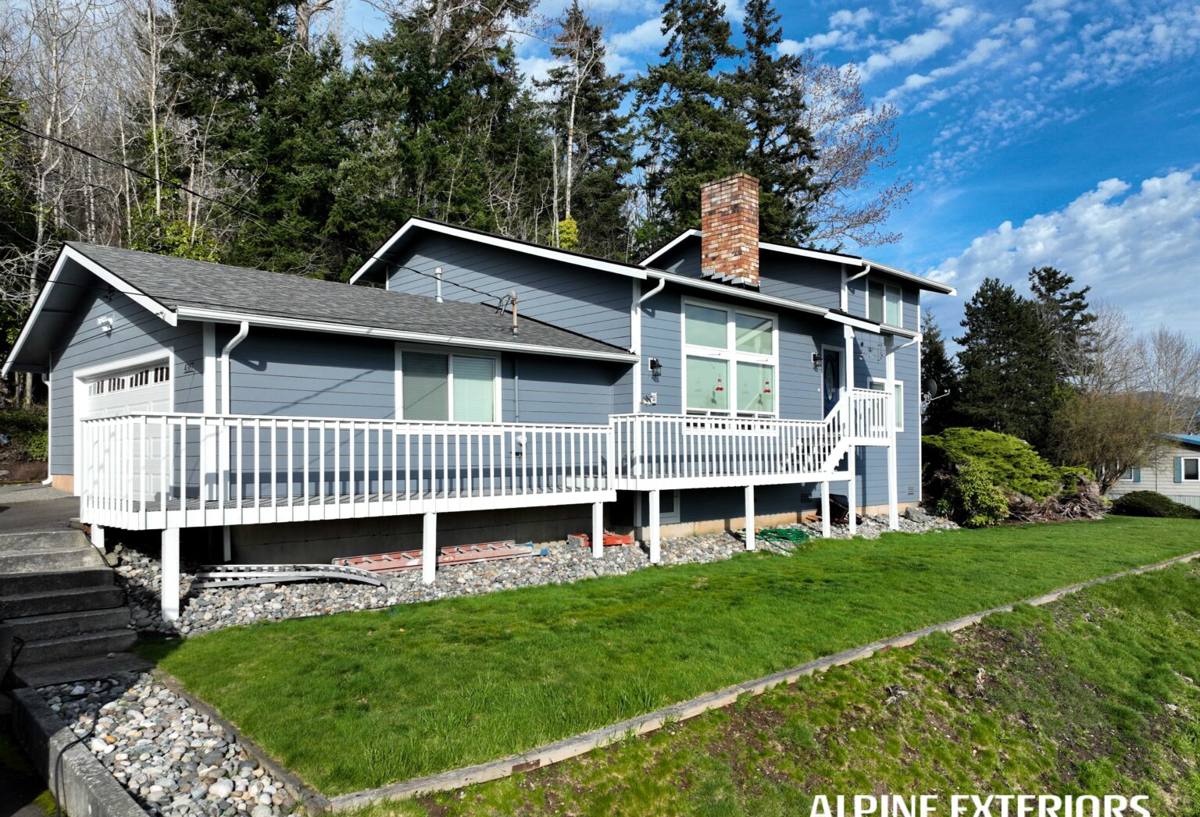
Early Warning Signs Worth Taking Seriously
Because of the salt air and moisture load, roofs here often show trouble a few years before a homeowner in a drier climate would expect it. Catching these signs early is usually the difference between a straightforward replacement and a job that also has to deal with rotten decking.
- Dark streaking or thick moss growth concentrated on north-facing slopes or shaded sections
- Granule loss showing up in gutters, especially after the first hard fall rains
- Shingles that look "cupped," curled at the edges, or brittle when you have a technician check them
- Rust staining around flashing, vent boots, or fasteners — a common early sign of salt-air corrosion
- Soft spots or slight sagging felt when walking the attic, which usually points to deck moisture
- Daylight visible through the roof deck from inside the attic
- Interior ceiling stains that appear or worsen after wind-driven storms specifically, not just steady rain
Any one of these on its own isn't necessarily an emergency. Two or three together, especially on a roof already past the middle of its expected service life, is a strong signal it's time for a real inspection rather than another round of patching.
What a Correct Roof Replacement Actually Involves
A roof replacement done right is a system, not a stack of shingles. Skipping or rushing any one layer is exactly how a roof that looks fine for two or three years starts failing in year five.
Tear-Off and Deck Inspection
We remove the old roofing down to the deck rather than layering over it. That's the only way to actually see the plywood or sheathing underneath, which matters a lot here — coastal moisture works its way into small leaks over years, and soft or delaminated decking has to be replaced before anything new goes down. Covering over compromised decking just hides the problem under a new roof.
Underlayment and Water Barrier
Given how much wind-driven rain Peace Arch sees, underlayment choice and installation matter more here than in calmer inland areas. We install self-adhered ice-and-water membrane at the eaves, valleys, and around penetrations — the spots where wind can push water backward under standard shingle coverage — and a synthetic underlayment across the rest of the field for its tear resistance and water shedding.
Flashing at Every Transition
Chimneys, skylights, sidewalls, and vent penetrations are where the overwhelming majority of roof leaks originate, not in the open field of shingles. We use corrosion-resistant flashing and step-flash every wall intersection correctly rather than relying on caulk or sealant to do a flashing detail's job. Sealant has its place, but it's a maintenance item, not a substitute for proper metal work — and in salt air, cheap or improperly installed flashing corrodes and fails faster than the shingles around it.
Ventilation
An underventilated attic traps moisture, which accelerates deck rot from underneath and encourages the exact kind of condensation and moss-friendly dampness this climate already produces. We check intake at the soffits and exhaust at the ridge as part of every replacement, and correct imbalances rather than just installing new shingles over an attic that was never breathing properly.
Choosing a Roofing Material for This Climate
There's no single "best" roofing material for every Peace Arch home — it depends on your budget, your roof's slope and shading, and how much long-term maintenance you're willing to stay on top of. Here's an honest comparison of the options most homeowners in this area are weighing.
| Material | Moss & Moisture Resistance | Salt Air Durability | Typical Lifespan | Relative Cost |
|---|---|---|---|---|
| Architectural asphalt shingle | Good with proper ventilation; algae-resistant granules help | Good — corrosion mainly a concern at fasteners/flashing, not the shingle itself | 25–30 years | $ |
| Standing seam metal | Excellent — sheds moisture fast, little surface for moss to grip | Very good with marine-grade coatings and stainless fasteners | 40–50+ years | $$$ |
| Cedar shake | Fair — needs regular treatment and cleaning to resist moss and rot in this climate | Fair — natural material, more maintenance-sensitive | 20–30 years with upkeep | $$ |
| 3-tab asphalt shingle | Fair — lower profile holds less debris but shorter overall lifespan | Fair | 15–20 years | $ |
We install asphalt shingle systems and metal roofing for Peace Arch homes, and we're upfront that cedar shake, while a beautiful traditional look, comes with a maintenance commitment (regular cleaning, moss treatment, and periodic re-coating) that a lot of homeowners underestimate when they choose it. If low maintenance and long-term value matter more to you than the cedar look, metal or a quality architectural shingle will generally serve this climate better with less ongoing work on your end.
Our Roof Replacement Process
- On-site inspection: We get on the roof and in the attic, not just look from the ground, and document deck condition, ventilation, and flashing points.
- Written estimate: A clear scope of work and price — no vague allowances that turn into surprise add-ons mid-job.
- Site protection: Landscaping, siding, and gutters get protected before tear-off starts.
- Tear-off and deck repair: Old roofing removed, deck inspected board by board, and any compromised sections replaced.
- Underlayment, flashing, and material installation: Installed in the sequence and to the standard described above — nothing skipped because it's "probably fine."
- Ventilation check and correction: Intake and exhaust balanced before the job is called finished.
- Cleanup and magnetic sweep: Full site cleanup, including a nail sweep of the yard and driveway.
- Final walkthrough: We walk the finished roof and attic with you and answer questions before we consider the job done.
Moss, Ventilation, and Roof Life: The Connection Most Homeowners Miss
Moss doesn't just look bad — it holds moisture directly against roofing material, and on shingles that means accelerated granule loss and, over time, deck moisture intrusion at the point where moss has taken hold. In Whatcom County's long wet season, moss growth is largely driven by shade, slope, and poor air movement across the roof surface. A well-ventilated attic and roof deck dry out faster between rain events, which slows moss regrowth even without chemical treatment. This is part of why we treat ventilation as a core part of every replacement rather than an optional upgrade — it directly affects how often you'll need moss treatment and how long your new roof actually lasts versus its rated lifespan.
Timing a Replacement Around Blaine's Weather
Roofing can be done in the Pacific Northwest nearly year-round with the right crew and scheduling, but there are real advantages to timing. Late spring through early fall gives the longest stretches of dry working days, which matters most for larger tear-offs where an exposed deck needs to stay covered and dry overnight. If your roof is already showing active leaks, though, waiting for "ideal" weather isn't the right call — a temporary tarp-and-repair approach to get through the wet months followed by a full replacement in a drier window is often the more responsible plan than either rushing a mid-storm tear-off or letting an active leak sit through an entire winter.
Why a Crew That Already Works Peace Arch Matters
Roofing knowledge that's specific to this stretch of coastal Whatcom County isn't something you get from a general contractor who occasionally works up here. It comes from having seen how salt air behaves on fasteners and flashing over several winters, which slopes in this area tend to hold moss regardless of material, and how wind off the water actually moves rain sideways under improperly lapped shingles. A crew that already works Peace Arch homes also tends to have a better sense of realistic, honest timelines around this area's weather windows, and won't need to relearn basic regional lessons on your project. That local pattern recognition is what separates a roof that performs well for its full rated lifespan from one that needs unexpected repairs five years in.
What Drives the Cost of a Roof Replacement
Every roof is priced individually, but the main variables are consistent. Being aware of them up front makes it easier to understand your estimate and compare it fairly against others.
- Roof size and complexity: Steeper slopes, multiple valleys, and dormers all add labor and material.
- Deck condition: Rotted or soft sheathing discovered during tear-off adds cost, which is why a pre-estimate inspection matters.
- Material choice: Asphalt, metal, and cedar sit at different price points, as shown in the comparison above.
- Layers to remove: A roof with multiple existing layers costs more to tear off than a single-layer roof.
- Ventilation and flashing corrections: Bringing an older, underventilated roof up to a proper standard is worth the added cost in a climate this wet.
- Access and site conditions: Steep lots, limited driveway access, or difficult staging areas can affect labor time.
If you're weighing a repair against a full replacement, the honest answer usually comes down to how much of the roof's remaining service life is left and whether the deck underneath is still sound — both of which we'll tell you plainly after an inspection, even if the answer is "a repair will hold you for a few more years."
If your Peace Arch roof is showing any of the signs above, or you'd simply like a straight answer on where it stands, we're happy to take a look. The estimate is free, there's no pressure to commit on the spot, and you'll get a clear explanation of what we find — use the form below to get started.