 Blaine Siding
 Window Installation Built for the Peace Arch Area
Homes near the Peace Arch border crossing sit in one of the more exposed pockets of Blaine. You're close to open water, close to the border corridor's wind funnel, and squarely inside Whatcom County's wet season, which can run half the year or more. Windows here don't fail the way they do in drier inland climates. They fail from the outside in — seals give up first, then trim, then framing — and by the time you notice it from inside the house, the damage has usually been building for a while.
This page is about one job, done right, in one area: replacing and installing windows on homes in and around Peace Arch. It's not a general overview of every window option on the market. It's what actually matters for this specific stretch of Blaine.
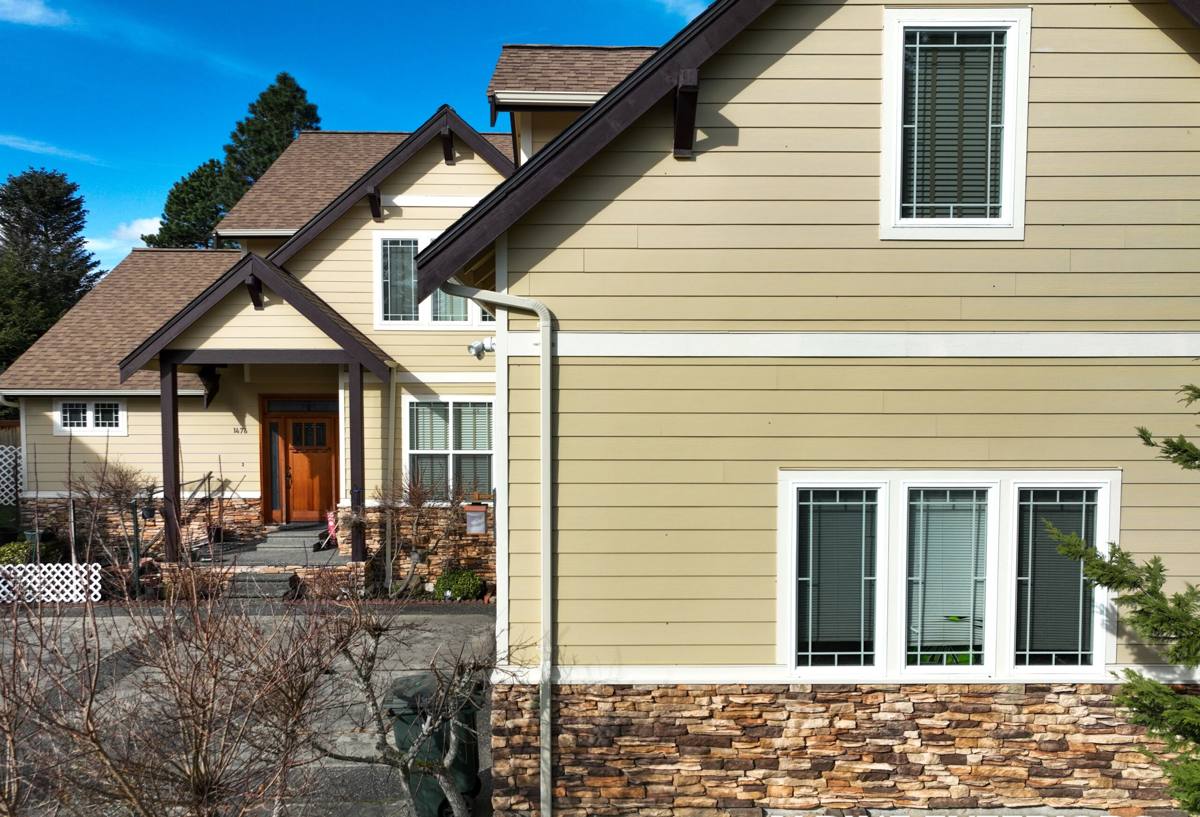
What Salt Air, Rain, and Moss Actually Do to a Window
Salt Air
Proximity to Semiahmoo Bay and the Salish Sea means airborne salt is a constant, low-grade presence on anything exposed outdoors. Salt accelerates corrosion on hardware — hinges, cranks, locks, and especially uncoated or lower-grade aluminum components. It also breaks down some sealants and finishes faster than a standard product warranty assumes, which is why hardware and sealant choice matters more here than it would forty miles inland.
Driving Rain
Blaine doesn't just get rain — it gets wind-driven rain that hits window assemblies at an angle instead of falling straight down. That matters because a window can be perfectly watertight against vertical rain and still leak under sideways pressure if the flashing, sill pan, and head flashing weren't detailed for it. Most water intrusion problems we find in older installs trace back to this exact gap: the window itself was fine, the flashing sequence around it wasn't.
Moss and Prolonged Damp
Whatcom County's moss season is long, and moss doesn't need much to take hold — a shaded sill, a north-facing wall, a spot where water sits instead of draining. Once moss or algae establishes on a sill or trim board, it holds moisture against the wood or composite far longer than open air would, which is exactly the condition that leads to rot underneath a window opening that otherwise looks fine from a few feet away.
What a Correct Installation Involves
A window installation is really two jobs stacked together: the window unit itself, and the opening it sits in. Most problems we get called out to fix started as a mistake in the second job, not the first.
- Opening inspection. Before anything new goes in, the existing framing, sheathing, and sill area get checked for rot, soft spots, or prior water damage — common around older single-pane and early dual-pane installs in this part of Blaine.
- Sill pan flashing. A properly sloped, sealed sill pan gives any water that gets past the window a path back out, instead of a place to collect.
- Weather-resistive barrier integration. Housewrap or building paper has to be lapped correctly with the window flanges so water sheds down and out, not behind the wall assembly.
- Head flashing. This is the piece most often skipped or done poorly on quick installs, and it's the piece that matters most under driving rain.
- Shimming and squaring. A window that's out of square binds, leaks air, and wears its hardware unevenly — even if the flashing is perfect.
- Interior and exterior sealant. Both sides matter. Exterior sealant sheds bulk water; interior sealant controls air leakage and condensation.
Skip or rush any one of these steps and the window can look correctly installed for years before a problem shows up — usually as a soft spot in the wall or a stain on the interior trim, well after the original installer is long gone.
Frame Material: What Actually Holds Up Here
There's no single "best" window material for every house — it depends on exposure, budget, and how the home is built. For Peace Arch homes specifically, here's how the common options compare under local conditions.
| Frame Material | Salt Air / Corrosion Resistance | Moisture Behavior | Maintenance | Typical Lifespan Range |
|---|---|---|---|---|
| Vinyl | Good — won't corrode | Doesn't absorb water; seams are the weak point | Low | 20–30 years |
| Fiberglass | Excellent — very stable | Minimal expansion/contraction, handles wet-dry cycling well | Low | 30–40+ years |
| Wood / Wood-Clad | Fair — depends entirely on finish upkeep | Vulnerable if finish fails or moss holds moisture against it | High — needs regular attention | Varies widely with maintenance |
| Aluminum (uncoated/lower-grade) | Poor near salt air unless properly coated | Conducts cold, prone to condensation | Moderate to high | Shorter in this climate unless upgraded coatings used |
We're not against wood windows on principle — plenty of homes in this area are built around them and they look right on certain house styles. But we'll tell you honestly upfront: a wood-clad window near Peace Arch is a maintenance commitment, not a set-it-and-forget-it choice, because the combination of salt exposure and long damp seasons is unforgiving toward any finish that isn't kept up. For most homeowners who want the lowest long-term hassle in this exact microclimate, vinyl or fiberglass earns its keep.
Our Process, Start to Finish
1. On-Site Assessment
We look at each opening individually — not just the glass, but the sill, the flashing, and any signs of prior water intrusion. Two windows on the same wall can need different treatment depending on sun exposure, drainage, and how they were originally flashed.
2. Straightforward Estimate
You get a written scope covering window selection, any framing or sill repair needed, and flashing details — no vague line items. If we find rot or damage once we open a wall, we tell you before we proceed, not after.
3. Removal and Opening Prep
Old units come out carefully to avoid unnecessary damage to siding or trim. Any compromised sheathing or framing gets repaired before a new window goes in — installing new glass into a soft or wet opening just locks the problem behind new trim.
4. Installation
Sill pan, WRB integration, shimming, squaring, and flashing sequence — done in the order that actually keeps water out under wind-driven rain, not just a fast weatherproofing pass.
5. Sealing and Finish Work
Interior and exterior sealant, trim reinstallation or replacement, and a check of hardware operation — cranks, locks, and latches should move smoothly, not just look installed.
6. Final Walkthrough
We walk every opening with you, operate each window, and point out anything worth watching — for example, a sill orientation that will need occasional cleaning to stay ahead of moss.
Signs a Peace Arch Home Needs Window Attention
Because failures here tend to start hidden, it helps to know what to check for before a small issue becomes a wall repair.
- Visible condensation between panes on dual-pane windows — a sign the seal has failed
- Soft or spongy trim or sill wood when pressed
- Drafts you can feel even with the window fully latched
- Windows that are difficult to open, close, or lock, especially after being fine for years
- Moss or dark staining building up on sills or lower trim
- Peeling or bubbling paint on interior trim near the window — often a sign of moisture behind it, not just age
- Noticeable temperature difference near the window compared to the rest of the room
Any one of these on its own isn't necessarily an emergency. Several together, or any sign of soft wood, is worth having looked at before the next wet season.
Where We See Other Installs Go Wrong
We're not going to name products or other contractors — that's not useful to you, and it's not really the point. What we will say is that the installs we get called back to fix locally almost always share one of a few patterns: flashing that wasn't lapped correctly for wind-driven rain, sealant used in place of proper flashing rather than alongside it, or a window installed into an opening that had existing rot no one addressed first. None of those are exotic mistakes — they're shortcuts that hold up fine in a mild climate and fail in this one. Our standard is to treat the opening and the flashing sequence as seriously as the window unit itself, every time, because in this location that's the part that actually determines whether the job lasts.
Why a Local Crew Matters for This Job
Window installation methods that work in a drier part of the state don't automatically transfer to a block near Peace Arch with direct exposure to salt air and prevailing wind-driven rain. A crew that regularly works this specific area already knows which orientations take the worst weather, how fast moss reestablishes on a north-facing sill, and which flashing details actually get tested by a real Whatcom County winter. That's not something you can fully substitute with a generic install checklist — it comes from doing the work in this exact climate, repeatedly.
Get a Straightforward Estimate
If you're dealing with drafty windows, fogged glass, or trim that's starting to look rough near Peace Arch, we're happy to take a look and give you an honest read on what's actually going on — no pressure, no upsell. Use the form below to request a free estimate.