 Blaine Siding
 Why Point Roberts Is a Different Kind of Siding Job
Point Roberts sits on its own point of land at the bottom of Boundary Bay, surrounded on three sides by water and cut off from the rest of Whatcom County by the international border. That geography is exactly what makes siding here behave differently than it does even a few miles away in Blaine. Homes here take a steady diet of salt-laden marine air, wind-driven rain coming straight off the Strait of Georgia, and long stretches of the year where shaded, damp conditions never really dry out. On a lot of homes we've looked at, moss and algae aren't a cosmetic nuisance — they're a sign that moisture is sitting somewhere it shouldn't be.
Fiber cement handles that environment better than most cladding options, but only when it's installed correctly for this specific climate. A generic install — the kind that would hold up fine in a drier inland town — doesn't account for the amount of water this peninsula sees, or how long that water lingers on north- and west-facing walls under tree cover. This page is about what a correct fiber cement job looks like specifically for a Point Roberts home, not siding in general.
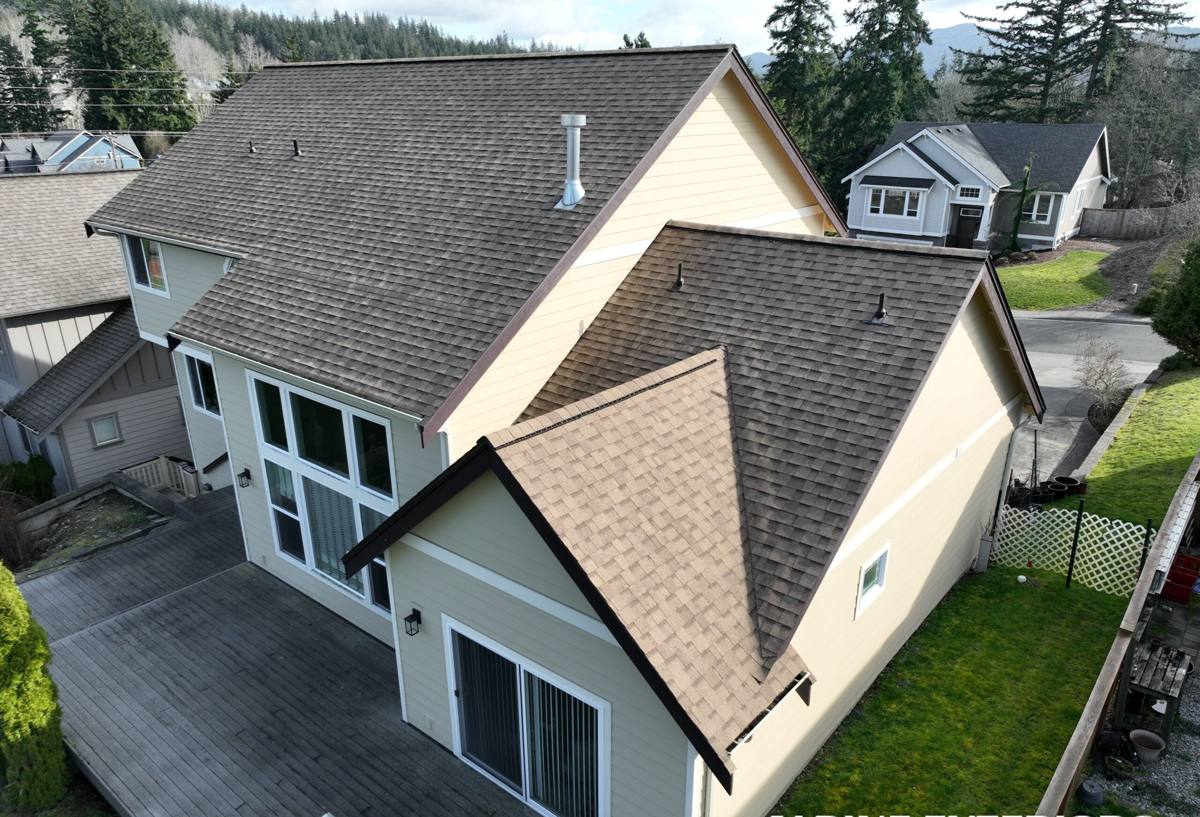
What Salt Air, Driving Rain, and Moss Actually Do to a Wall
Salt Air
Airborne salt is corrosive to metal fasteners, flashing, and trim if the wrong materials are used, and it accelerates the breakdown of paint films that aren't built to handle it. Over years, a home facing the water can show chalking, fading, and fastener corrosion well ahead of schedule if the siding, trim, and hardware weren't chosen with a marine environment in mind.
Driving Rain
Wind off the water doesn't just fall on a wall, it drives into it — under laps, around trim, and into any gap that wasn't properly flashed or caulked. Fiber cement itself doesn't absorb and swell the way wood-based products do, but the assembly behind it (house wrap, flashing, seams, penetrations) has to be built to shed that water before it reaches the sheathing.
Moss and Persistent Dampness
A long moss season means long stretches where a wall surface simply doesn't fully dry between rain events, especially on shaded sides of a home or under overhanging trees. Moss and algae growth on siding is often less about the siding material and more about a wall system that isn't draining and drying the way it should.
What a Correct Fiber Cement Install Looks Like Here
The siding itself is only part of the system. On a home facing this climate, the details behind and around the boards matter as much as the boards themselves.
- A drainage plane and, where the wall assembly calls for it, a rainscreen gap so water that gets behind the siding can drain and the wall can dry from both sides
- Correctly lapped and sealed weather-resistant barrier, with every seam, window, and door opening properly flashed before the first board goes up
- Stainless or coated corrosion-resistant fasteners appropriate for a marine-air environment, driven and spaced to manufacturer specification
- Factory-finished boards (ColorPlus) wherever possible, since a factory-cured finish resists the fading and chalking that field-applied paint struggles with in salty, damp air
- Proper clearance at grade, decks, and roof lines so siding isn't sitting in standing water or constant splash-back
- Caulking used sparingly and correctly — as a supplement to good flashing, not a substitute for it
Skip any one of these and the siding can still look fine going up, but the problems show up two, five, or ten years later — usually as trapped moisture, premature paint failure, or rot in the framing behind boards that looked untouched from the outside.
Why We Only Install James Hardie
We install James Hardie fiber cement exclusively — not vinyl, not LP SmartSide, not primed wood, not other fiber cement brands. That's a deliberate standard, not a sales preference, and it matters more on a site like Point Roberts than almost anywhere else we work.
Vinyl siding can crack, warp, or pull loose in sustained high winds, and it doesn't hold paint, so once its factory color starts to fade from years of coastal sun and salt exposure, there's no practical way to refresh it short of replacement. Wood-based products, including engineered wood siding, depend on an intact factory coating and diligent field caulking to keep moisture out — a single missed seam in a climate this wet can lead to swelling or rot well before the siding's expected lifespan is up. Other fiber cement brands may look similar on a spec sheet, but James Hardie is the only one we've found that consistently backs its product with climate-specific engineering (their HZ5 product line is formulated for the Pacific Northwest's wet, moderate climate), a genuinely strong factory finish warranty, and installation guidance detailed enough to build around.
We'd rather turn down work than install a product on a Point Roberts home that we don't believe will hold up to what this location actually throws at it.
The Logistics of Working in Point Roberts
Point Roberts is a U.S. exclave — by land, it's only reachable by driving through Canada, since it sits on the same peninsula as Tsawwassen, B.C. but south of the border. That's a fact of life for anyone doing construction work here, and it has real consequences for a siding project: material deliveries have to be planned around the crossing, crews need to account for border wait times when scheduling a workday, and last-minute "we forgot a box of trim" runs aren't as simple as they'd be on the mainland.
A crew that hasn't worked here before often underestimates this, which shows up as delayed start times, rushed staging, or trips back across the border mid-project to grab something that should have been on the truck the first time. We stage material for Point Roberts jobs deliberately — ordering with the crossing and the job timeline in mind, rather than treating it like any other Whatcom County address.
Our Process for a Point Roberts Siding Project
- On-site assessment. We look at sun and shade exposure, wind direction relative to the water, existing moss or moisture staining, and the condition of the sheathing underneath the current siding.
- Scope and material plan. We spec the right Hardie product line, profile, and factory finish for the home's exposure, and plan the full delivery — accounting for the border crossing — before the first board is removed.
- Tear-off and inspection. Old siding comes off in sections so we can inspect the sheathing as we go, not all at once with the wall left exposed to weather.
- Repair and weatherproofing. Any damaged sheathing gets replaced, and the weather-resistant barrier, flashing, and drainage details go in correctly before siding starts.
- Installation to manufacturer spec. Fastener type, spacing, clearances, and caulking follow James Hardie's published installation requirements — the same requirements that keep the product warranty valid.
- Final walkthrough. We review the finished job with the homeowner and cover basic care so the siding performs the way it's designed to in this climate.
What It Costs — and What Drives the Price
Every home is different, but the factors that move a Point Roberts siding estimate up or down are fairly consistent. We give honest, specific numbers once we've seen the home — the table below is meant to explain the "why," not replace a real quote.
| Cost Factor | Why It Matters Here |
|---|---|
| Home size and wall complexity | More corners, dormers, and trim details mean more cutting, flashing, and labor time |
| Condition of existing sheathing | Long-term moisture or moss exposure sometimes means hidden rot that needs repair before siding goes up |
| Siding profile and finish selection | Lap width, texture, and ColorPlus factory finish options are priced differently within the Hardie lineup |
| Site access and staging | Point Roberts delivery and border logistics factor into scheduling and, in some cases, material staging costs |
| Trim, flashing, and drainage details | Marine-climate homes often need more careful (and more labor-intensive) flashing and rainscreen detailing than a typical inland job |
Living With Fiber Cement Siding in a Marine Climate
James Hardie siding, installed correctly, is genuinely low-maintenance compared to wood or engineered wood — but "low-maintenance" doesn't mean "no maintenance," especially this close to the water. A little seasonal attention goes a long way toward keeping a Point Roberts home looking and performing the way it should.
- Rinse siding periodically to clear salt residue, especially on walls facing the water
- Trim back vegetation and tree limbs that keep a wall shaded and damp longer than it needs to be
- Check gutters and downspouts before the wet season so runoff isn't dumping onto siding or foundation areas
- Address any moss or algae growth early with a gentle wash rather than pressure that can damage the finish
- Keep an eye on caulking at trim joints and penetrations, and have any gaps resealed before they become a moisture path
- Watch grade and landscaping changes over time so soil or mulch doesn't creep up against the bottom of the siding
Why Hire a Crew That Already Works Point Roberts
Siding contractors who mainly work Blaine, Ferndale, or Bellingham can absolutely install Hardie siding correctly in general — but Point Roberts adds a layer most of them haven't had to plan around: the border crossing for materials and crew, the exposure differences of a peninsula surrounded by water on three sides, and permitting through Whatcom County for a site that feels, logistically, like its own small world. A crew that's done the work here already knows how to stage a job so it doesn't stall out mid-project, and has seen firsthand how these homes weather over time — not just how they look the day the last board goes up.
If you're weighing a siding project for a Point Roberts home, we're glad to take a look and talk through what your home's exposure actually calls for. Reach out for a free, no-pressure estimate using the form below.