 Blaine Siding
 Siding Built for a Peninsula, Not Just a Zip Code
Point Roberts sits in a category of its own among Whatcom County communities. It's a small peninsula bounded by water on three sides, connected to the rest of Washington only by a drive through Canada. That geography isn't just a curiosity for homeowners here — it shapes what siding has to survive. Homes on Point Roberts take on a steady diet of salt-laden marine air, driving rain off the Strait of Georgia, and a long, damp moss season that stretches well beyond what inland Whatcom County properties deal with. Siding installation here isn't a generic exterior job. It's a job that has to account for what the water around this peninsula does to a house, year after year.
This page focuses specifically on siding installation for Point Roberts homes — what the local climate demands, what a correct installation actually involves, and why the crew doing the work matters as much as the material going on the wall.
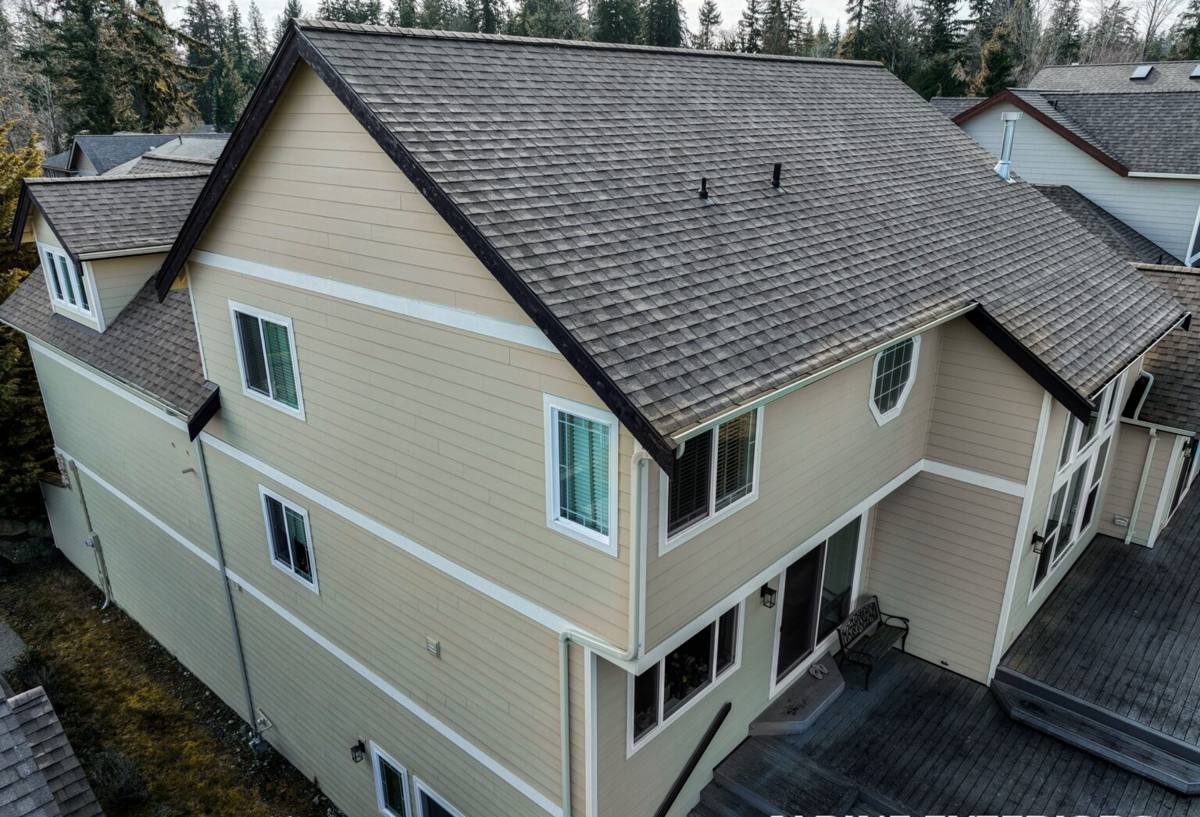
What Point Roberts' Climate Does to Siding
Salt Air
Being surrounded by water means Point Roberts homes are exposed to airborne salt more consistently than most Whatcom County properties. Salt is corrosive to exposed metal fasteners and trim, and it accelerates the breakdown of coatings and finishes that aren't engineered to resist it. Over years, siding and trim that weren't specified for a marine-influenced environment can show premature fading, chalking, or fastener corrosion — problems that show up faster here than they would ten or fifteen miles inland.
Driving Rain
Point Roberts gets wind-driven rain off open water, which behaves differently than rain falling straight down. Driving rain gets pushed sideways into laps, seams, and penetrations — the exact places where a siding installation either holds up or starts letting moisture behind the cladding. A house-wrap detail or a lap that would be marginal but tolerable in a sheltered inland yard can become a real moisture pathway on an exposed Point Roberts elevation.
Moss Season
Cool, wet, and shaded conditions persist longer here than in drier parts of the county, and that means a longer window each year for moss and algae to take hold on siding surfaces — especially on north-facing walls, under eaves, and anywhere airflow is limited. Moss holds moisture against the siding surface long after the rain stops, which matters a lot depending on what the siding is actually made of.
Why the Material Choice Matters More Here
Every siding material responds differently to salt air, driving rain, and sustained moisture from moss. Wood-based products — including primed spruce and engineered wood siding — depend on an intact factory coating and diligent long-term maintenance to keep moisture out; once that coating is compromised by UV, moss, or a missed touch-up, the substrate underneath is vulnerable to swelling and rot. Vinyl siding doesn't rot, but it isn't rigid, and wind-driven rain can find its way behind loose or thermally-stressed panels over time, with little way to inspect or manage what's happening behind it.
We install James Hardie fiber cement siding exclusively, and on a site like Point Roberts, the reasoning is straightforward: fiber cement is non-combustible and dimensionally stable, it doesn't feed moss the way wood-based products can, and Hardie's ColorPlus factory finish is engineered to hold up under UV and moisture exposure far longer than field-applied paint. It's not immune to the elements, but it's built to take a coastal beating without the maintenance dependency that wood and vinyl carry.
How Common Siding Materials Handle Marine Exposure
| Material | Salt Air / Moisture Response | Maintenance Burden Here |
|---|---|---|
| James Hardie fiber cement | Non-combustible, dimensionally stable, factory finish resists fading and moisture intrusion at the surface | Periodic cleaning; no repainting cycle with ColorPlus finish |
| Primed wood / engineered wood | Coating is the only moisture barrier; salt air and UV degrade it faster than inland conditions | Regular repainting and caulking; vulnerable once coating fails |
| Vinyl | Won't rot, but panels can loosen under wind-driven rain and thermal cycling | Low routine maintenance, but limited ability to inspect what's happening behind panels |
| Cedar (unfinished or stained) | Natural moisture resistance but no match for sustained coastal wet without diligent upkeep | High — regular staining/sealing to prevent moss colonization and cupping |
What a Correct Installation Looks Like on This Peninsula
The siding material is only part of the equation. On an exposed, marine-influenced site like Point Roberts, the installation details around it are what actually keep water out over the long run.
Water-Resistive Barrier and Flashing
A continuous, properly lapped water-resistive barrier behind the siding is non-negotiable here. Every window, door, and penetration needs flashing detailed so that any water that does get past the cladding is directed back out, not into the wall assembly. On a house taking driving rain from open water, sloppy flashing work is the single most common cause of hidden rot years down the road.
Rainscreen Gap
Where conditions call for it, a drainage gap between the siding and the water-resistive barrier lets any moisture that gets behind the panels drain and dry instead of sitting against the wall. This detail is especially valuable on shaded or north-facing walls, which are exactly the elevations most prone to sustained moisture and moss on a Point Roberts property.
Fastener Selection
In a salt-air environment, fastener choice isn't a place to cut corners. Corrosion-resistant fasteners rated for the exposure, installed to Hardie's fastening specifications, prevent the streaking and loosening that substandard fasteners cause within just a few seasons near the water.
Proper Clearances
Siding installed too close to grade, decks, roof lines, or other hard surfaces traps moisture and gives moss a foothold. Correct clearances aren't cosmetic — they're one of the simplest ways to keep a wall assembly dry through a long, wet Point Roberts winter.
Our Installation Process
- On-site assessment — we walk the exterior, checking exposure by elevation (which walls take the worst of the wind-driven rain, which stay shaded and moss-prone), existing moisture damage, and trim and flashing condition.
- Removal and inspection — old siding comes off and the sheathing underneath gets inspected for hidden rot or moisture damage before anything new goes up. Problems found here get addressed, not covered over.
- Water-resistive barrier and flashing — a new, continuous barrier and properly lapped flashing at every window, door, and penetration, detailed for a site that takes driving rain.
- James Hardie installation — installed to manufacturer fastening and clearance specifications, with attention to the elevations most exposed to salt air and moss.
- Trim, caulking, and final detailing — the finish work that determines how the installation ages, not just how it looks on day one.
- Walkthrough — we go over the finished work with the homeowner before we consider the job done.
Why Hiring a Crew That Already Works Point Roberts Matters
Point Roberts' geography creates real logistical realities that a contractor unfamiliar with the peninsula has to learn on the fly, often at the homeowner's expense. Material deliveries, crew scheduling, and border crossing logistics all take planning that a crew already familiar with the area has worked out ahead of time. Beyond logistics, a crew that has worked this specific stretch of coastline understands, from experience, which elevations of a Point Roberts home take the worst weather and where moss and moisture problems tend to originate — knowledge that shows up in how carefully the water-resistive barrier and flashing get detailed, not just in the finished appearance.
A siding job that looks right the day it's finished but wasn't detailed for salt air, driving rain, and a long moss season is a job that starts causing problems within a few years. On a peninsula like this, that gap between "looks done" and "done right" matters more than almost anywhere else in Whatcom County.
What to Check Before Hiring a Siding Contractor Here
- Do they detail water-resistive barrier and flashing specifically for wind-driven, coastal rain exposure?
- Do they follow James Hardie's published fastening, clearance, and flashing specifications?
- Do they use corrosion-resistant fasteners appropriate for a salt-air environment?
- Do they inspect sheathing for hidden moisture damage before installing new siding?
- Do they account for moss-prone, shaded elevations with proper clearances and drainage detailing?
- Can they speak specifically to logistics of working on Point Roberts, including delivery and scheduling?
A Realistic View of Cost Factors
Every Point Roberts home is different, and we don't publish blanket prices because the real cost drivers vary house to house. What generally affects the cost of a siding installation here:
| Factor | Why It Matters |
|---|---|
| Extent of existing moisture or rot damage | Sheathing repair adds time and material before new siding can go on |
| Home size and elevation complexity | More corners, penetrations, and trim details mean more flashing and labor |
| Siding profile and Hardie product line chosen | Different HZ product lines and profiles carry different material costs |
| Access and site logistics | Point Roberts delivery and scheduling logistics factor into project planning |
We walk every property in person and give a straightforward, itemized estimate before any work starts — no inflated numbers, no pressure to decide on the spot.
Get a Free, No-Pressure Estimate
If your Point Roberts home is due for new siding, or you're seeing early signs of moss, moisture, or fading trim, we're happy to take a look and walk you through what your house actually needs. Use the form below to request a free estimate — no obligation, no pressure, just a straight answer about what correct siding installation looks like for your property.