 Blaine Siding
 Roof Repair in Sumas: Built for This Part of Whatcom County
Homes in and around Sumas deal with a climate that's harder on roofing than most people realize until something starts leaking. This corner of Whatcom County sits close enough to the coast to catch salt-tinged, moisture-heavy air off the Salish Sea, and far enough inland to collect long stretches of standing damp, fog, and slow-draining rain through fall, winter, and spring. Add a moss season that can run eight months or longer in a shaded, tree-lined yard, and you have a roofing environment that punishes shortcuts. A repair that would hold up fine in a drier climate can fail here in a single wet season if it's not done with local conditions in mind.
This page is about one thing: roof repair for Sumas homes specifically. Not a general roofing overview, not a sales pitch for full replacement when a repair will do the job — just a straight look at what local roofs need, what a correct repair actually involves, and how we handle it.
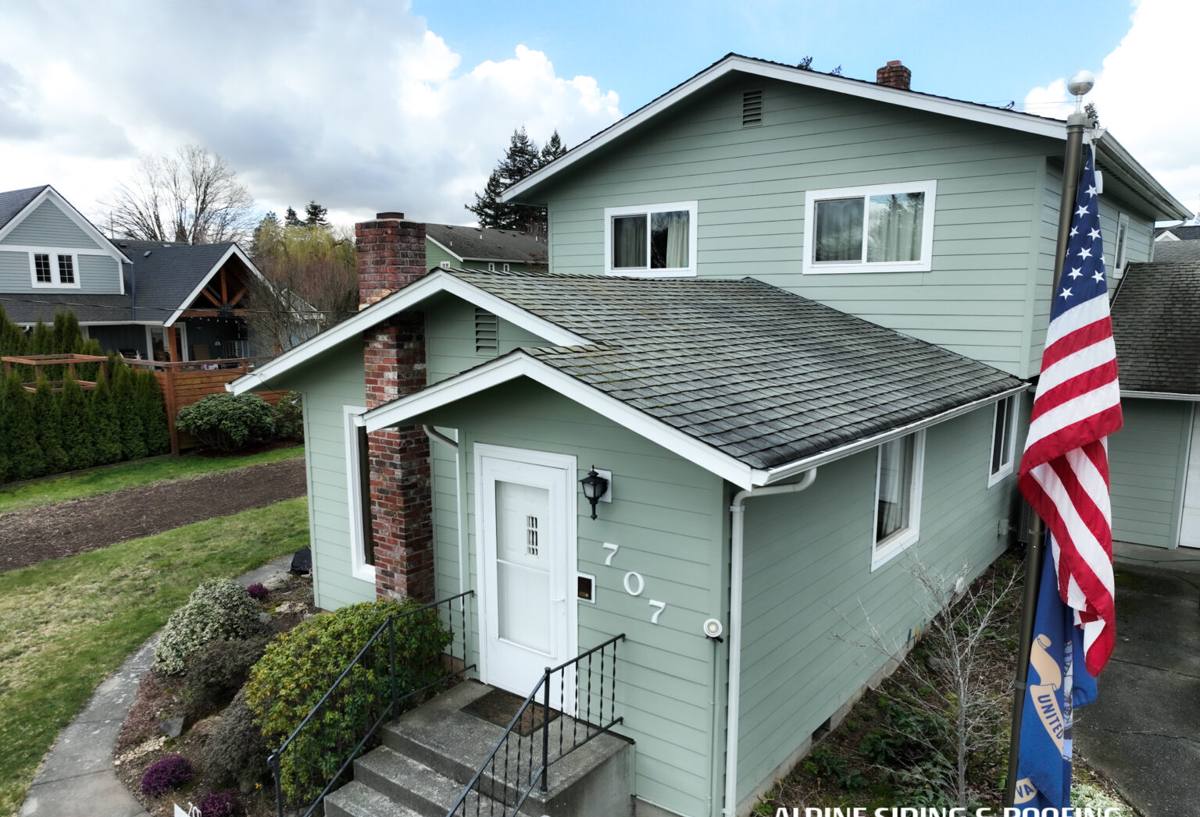
Why Roofs in This Area Fail Sooner Than the Warranty Suggests
Every asphalt shingle, metal panel, and underlayment sold in the Pacific Northwest carries a manufacturer warranty written for average conditions across the whole country. Sumas isn't average. Two things in particular shorten the real-world lifespan of a roof here.
Moss and Organic Growth
Moss doesn't just sit on a roof looking green — it holds moisture against the shingle surface around the clock, works its rhizoids under shingle tabs and granules, and lifts edges enough for wind-driven rain to get underneath. On north-facing slopes and anywhere a roof sits under tree cover, moss can establish within a year or two of a roof being cleaned. Left unaddressed, it accelerates granule loss, rots sheathing from the top down, and turns a $300 cleaning job into a $3,000 sheathing repair.
Wind-Driven Rain and Flashing
Rain that falls straight down is rarely the problem. Rain that's being pushed sideways by wind off open farmland or through a valley is what finds every weak seam — step flashing at a chimney or dormer, the transition where a lower roof meets a wall, or a vent boot that's cracked from UV and cold cycling. These are the leaks that show up as a stain on a ceiling weeks after the storm that actually caused them, because water is tracking along framing before it ever drips.
Signs a Sumas Roof Needs Repair, Not Just a Look
Most roof damage out here doesn't announce itself with a dramatic leak. It shows up as small, easy-to-dismiss signals first.
- Dark streaking or thick moss growth concentrated on shaded or north-facing slopes
- Granules collecting in gutters or at downspout outlets after a hard rain
- Soft or spongy spots when walked on, especially near valleys and roof-to-wall transitions
- Daylight visible through the attic at roof penetrations, ridges, or eaves
- Ceiling stains that appear, fade, then reappear after the next significant storm
- Curling, cracked, or missing shingles, particularly on the side that takes the prevailing wind
- Rusted, cracked, or lifted flashing around chimneys, skylights, and vent pipes
- Sagging sections of roofline, which usually points to sheathing damage underneath
If any of these look familiar, it's worth having someone look before the next storm cycle, not after.
What a Correct Roof Repair Actually Involves
A roof repair done right is a diagnosis first and a patch second. Skipping the diagnosis is the single most common reason repairs fail early in this climate.
Finding the Real Source, Not Just the Visible Symptom
Water travels. A stain on a bedroom ceiling might trace back to a flashing gap ten feet away, or to moss holding water against a seam two roof planes over. We check the full roof system — shingles or panels, underlayment condition where accessible, flashing at every penetration and transition, and attic framing and insulation — before deciding what actually needs to be opened up and fixed. Patching the spot directly above a stain without finding the real entry point is how the same leak comes back next winter.
Matching Materials and Technique to Local Conditions
Repairs here need to account for the same moisture and moss pressure that caused the original damage, or they just fail again faster. That means proper ice-and-water shield or self-adhering membrane at vulnerable transitions, corrosion-resistant flashing metal, and shingle or panel matching that keeps water shedding correctly rather than creating a new dam or seam where debris and moss can collect. It also means not over-sealing with caulk or roofing cement as a substitute for correct flashing work — that's a short-term fix that traps moisture and hides problems rather than solving them.
Repair or Replace? How We Help You Decide
Not every damaged roof needs to come off. But a repair that's fighting the roof's overall age and condition is money that would have been better spent toward a new roof. Here's roughly how we think through it with homeowners.
| Factor | Leans Toward Repair | Leans Toward Replacement |
|---|---|---|
| Roof age | Under 15-20 years, or well-maintained | Nearing or past manufacturer lifespan |
| Extent of damage | Localized — one flashing point, a small shingle section | Multiple areas, or damage spread across several slopes |
| Sheathing condition | Solid, no soft spots underneath | Soft, delaminated, or rotted decking found |
| Moss/algae history | First occurrence, addressed early | Repeated growth with granule loss over multiple seasons |
| Prior repairs | Roof holding up well otherwise | Patchwork of past repairs failing in new spots |
We'll tell you honestly which side of that table your roof falls on. If a repair is the right call, that's what we'll recommend — a solid repair now, with an honest read on how many more years it's likely to buy you, is a better outcome for most homeowners than being pushed toward a replacement they don't need yet.
Our Roof Repair Process for Sumas Homes
- Inspection. We walk the roof and check the attic where accessible, looking at the full system rather than just the reported problem area.
- Written assessment. You get a clear explanation of what's actually wrong, what's causing it, and what it will take to fix — before any work starts.
- Repair. We open up the affected area, address the underlying cause (not just the visible symptom), and rebuild the flashing, underlayment, or shingle section correctly for this climate.
- Cleanup and check. Moss and debris are cleared from the work area and surrounding roof planes so water sheds the way it's supposed to, and the repair is checked before we consider the job done.
We don't upsell a full roof replacement to a homeowner who needs a repair, and we don't quote a quick patch on a roof that genuinely needs more attention. Either call should be made on the roof's actual condition, not on what's easier to sell.
Why Hiring a Crew That Already Works This Area Matters
A roofer who works mostly in drier climates or dense urban roofs is going to make different assumptions than one who's used to Whatcom County's moss pressure, rainfall totals, and the way wind moves through this part of the county. That shows up in small but important decisions: how much ice-and-water membrane to use at valleys and eaves, which flashing details hold up against sustained wind-driven rain, and how aggressively to address moss so it doesn't come straight back within a year. Crews familiar with Sumas and the surrounding area have already seen how roofs here actually fail over time, not just how they're built on day one — and that experience shapes where we look first and what we prioritize fixing.
Keeping a Repaired Roof Healthy Between Visits
A good repair buys time, but a few habits stretch that time further in this climate:
- Keep gutters and downspouts clear so water isn't backing up under the lowest course of shingles
- Trim back tree limbs that shade roof sections and keep them damp longer than the rest of the roof
- Have moss treated or removed before it establishes a thick mat, not after
- Do a visual check from the ground after any major windstorm for lifted or missing shingles
- Get a professional look every couple of years even without an active leak — small issues are far cheaper to fix than water damage after the fact
None of this requires getting on the roof yourself. It's mostly about not letting small, visible warning signs sit through another wet season.
If you're dealing with a leak, visible moss damage, or you just want a second opinion on the condition of your roof, we're glad to take a look. Reach out for a free, no-pressure estimate using the form below — we'll give you a straight answer on what your roof actually needs.