 Blaine Siding
 Why Semiahmoo's Location Puts Extra Demand on Siding
Semiahmoo sits out on the water, wrapped by Semiahmoo Bay and Drayton Harbor, just west of downtown Blaine. That waterfront position is part of what makes the area desirable, but it's also exactly the kind of exposure that wears out exterior building materials faster than a home a few miles inland. Homes here take a steady dose of salt-laden air, wind-driven rain off the Strait of Georgia, and long stretches of damp, low-light weather that keeps north and west-facing walls wet for days at a time. None of that is unusual for Whatcom County, but Semiahmoo gets a more concentrated version of it than most of Blaine.
Siding that isn't built for that combination shows it early: chalky or peeling paint, soft spots at the bottom courses, swelling at seams, and a persistent green-black film that comes back within a season of cleaning. We install fiber cement on a lot of homes in this area specifically because it holds up to salt exposure and moisture cycling in a way that wood-based and vinyl products generally don't.
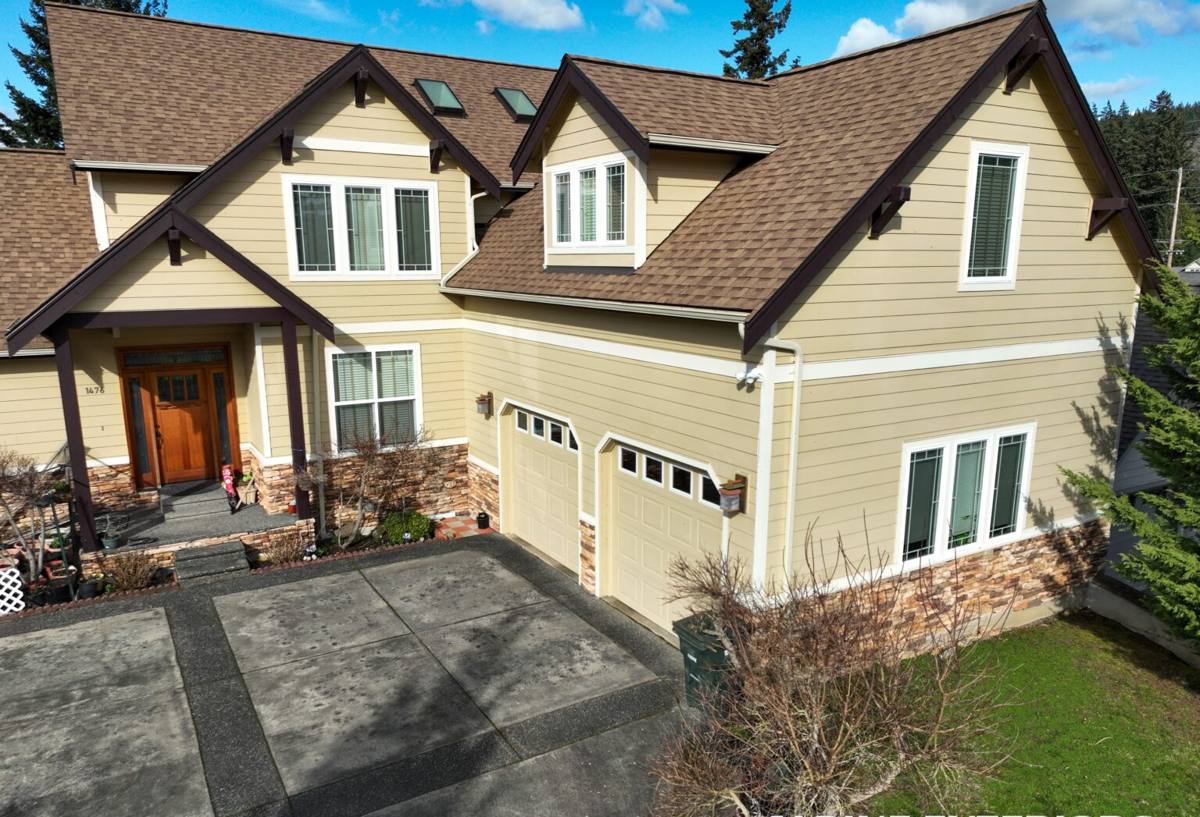
What Salt Air and Moss Season Actually Do to a Wall System
Salt air
Airborne salt doesn't just sit on the surface — over time it accelerates the breakdown of paint films and can corrode fasteners, flashing, and trim if they aren't rated for coastal exposure. Siding with a factory-applied finish designed to resist that breakdown holds its color and its protective layer far longer than field-painted materials exposed to the same air.
Driving rain
Storms coming off the water don't fall straight down — they drive sideways into walls, which pushes water into laps, seams, and penetrations that would stay dry in a calmer climate. This is why lap spacing, flashing details, and caulking at joints matter more here than they would on a sheltered inland lot.
Moss and prolonged dampness
Whatcom County's wet season runs long, and shaded or north-facing walls in Semiahmoo can stay damp for weeks. Materials that absorb moisture rather than shed it stay wet at the core even when the surface looks dry, which is where rot and delamination start. Fiber cement is manufactured to resist that kind of moisture absorption, which is a big part of why it holds a moss-free, stable surface longer than wood-based siding in this specific environment.
Why We Install Only James Hardie Fiber Cement
We standardized on James Hardie products for every siding job we do, including here in Semiahmoo, and we don't install vinyl, LP SmartSide, primed wood, cedar, or other fiber cement brands. That's not a marketing position — it's a decision based on what actually performs in this climate over the long run. James Hardie's fiber cement is non-combustible, engineered specifically for Pacific Northwest moisture conditions through its HZ5 product line, and finished with a factory-applied ColorPlus coating that's bonded and cured under controlled conditions rather than painted on-site after installation. That factory finish is a real advantage in a salt-air environment, where field-applied paint has to fight both UV and salt breakdown from day one.
We'd rather stand behind one product system we know inside and out — installation specs, warranty terms, and long-term behavior — than offer a menu of options with different failure points. When a homeowner asks why we don't install a cheaper alternative, the honest answer is that we've seen how those products age in coastal Whatcom County conditions, and we're not willing to put our name on a job we don't expect to last.
What Correct Fiber Cement Installation Involves
Fiber cement siding is only as good as the installation behind it. In a location like Semiahmoo, a few details matter more than they would in a drier, more sheltered part of the county:
- Proper weather-resistive barrier and a drainage plane behind the siding so any moisture that gets past the cladding can escape instead of sitting against the sheathing
- Correct lap exposure and fastener placement per manufacturer spec — under-lapped or over-driven fasteners are a common source of early water intrusion
- Stainless or coated fasteners rated for coastal/salt-air exposure, not standard interior-grade hardware
- Careful flashing and sealant work at windows, doors, and any wall penetration, since these are the points where driving rain actually gets in
- Proper clearance between the bottom of the siding and grade, decks, or roof lines to avoid wicking moisture from splash-back
- Factory-cut or properly sealed field cuts, since exposed cut edges are more vulnerable to moisture absorption than the factory-finished face
Skipping any one of these doesn't usually cause an immediate problem — it shows up two, five, or ten years later as a soft spot, a stain, or a section that needs to come off and be redone. That's the real cost of a rushed installation, and it's why we treat these details as non-negotiable rather than optional upgrades.
Our Process for Semiahmoo Projects
1. On-site assessment
We walk the exterior, check for existing moisture damage, evaluate the current wall assembly, and look specifically at exposure — which walls take the worst of the wind and rain, where moss and algae are already established, and where prior repairs or patches suggest a recurring problem.
2. Scope and product selection
We spec the right Hardie plank or panel profile, exposure, and ColorPlus finish for the home, and lay out a written scope that covers tear-off, any sheathing repair, house wrap, flashing, and installation details specific to that property.
3. Installation
Our crews install to James Hardie's published specifications, with attention to the coastal-specific details above — fastener type, flashing, and drainage plane integrity.
4. Final walkthrough
We review the finished work with the homeowner, confirm caulking and trim details are tight, and make sure everything matches the agreed scope before calling the job done.
Cost Factors for Semiahmoo Siding Projects
Every home is different, and we won't quote a number without seeing the property, but these are the main factors that move the price on a fiber cement project in this area:
| Factor | Why It Matters Here |
|---|---|
| Existing wall condition | Rot or moisture damage found under old siding adds sheathing repair before new siding can go on |
| Wall exposure | Waterfront-facing walls often need more careful flashing and detailing than sheltered sides |
| Home size and complexity | Corners, dormers, and trim detail increase labor time beyond flat wall area |
| Siding profile and finish | Plank width, texture, and ColorPlus color selection affect material cost |
| Access | Waterfront lots and tight setbacks can limit staging and equipment access, affecting labor time |
| Tear-off scope | Full removal of old siding versus a simpler re-side changes both cost and timeline |
Maintenance Once It's Installed
One of the practical advantages of James Hardie fiber cement in a place like Semiahmoo is how little ongoing maintenance it asks for compared to wood-based siding. That said, "low-maintenance" doesn't mean "no maintenance," especially in a salt-air environment:
- Rinse the exterior periodically to clear salt residue and organic buildup before it takes hold, especially on shaded and water-facing walls
- Inspect caulking at trim, windows, and joints every couple of years and re-seal where it's cracked or pulled away
- Keep gutters and downspouts clear so water isn't overflowing directly onto siding below
- Trim back vegetation and keep mulch or soil from piling against the bottom edge of the siding
- Address any impact damage or exposed cut edges promptly rather than letting them sit through a wet season
Signs Your Current Siding Needs Attention
If you're not sure whether your Semiahmoo home's siding is holding up, these are the signs worth taking seriously:
- Paint that's chalking, peeling, or bubbling, particularly on walls facing the water
- Soft or spongy spots when you press near the bottom edge of the siding
- Persistent moss or black staining that returns quickly after cleaning
- Visible gaps, warping, or buckling at seams and corners
- Rising utility bills or noticeable drafts, which can point to a compromised wall assembly behind the siding
Why Local Experience on Semiahmoo Specifically Matters
A crew that's worked waterfront homes in Semiahmoo already understands how differently this stretch of coastline behaves compared to inland Blaine or other parts of Whatcom County. They know which wall orientations take the worst weather, how moss establishes itself here, and what flashing and fastener choices actually hold up long-term against salt air and driving rain. That local pattern recognition doesn't replace following the manufacturer's installation spec, but it does mean fewer surprises during the job and a better read on which details deserve extra attention on your specific property.
If you're weighing a siding replacement or repair on a Semiahmoo home, we're happy to take a look and give you a straightforward, no-pressure estimate — including an honest read on your home's current condition and what it actually needs. There's a form below to get that started.