 Blaine Siding
 Siding Repair in Lynden: What Makes This Job Different
Lynden sits far enough inland from Blaine and the coast to feel a little different from the waterfront, but it still gets the full Whatcom County weather package: long stretches of driving rain off the Strait, damp air that lingers in the valley, and a moss season that can run from October into May in a shaded yard. Siding repair here isn't just patching a crack and moving on. It's figuring out why that section failed in the first place, because in this climate, a surface fix on a moisture problem comes back within a year or two.
We're based in Blaine and work Lynden regularly, which matters more than it sounds like. A crew that's repaired siding on a dozen Lynden homes already knows which wall orientations take the worst of the weather, which older siding products in this area are starting to show their age at the same time, and what a correct repair actually requires versus what a quick patch job gets away with for a season.
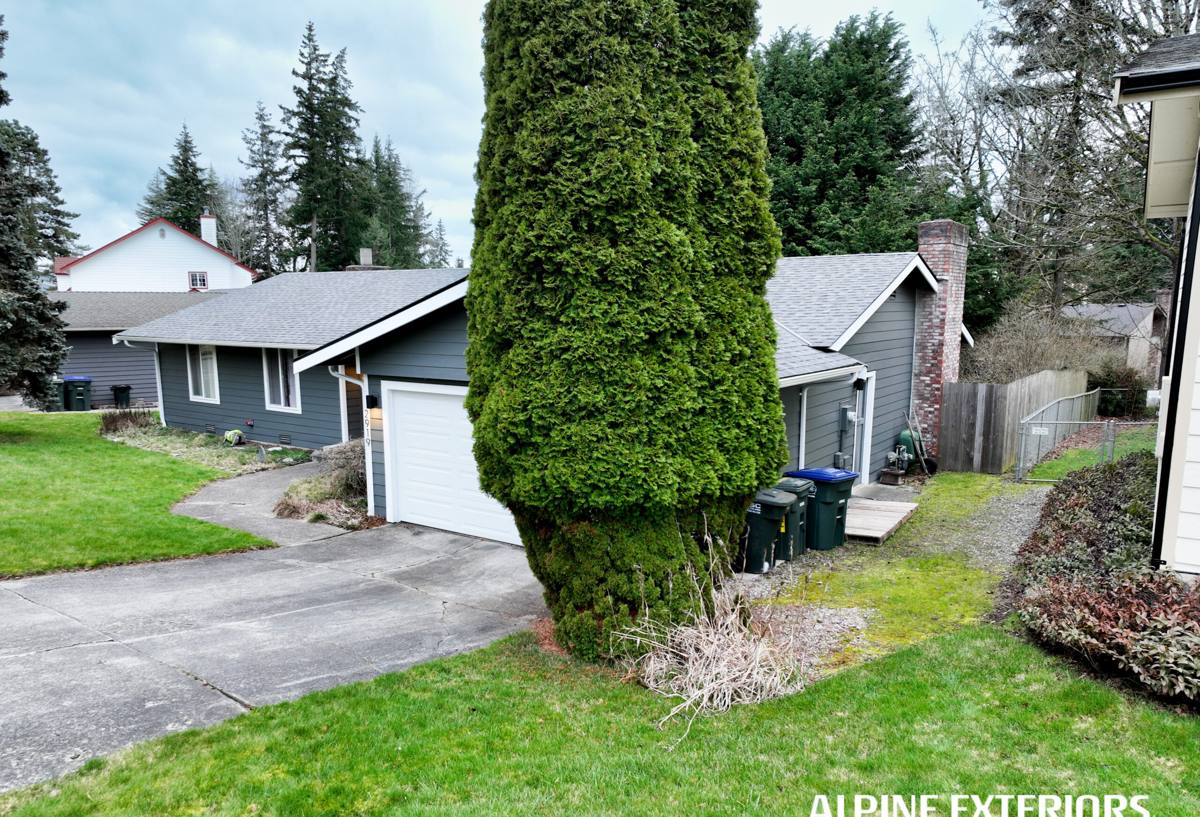
Why Lynden Homes Need Siding Repair More Than You'd Expect
Rain Exposure and Wall Orientation
Lynden gets plenty of direct rain, and certain walls on a given home — usually the west and north faces, depending on how the lot sits — take the brunt of it year after year. Over time, that repeated soaking finds every small gap: a nail hole that lost its seal, a seam that was never caulked quite right, a corner trim piece that's pulled away just enough to let water behind it. None of this is usually visible from the street. It shows up as soft spots, staining, or paint that won't hold no matter how many times it's redone.
Moss and Organic Growth
Whatcom County's moss season is long, and Lynden's mix of mature trees and shaded lots gives moss and algae plenty of places to take hold on siding, especially on north-facing walls and anywhere runoff from a roof or gutter splashes down. Moss itself doesn't eat through siding, but it holds moisture against the surface far longer than open air would, and that extended dampness is what breaks down vulnerable siding materials and paint systems underneath.
Material Fatigue in Older Siding
A lot of Lynden homes still have older wood, older vinyl, or early-generation fiber cement siding that's now 15-30+ years old. These materials don't fail all at once — they fail in patches, usually wherever moisture exposure has been worst. That's exactly why siding repair requests cluster around certain wall sections rather than whole houses, and why a repair crew needs to assess the whole elevation, not just the spot the homeowner noticed.
What a Correct Siding Repair Actually Involves
A repair that holds up in this climate isn't just about matching the color and nailing a new piece into place. It starts with figuring out the cause of the damage, not just the visible symptom.
- Diagnose before you patch. Soft or stained siding is often a symptom of a flashing, caulking, or water-management failure behind it — not a defect in the siding panel itself.
- Check the water-resistive barrier. If the house wrap or building paper behind the damaged section is compromised, replacing the siding alone won't fix the underlying leak path.
- Inspect for hidden rot. Sheathing and framing behind long-term moisture intrusion sometimes needs attention before new siding goes back on — skipping this step just hides a bigger problem.
- Match or transition materials thoughtfully. If the existing siding is a different product than what's available today, we talk through whether a patch, a full elevation replacement, or a planned transition makes the most sense.
- Reseal and re-flash properly. Trim, corners, and penetrations (hose bibs, vents, light fixtures) get re-flashed and sealed as part of the repair, not left as an afterthought.
- Clean and treat moss-affected areas. Any section that's had sustained moss or algae growth gets cleaned and, where needed, addressed so the new work doesn't fail the same way in a couple of seasons.
Common Repair Scenarios We See in Lynden
| What You Notice | Likely Cause | What the Fix Usually Involves |
|---|---|---|
| Soft or bubbling siding near the bottom of a wall | Splashback from grade, poor drainage, or a failed kickout flashing | Section replacement plus grading or flashing correction |
| Persistent moss or dark staining on a shaded wall | Low airflow, tree cover, moisture trapped against the surface | Cleaning, treatment, and sometimes trimming back vegetation near the wall |
| Cracked or warped panels around windows | Missing or deteriorated window flashing | Re-flash the opening, then replace affected panels |
| Paint failing repeatedly in one spot | Moisture intrusion behind the siding in that area | Open it up, find the leak path, repair before repainting |
| Gaps or separation at corners and trim | Original installation shortcuts or material movement over time | Re-secure, reseal, and replace trim where needed |
Our Process for a Lynden Repair Job
- On-site assessment. We walk the exterior, look at every elevation (not just the spot you called about), and check for signs of moisture issues beyond the visible damage.
- Honest scope conversation. We tell you whether this is a true spot repair, a larger section replacement, or a sign that the wall needs a fuller siding plan — no upselling, no downplaying.
- Written estimate. You get a clear breakdown of what's being repaired, what's being inspected along the way, and what it costs before any work starts.
- Repair and water-management correction. We fix the siding and the underlying cause — flashing, sealant, drainage — in the same visit whenever possible.
- Final walkthrough. We go over the completed work with you so you know exactly what was done and what to watch for going forward.
Why We Only Repair and Replace With James Hardie
When a repair does call for new siding material — because the damaged section can't be reasonably patched, or because the existing product has reached the end of its useful life — we use James Hardie fiber cement exclusively. We don't install vinyl, LP SmartSide, Cemplank, Allura, or cedar, and that's a deliberate standard, not a brand preference we picked at random.
In a climate like Whatcom County's, the materials that struggle most are the ones sensitive to sustained moisture and organic growth: wood products that need consistent maintenance to resist rot, and engineered wood products that can be vulnerable at cut edges and seams if moisture gets in and isn't caught early. Vinyl holds up to moisture fine but can warp under heat and doesn't offer the same fire resistance or factory-finish durability. Hardie's fiber cement is non-combustible, dimensionally stable in wet-dry cycling, and its ColorPlus factory finish is built to resist the fading and peeling that repeated Pacific Northwest rain cycles cause in field-applied paint. For a repair patch to blend in and age the same way as the surrounding siding for years, not just for the first season, that consistency matters.
This also means that if your home currently has a non-Hardie product and needs a repair, we'll tell you plainly what your options are — a like-for-like patch versus a planned transition to Hardie on that section or elevation — rather than pretending every repair is simple.
What to Check Before You Call Anyone
- Walk your exterior after a heavy rain and note any walls that stay visibly wet longer than others.
- Look for moss or dark streaking concentrated in one area rather than spread evenly across the house.
- Press gently on any soft-looking or bubbled siding (don't force it) and note the location.
- Check around windows, hose bibs, and vents for gaps, cracking, or separated caulk.
- Note whether paint has failed repeatedly in the same spot over multiple repaint cycles.
Why Local Matters for a Repair Crew
Siding repair is one of those jobs where local experience shows up in the details. A crew that already knows Lynden's weather pattern, knows which wall orientations in this area take the worst rain exposure, and has handled moss-related damage on homes nearby isn't guessing at causes — they've seen the pattern before. Being based in Blaine means we're not driving a long distance for a follow-up check, and we're not unfamiliar with how Whatcom County's climate behaves differently than, say, a drier inland region where a repair crew might make different assumptions about what caused the damage.
Get a Straight Answer on Your Repair
If you've got a section of siding in Lynden that's showing damage, staining, or persistent moss, we're happy to take a look and give you a straightforward read on what's going on and what it'll take to fix it right. Fill out the form below for a free, no-pressure estimate.