 Blaine Siding
 Why Bellingham Siding Wears Differently Than Siding Inland
Bellingham sits close enough to salt water, and gets enough sustained rain and shade cover, that its homes take a specific combination of punishment most siding products were never engineered for. Salt-laden air off the bay works its way into seams and fastener heads. Driving rain off the Strait pushes water sideways into laps and joints that were only ever designed to shed water falling straight down. And a moss season that can run most of the year in shaded, north-facing, and tree-covered lots keeps siding damp for weeks at a stretch, even between actual rain events.
None of that is dramatic on its own. It's the combination, repeated year after year, that turns small gaps into real problems: swollen seams, soft trim returns, discoloration that won't wash off, and in the worst cases, rot working its way into the wall assembly behind the siding. A repair job in Bellingham has to account for all of it, not just patch the visible damage and move on.
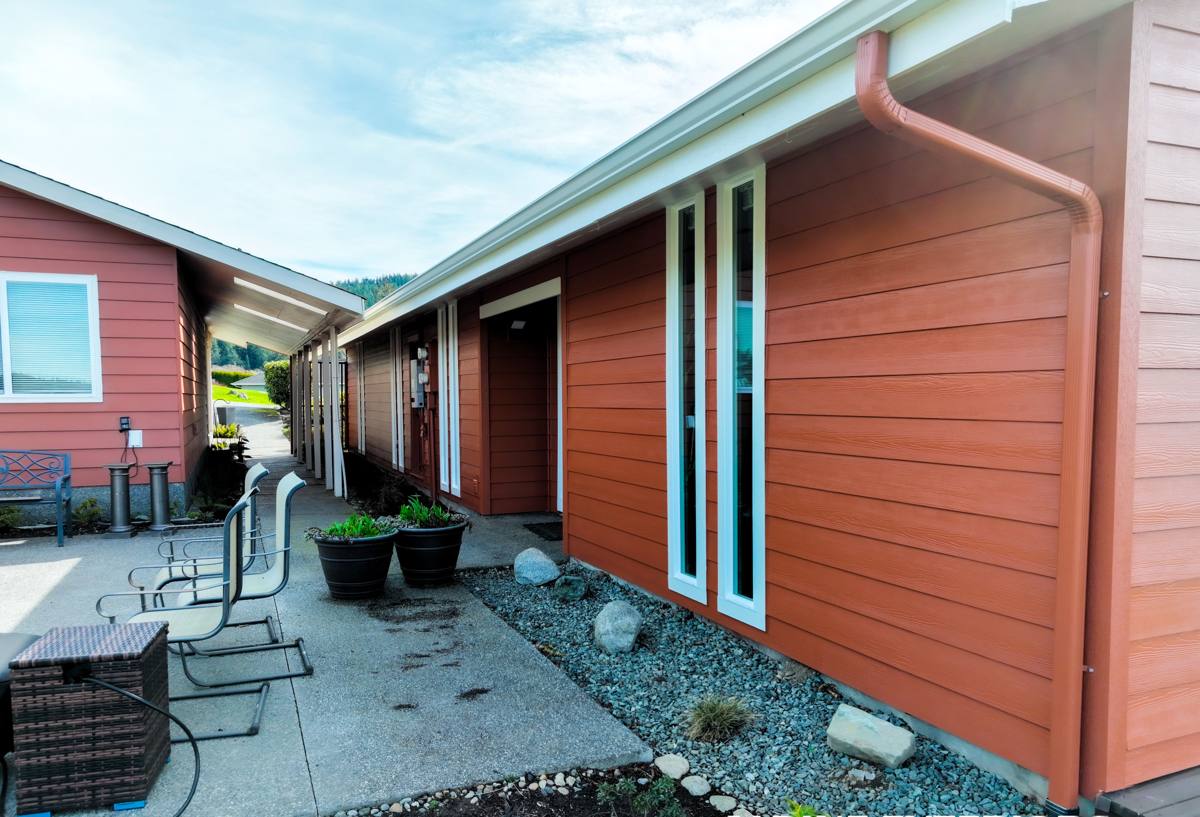
Signs Your Siding Needs Repair, Not a Full Replacement
Most siding problems we see in Whatcom County are localized — a section near a downspout, a corner that catches wind-driven rain, an area under a tree that never fully dries. Full replacement isn't always necessary. Here's what typically points to a repair rather than a tear-off:
- Isolated soft spots, buckling, or visible swelling in one or two boards, not spread across the whole elevation
- Cracking or splitting concentrated around fastener points or board ends
- Persistent moss or black streaking in a specific area tied to shade or poor drainage, without soft substrate underneath
- Gaps opening up at butt joints, corners, or trim returns that are letting water behind the siding
- Damage from a single event — a fallen branch, a ladder mishap, a piece that came loose in a windstorm
- Caulk failure and cracked sealant joints without wider material breakdown
If the damage is widespread, if there's rot in the sheathing behind multiple sections, or if the existing siding is a product with a track record of moisture problems (old primed wood, older LP OSB-based product, or failing vinyl), repair can turn into a losing game — you're chasing new problems every year instead of solving the underlying one. Part of an honest repair visit is telling you which situation you're actually in.
What a Correct Siding Repair Actually Involves
Diagnosing the Moisture Path, Not Just the Symptom
The visible damage — a stained board, a soft corner — is rarely the whole story. Water almost always got in somewhere upstream of where you see the damage: a failed caulk joint, a piece of flashing that was never installed correctly, a gap where two siding runs meet. A repair that just swaps the damaged board without finding and correcting that entry point will show the same failure again within a season or two, especially with the amount of driving rain Bellingham gets off the water.
Checking What's Behind the Siding
Before any new material goes on, the sheathing and weather-resistive barrier behind the damaged section need to be checked. If water has been getting behind the siding for a while, there can be soft sheathing, compromised house wrap, or rot that has to be addressed before new siding goes back up — patching over a wet wall assembly just traps the moisture and hides the problem.
Matching Material, Profile, and Finish
On a repair, the new section has to match the existing siding in exposure, profile, and color — otherwise you end up with an obvious patch instead of a repair. This is one of the trickier parts of repair work on homes with older or discontinued products, and it's a big part of why we only work with James Hardie: the HZ5 product line and factory ColorPlus finishes are consistent and available in a way that makes an honest, close match achievable, instead of guessing at a hardware-store paint match that will visibly fade differently within a year.
Correcting Flashing and Sealant, Not Just Cosmetics
Proper repair work re-flashes penetrations, corrects any laps that were installed backwards or too tight, and re-seals joints with the right sealant for the material and exposure — not just a bead of caulk over the old failure point. This is the difference between a repair that lasts and one that's cosmetic.
Repair vs. Replace: How We Help You Decide
| Factor | Favors Repair | Favors Replacement |
|---|---|---|
| Extent of damage | One or two isolated sections | Spread across multiple elevations |
| Sheathing condition | Dry, sound wood behind the siding | Soft or rotted sheathing in several areas |
| Underlying material | Sound James Hardie or comparable fiber cement | Older primed wood, degraded OSB-based product, or failing vinyl |
| Age of existing siding | Well within its expected service life | Near or past the point where matching new-to-old makes sense |
| Cause of damage | A single event (impact, storm damage) | Ongoing moisture intrusion or systemic installation flaws |
We'll walk the home with you and give you a straight answer on which column your situation falls into. There's no reason to sell a whole-home replacement when a section repair genuinely solves the problem, and there's no reason to keep patching a wall assembly that's telling you it's done.
Why Every Repair We Do Uses James Hardie Fiber Cement
We don't install or repair with vinyl, LP SmartSide, Cemplank, Allura, primed spruce, or cedar. That's a standard we hold on new installs and it carries straight through to repair work: when we open up a wall to fix damage, we're not going to close it back up with a product we don't stand behind.
Fiber cement from James Hardie doesn't absorb moisture into its core the way wood-based products can, and it's non-combustible, which matters in a region where wildfire smoke and fire risk have become a bigger part of the conversation even west of the Cascades. The HZ5 climate-engineered line is built for exactly the wet, marine-influenced conditions Whatcom County sees, and the ColorPlus factory finish holds its color under UV and salt exposure far better than a field-applied paint job — which matters a lot when you're trying to match a repair into existing siding years down the road. It also carries a strong transferable warranty when installed to spec, which is worth something on a home you may eventually sell.
When we repair a home that currently has a different siding product, we'll talk through honestly whether a Hardie patch is a reasonable match, or whether the smarter long-term move is transitioning that elevation — or eventually the whole home — to Hardie so you're not maintaining two different materials with two different failure patterns going forward.
Our Bellingham Repair Process
- On-site assessment. We inspect the damaged area and the surrounding siding, check for softness in the substrate, and look for the actual moisture entry point rather than just the visible symptom.
- Honest scope and pricing. You get a clear explanation of what's actually needed — repair or replacement — and what it involves, before any work starts.
- Opening the wall correctly. Damaged siding, trim, and any compromised weather barrier or sheathing are removed carefully to avoid spreading damage to sound material.
- Correcting the cause. Flashing, house wrap, and drainage details are fixed so the same failure doesn't happen again in the same spot.
- Installing matched James Hardie material. New material is fitted to match exposure and profile, fastened to manufacturer spec, and finished with correct joint treatment.
- Final check. We walk the repair with you so you can see exactly what was done and why.
Why Local Experience in Bellingham and Whatcom County Matters
A repair done by a crew that doesn't regularly work this stretch of coastline tends to treat every job like a generic siding fix. A crew that works Bellingham and the surrounding Whatcom County towns on a regular basis already knows which elevations catch the worst of the wind-driven rain, how fast moss re-establishes on shaded north walls, and where salt air tends to concentrate corrosion at fasteners and flashing. That familiarity shows up in the details — the flashing corrections, the sealant choices, the decision on whether a repair will actually hold or whether it's a stopgap. It also means a crew that's still reachable next year if something needs a look, not a name that only shows up for a single job.
Timing Repairs Around the Local Season
Whatcom County's wet season runs long, and moss growth tracks right alongside it. Repairs done during a stretch of drier weather cure and seal better, and give sealants and finishes time to set up properly before the next round of driving rain. We'll work with you to time the repair sensibly rather than rushing a patch into a wall during the wettest weeks of the year.
Keeping Repaired Siding From Failing Again
A correct repair should be close to a permanent fix, not a recurring maintenance item. A few things keep it that way:
- Keep gutters and downspouts clear so water isn't dumping directly onto siding or pooling at the base of a wall
- Trim back vegetation and tree cover where practical to cut down on the shaded, damp conditions that feed moss growth
- Rinse moss and organic buildup off siding periodically rather than letting it sit and hold moisture against the surface
- Have caulk and sealant joints checked every few years, since sealant fails well before the siding material does
- Address small issues — a lifted piece of trim, a cracked joint — while they're small, before they become an entry point for water
If you're seeing soft spots, staining, moss buildup, or gaps in your siding anywhere in the Bellingham or Blaine area, we're happy to come take an honest look. The estimate is free, there's no pressure to do more work than the home actually needs, and you'll get a straight answer on whether you're looking at a repair or something bigger.