 Blaine Siding
 Why Birch Bay Roofs Wear Out Faster Than Inland Homes
Birch Bay sits right on the water, and that location is a big part of what makes it a great place to live — and a hard place to keep a roof healthy. Salt-laden air off the bay works its way into metal fasteners, flashing, and vent components year-round, accelerating corrosion in ways that inland Whatcom County homes simply don't experience at the same rate. Add in the driving rain that comes with west-facing exposure and winter storms, and you've got wind-driven water finding every gap in flashing, every worn seal, and every lifted shingle edge.
Then there's moss. Northwest Washington's long, wet, mild winters are close to ideal growing conditions for moss and algae, and Birch Bay's tree cover and shade patterns make it worse on many lots. Moss doesn't just look bad — it holds moisture against the roof surface, works into shingle edges, and can lift material enough for wind and rain to get underneath. A roof here needs to be built and installed with all three of these factors in mind from day one, not treated the same as a roof going on a dry-climate home.
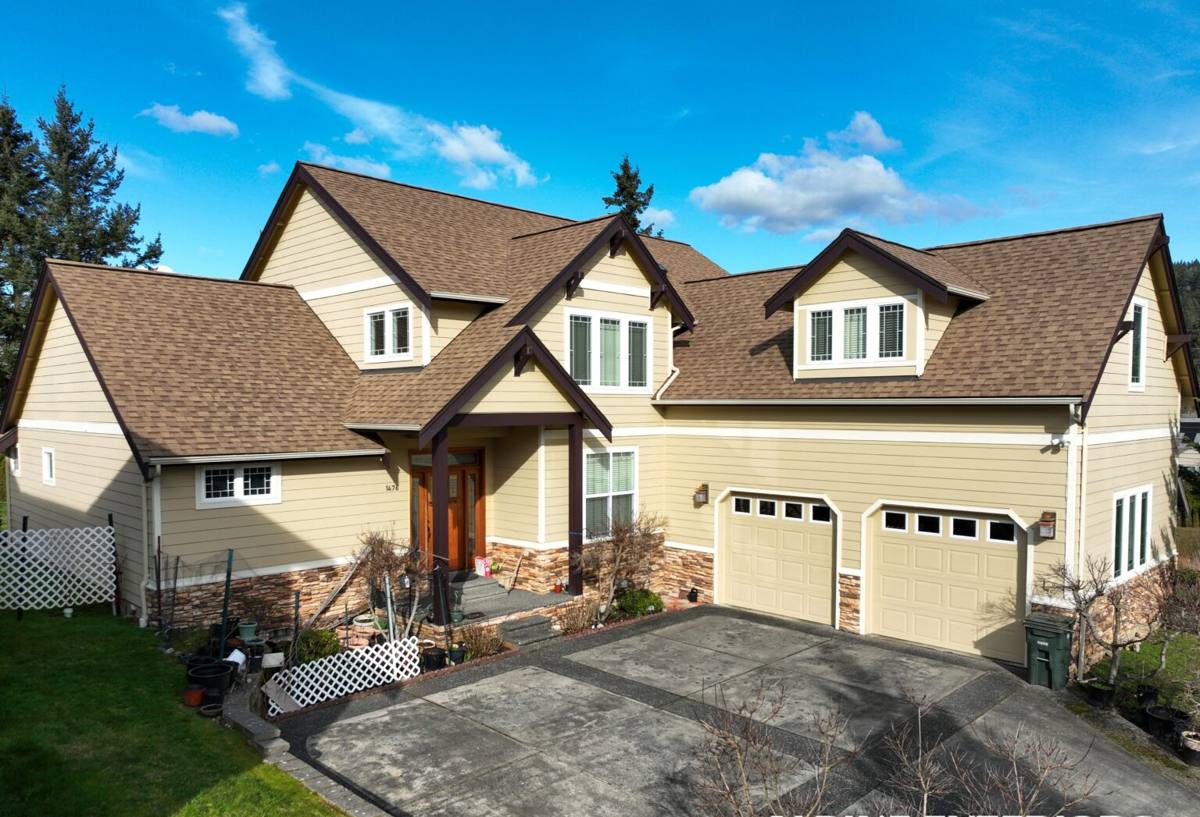
What a Correct New Roof Installation Actually Involves
A new roof is more than swapping old shingles for new ones. Done right, it's a system, and every layer matters for how well the roof holds up to coastal conditions.
Full Tear-Off, Not a Layover
We remove the existing roofing down to the deck on every install. Roofing over an old layer traps moisture that's already worked its way in, hides deck damage, and voids most manufacturer warranties. In a moisture-heavy area like Birch Bay, that trapped dampness is exactly what accelerates rot.
Deck Inspection and Repair
Once the old roofing is off, we check the decking for soft spots, delamination, and water staining — common where moss and standing moisture have been sitting against the roof for years. Any damaged sheathing gets replaced before anything new goes down. Skipping this step is one of the most common shortcuts in the industry, and it's the reason a "new roof" can start leaking again within a couple of years.
Underlayment Built for Wet Climates
We use synthetic or self-adhered underlayment suited to high-moisture coastal exposure, with extra ice-and-water shield membrane at eaves, valleys, and anywhere wind-driven rain is most likely to push water sideways under the shingle edge.
Flashing at Every Transition
Flashing around chimneys, skylights, sidewalls, and roof-to-wall transitions is where most leaks actually start — not in the open field of the roof. We install new flashing rather than reusing old, corroded pieces, since salt air is hard on metal flashing over time.
Choosing the Right Roofing Material for a Bay-Front Property
There's no single "best" roofing material for every home, but some perform noticeably better than others under Birch Bay's specific mix of salt exposure, rain, and moss pressure. The table below is a general comparison — your home's exposure, roof pitch, and budget all factor into the right call for your property.
| Material | Coastal/Salt Performance | Moss Resistance | Typical Lifespan |
|---|---|---|---|
| Architectural asphalt shingle | Good with proper fasteners and flashing | Moderate — improves with algae-resistant granules | 25–30 years |
| Standing seam metal | Very good with coastal-rated coatings | Strong — sheds moss more easily than shingle | 40–50+ years |
| Synthetic/composite shingle | Good, resists corrosion since it's not metal-based | Moderate to good depending on product | 30–50 years |
| Wood shake | Fair — high maintenance in wet, salty air | Poor without regular treatment | 20–30 years with upkeep |
We generally steer Birch Bay homeowners toward algae-resistant architectural shingles or coastal-rated metal, depending on the look they want and their long-term maintenance appetite. Wood shake can look great, but the upkeep it demands in this climate — regular cleaning and treatment to fight moss and moisture — is a real ongoing cost that's worth weighing honestly before committing.
Ventilation: The Part Homeowners Never See
Attic ventilation is one of the most overlooked parts of a roof system, and it matters more here than in drier climates. Without balanced intake and exhaust ventilation, moisture-laden air gets trapped in the attic, condenses on the underside of the deck, and creates the exact damp conditions that invite rot and, eventually, moss growth from the inside out.
- Intake ventilation at the eaves (vented soffit or edge vents)
- Exhaust ventilation at or near the ridge
- Correct balance between the two — too much exhaust without enough intake can actually pull moisture in
- Insulation baffles kept clear so airflow isn't blocked at the eaves
We evaluate and correct ventilation as part of every new roof install. It doesn't cost much relative to the roof itself, and it's one of the biggest factors in how long that roof actually lasts.
Our Installation Process
Homeowners deserve to know what's happening on their roof and when. Our process for a Birch Bay new roof install generally looks like this:
- On-site inspection and estimate — we walk the roof (or use safe alternative inspection methods when needed), check the attic, and give you an honest read on condition and options.
- Material selection — we walk through the trade-offs for your specific exposure, pitch, and budget rather than pushing one product.
- Scheduling around weather — Whatcom County's wet season means timing matters; we plan installs to minimize the roof being open to the elements.
- Tear-off and deck inspection — full removal, deck repair as needed, disposal handled by us.
- Underlayment, flashing, and ventilation work — the system layers that actually determine long-term performance.
- Final material installation — shingles, metal, or your chosen product, installed to manufacturer spec so warranties stay valid.
- Cleanup and walkthrough — magnetic sweep for debris, and a final walkthrough so you know what was done.
What Affects the Cost of a New Roof in Birch Bay
Every roof is priced based on its own specifics, but a few factors consistently move the number up or down. Being upfront about these helps you understand your estimate rather than just seeing a total.
| Cost Factor | Why It Matters |
|---|---|
| Roof size and pitch | Steeper roofs take longer and require more safety setup and material waste |
| Number of layers to remove | Multiple old layers mean more tear-off labor and disposal |
| Deck condition | Rotted or delaminated sheathing found during tear-off adds repair cost |
| Material choice | Metal and premium synthetic products cost more upfront than standard asphalt shingle |
| Roof complexity | Valleys, dormers, chimneys, and skylights all add flashing work and labor time |
| Access | Tree cover, tight lot lines, or waterfront access limitations can affect staging and disposal |
We don't quote a number without seeing the roof, but we'll always explain what's driving your price up or down so there are no surprises mid-project.
Signs Your Birch Bay Home May Need a New Roof
Coastal wear doesn't always show up as an obvious leak first. Some signs to watch for:
- Granules collecting in gutters or at downspouts
- Shingles that are curling, cupping, or losing their edge seal
- Moss buildup that returns quickly after cleaning
- Rusting or lifted flashing around chimneys, vents, or skylights
- Daylight visible through the attic roof deck
- Soft or spongy spots when walking the roof
- Interior ceiling stains, especially after wind-driven storms
- A roof already past 20–25 years old, regardless of visible damage
Any one of these on its own isn't necessarily an emergency, but a few together usually mean it's time for a real inspection rather than another round of patching.
Why Local Experience in Birch Bay Matters
A crew that's worked roofs throughout Blaine and the Birch Bay area already knows how prevailing wind direction, tree cover, and proximity to the water affect a given roof's exposure. That local knowledge shapes real decisions — which side of a roof needs extra ice-and-water membrane, how much moss pressure a shaded north slope will see, and which flashing details need reinforcing against salt corrosion. It also means we're not guessing at permitting requirements or typical roof styles in the area — we've already done the work here.
Whatcom County's coastal weather isn't going anywhere, and a roof installed without accounting for it tends to show problems years earlier than one that was. That's the standard we hold every install to, whether it's a straightforward gable roof or something with more complex geometry.
After Installation: Keeping a New Roof Performing
A well-installed roof still benefits from basic upkeep in this climate. We recommend keeping gutters clear so water isn't backing up under the roof edge, having moss growth addressed before it spreads rather than after, and scheduling a periodic visual check of flashing and vents — especially after major windstorms. None of this is intensive, but a little attention goes a long way toward getting the full lifespan out of the materials you invested in.
If your Birch Bay roof is showing its age or you're planning ahead rather than waiting for a leak, we're happy to take a look and walk you through your options honestly. Fill out the form below for a free, no-pressure estimate.