 Blaine Siding
 Birch Point's Siding Problem Isn't Like Most of Whatcom County
Birch Point sits close enough to the water that the air itself works against your siding, day in and day out. Homes a few miles inland in Blaine deal with rain and moss like everywhere else in this corner of Washington, but Birch Point gets an extra layer of stress: salt-laden air off the water that settles on exterior surfaces, accelerates corrosion on fasteners and trim metal, and breaks down paint film faster than it would on a house set back from the shoreline. Add the long wet season and the moss and algae growth that comes with it, and you've got a siding environment that punishes anything not built and installed specifically for it.
We install James Hardie fiber cement siding for homeowners in this area, and Birch Point is one of the neighborhoods where the difference between a correct installation and a rushed one shows up fastest — sometimes within a couple of wet seasons. This page covers what Birch Point homes actually need from their siding, what a correct fiber cement job looks like here, and why local experience matters as much as the product you choose.
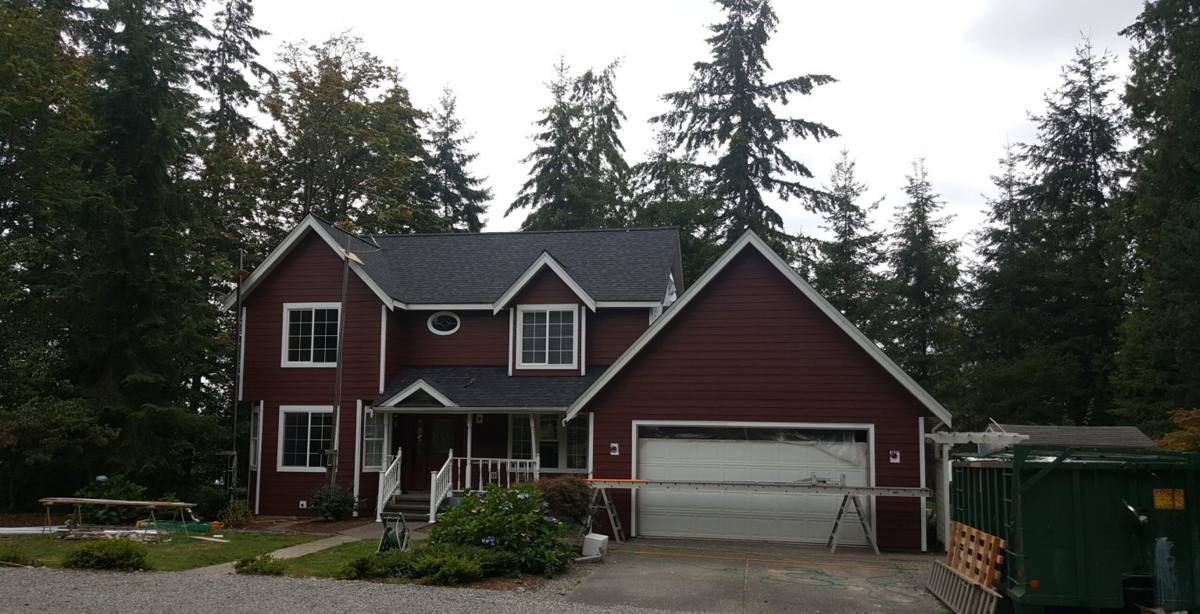
What Salt Air and Driving Rain Actually Do to Siding
Salt Air
Airborne salt doesn't just sit on a wall — it's hygroscopic, meaning it pulls moisture out of the air and holds it against the surface it lands on. On wood or engineered wood siding, that means the surface stays damp longer than it would a mile or two inland, which feeds rot and paint failure. On metal fasteners, flashing, and trim, salt accelerates corrosion. Fiber cement itself is not organic material, so it doesn't feed mold the way wood-based products can, but the fasteners, flashing, and caulking details around it still need to be chosen and installed with a corrosive coastal environment in mind.
Driving Rain
Blaine's weather pattern brings rain that doesn't just fall straight down — wind off the water pushes it sideways into wall assemblies, especially on west- and southwest-facing elevations. That means water-resistive barriers, flashing details, and siding overlaps matter more here than they would in a drier, calmer climate. A siding job that would hold up fine in a low-wind inland town can fail at the seams in a driving-rain coastal spot like Birch Point if the water management behind the siding isn't done right.
Moss and Algae
Long wet seasons mean long windows where north-facing walls and shaded areas under eaves or tree cover stay damp enough for moss and algae to take hold. This is mostly a surface and appearance issue on fiber cement — it doesn't rot the substrate the way it can on cedar — but it does mean the factory finish matters. A finish that resists staining and holds its color under constant damp exposure saves homeowners from re-painting or pressure-washing on a short cycle.
Why We Only Install James Hardie in This Climate
We don't install vinyl, LP SmartSide, primed spruce, cedar, or other fiber cement brands like Allura or Cemplank. That's not a marketing line — it's a standard we set because of what we've seen hold up in Whatcom County's coastal microclimates versus what doesn't.
- Non-combustible core: James Hardie fiber cement is cement, sand, and cellulose fiber — it doesn't burn, warp from heat, or provide fuel the way wood-based sidings can.
- ColorPlus factory finish: baked-on in a controlled environment, it resists the fading, chalking, and moisture-driven peeling that field-applied paint struggles with in a salt-air, high-humidity setting.
- Climate-engineered HZ product lines: Hardie manufactures different formulations for different climate zones. Homes here get the HZ5 line, engineered for wetter, harsher weather exposure rather than a one-size-fits-all product.
- Dimensional stability: fiber cement doesn't swell and shrink with moisture the way wood and some engineered wood products do, which matters when panels sit exposed to driving rain and salt humidity for months at a stretch.
- Warranty structure: a strong, transferable warranty backs the product when it's installed to Hardie's specifications — which is also why installation quality is not optional in a place like Birch Point.
We're upfront that other products get some things right — vinyl is cheap and low-maintenance in mild climates, LP SmartSide is easier to cut and handle on site, cedar looks the way a lot of homeowners want their house to look. But in a coastal wind-and-rain environment, those trade-offs (seam gaps and heat distortion in vinyl, moisture sensitivity at cut edges in engineered wood, ongoing sealing and maintenance in cedar) cost homeowners more over time than the upfront savings are worth. Fiber cement done right is the product we're willing to put our name behind here.
What "Correct Installation" Actually Means on a Birch Point Home
Fiber cement siding is only as good as the details behind and around it. In a high-exposure coastal spot, the installation details carry more weight than the product spec sheet.
Water Management Behind the Siding
A correctly installed weather-resistive barrier, properly lapped and taped, is what actually keeps driving rain out of the wall assembly — the siding itself is the first line of defense, not the only one. Rainscreen or drainage gap approaches, where appropriate for the wall assembly, give any moisture that does get behind the siding a path to drain and dry rather than sitting against the sheathing.
Fasteners and Flashing
In a salt-air environment, fastener choice matters. Corrosion-resistant fasteners rated for coastal exposure, along with properly installed flashing at windows, doors, and roof-to-wall intersections, are what keep small water intrusion points from becoming rot or staining problems down the line.
Clearances and Gaps
Hardie's install specifications call for specific clearances from grade, roof lines, decks, and other siding terminations, along with gaps at butt joints and openings that get properly caulked or capped — not tight-butted. Skipping these is one of the most common ways an otherwise good product fails early, especially where wind-driven rain is a regular occurrence.
Caulking and Sealant Selection
Not every exterior sealant holds up to constant damp-dry cycling and salt exposure. Using the right sealant at the right joints — and not over-relying on caulk to do a flashing detail's job — is part of what separates a job that looks fine at handoff from one that still looks fine in five years.
| Install Detail | Why It Matters More in Birch Point |
|---|---|
| Weather-resistive barrier & taping | Driving rain off the water pushes moisture into wall assemblies harder than calmer inland sites |
| Corrosion-resistant fasteners | Salt air accelerates standard fastener corrosion, risking staining and loosened panels |
| Proper clearances & joint gaps | Prevents trapped moisture against panel edges during long wet seasons |
| Flashing at penetrations | Wind-driven rain finds any shortcut at windows, doors, and roof lines first |
| ColorPlus factory finish | Resists fading and moisture staining better than field-painted alternatives in constant damp air |
Our Process for a Birch Point Fiber Cement Job
1. On-Site Assessment
We walk the exterior, check the condition of existing siding, sheathing, and trim, and look specifically at exposure — which elevations take the most wind-driven rain, where salt air and shade combine to create moss-prone zones, and where past water intrusion may already have caused damage that needs addressing before new siding goes up.
2. Scope and Product Selection
We spec the right Hardie panel or plank profile and HZ formulation for the home, along with trim, fastener, and flashing choices suited to a coastal Whatcom County exposure. This is also when we flag any sheathing or framing repairs needed underneath — installing new siding over compromised sheathing just locks a problem in.
3. Tear-Off and Prep
Old siding comes off, sheathing gets inspected and repaired as needed, and the weather-resistive barrier goes on correctly lapped and sealed before a single piece of new siding is hung.
4. Installation to Spec
Panels or planks go up following Hardie's installation guidelines exactly — proper clearances, fastener patterns, joint treatment, and flashing integration — not a generalized "siding install" approach borrowed from a different product.
5. Final Walkthrough
We review the finished job with the homeowner, checking caulking lines, trim details, and overall finish before calling it complete.
What Local Experience Actually Buys You
A crew that's already worked Birch Point knows which elevations on a given lot type take the worst of the wind-driven rain, how far moss creep tends to go on shaded north walls near the water, and what the salt exposure does to fasteners and trim over a few winters — because they've gone back and seen it firsthand. That's different from a crew installing fiber cement for the first time in a coastal setting and applying inland assumptions to a house that doesn't get inland weather. Whatcom County's coastline has its own microclimate patterns, and Birch Point's proximity to open water puts it toward the more demanding end of that range.
Maintenance Expectations After Installation
Fiber cement is genuinely lower-maintenance than wood-based sidings, but "lower-maintenance" doesn't mean "no maintenance," especially this close to the water.
- Rinse siding periodically to clear salt residue and organic buildup, particularly on walls facing the water or under tree cover.
- Inspect caulking at joints and penetrations annually — sealant is the first thing to wear in a constant damp-dry cycle.
- Keep gutters and downspouts clear so roof runoff isn't dumping extra water down wall sections.
- Trim back vegetation that keeps a wall section shaded and damp, which is what invites moss and algae growth.
- Watch for any hairline gaps opening up at trim or joints after the first year or two of seasonal movement, and have them resealed before they become entry points.
Cost Factors Homeowners Should Understand
We won't quote a number without seeing the house, but a few things consistently move the price on a Birch Point job:
| Factor | Why It Affects Cost |
|---|---|
| Existing siding removal & sheathing condition | Rot or water damage found underneath old siding needs repair before new siding goes on |
| Home size and wall complexity | More corners, penetrations, and trim details mean more labor and material for correct flashing and sealing |
| Panel vs. lap plank profile | Different Hardie profiles carry different material and labor costs |
| Trim and accessory scope | Fascia, soffit, and trim replacement alongside siding adds to the project but improves the whole water-management system |
| Site access and exposure | Wind exposure and site conditions near the water can affect scheduling and staging |
Is It Time to Replace Your Siding?
Some signs are worth acting on rather than watching:
- Visible warping, soft spots, or bubbling on current siding, especially on water-facing walls
- Paint that's peeling or chalking faster than a normal repaint cycle would explain
- Persistent moss or algae staining that comes back quickly after cleaning
- Gaps opening at seams, trim, or corners
- Rising heating bills that suggest wall assemblies are no longer sealing properly
If your Birch Point home is showing any of these, it's worth having someone look at what's happening behind the siding, not just the surface.
If you're weighing a siding project for your Birch Point home, we're happy to take a look and give you a straightforward, no-pressure estimate — no obligation, just an honest read on what your house needs.