 Blaine Siding
 Why Birch Point's Shoreline Location Changes the Siding Equation
Birch Point sits close enough to the water that homes there deal with a different set of stresses than a house a few miles inland in Blaine. Wind coming off the water carries salt, and that salt lands on every exterior surface of a home — siding, trim, fasteners, window flashing. Add in the wind-driven rain that comes with a marine exposure, and you get moisture pushed sideways into joints and seams that would stay dry on a more sheltered lot. Then there's the shade and dampness that many Whatcom County properties hold onto for months at a time, which is exactly what moss and algae need to take hold.
None of this means a house on Birch Point is doomed to problems. It means the siding system and the installation details have to be chosen with that exposure in mind, not treated the same as a generic re-side job. That's the whole focus of this page: what a Birch Point home actually needs from its siding, and what it takes to get that right.
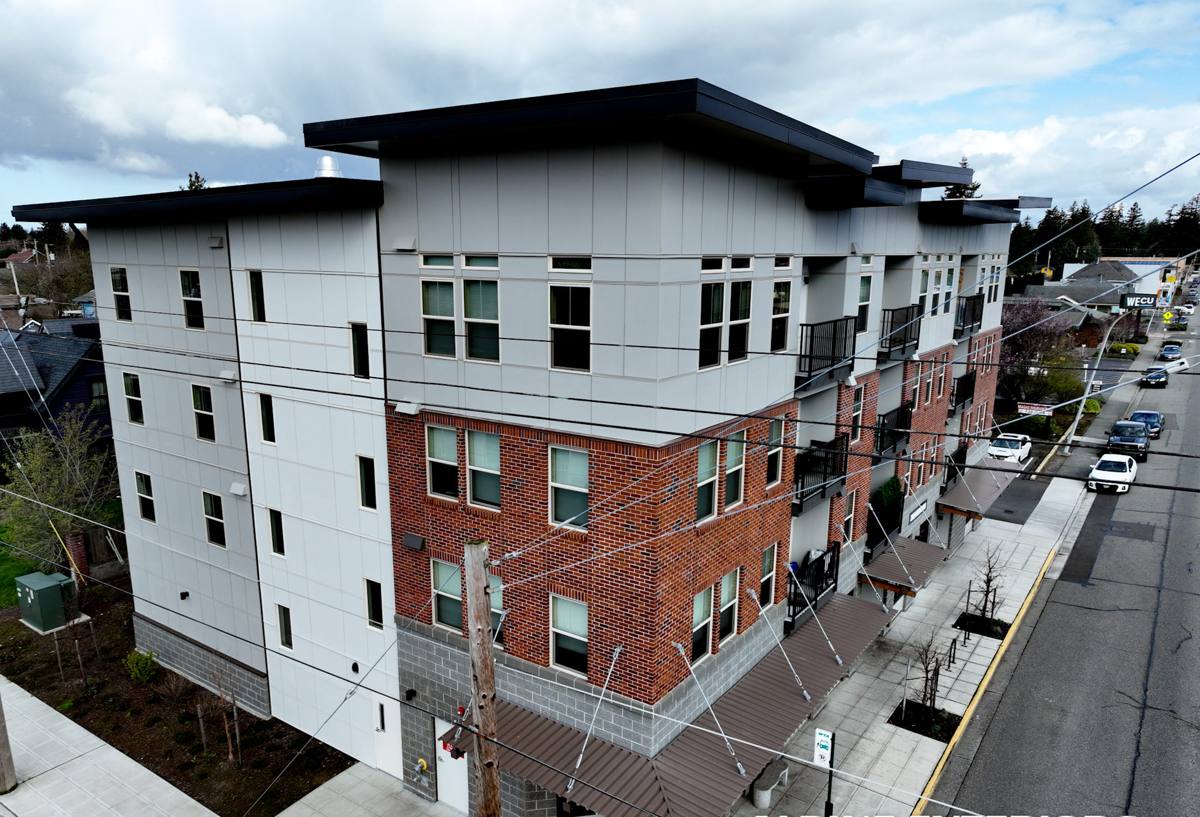
What Salt Air and Driving Rain Actually Do Over Time
These aren't abstract concerns — they show up in predictable ways on homes near the water:
- Corrosion on fasteners and trim hardware — cheap or improperly rated fasteners can start rusting years before the siding itself shows wear, and rust stains bleed down the face of the wall.
- Paint and caulk failure — salt-laden, damp air breaks down standard field-applied paint and caulking faster than it would inland, which is part of why factory-cured finishes matter more here.
- Moisture intrusion at joints — wind-driven rain doesn't just fall straight down, it gets pushed under laps, around trim, and into any gap that wasn't flashed correctly.
- Moss and algae growth — shaded, north-facing, or tree-covered walls stay damp long enough for moss to establish, especially through the long wet season Whatcom County sees every year.
A siding product and installation that doesn't account for these four things will look fine for a year or two and then start showing its weaknesses — which is usually right around the time a homeowner is settling in and not expecting to think about their siding again.
Why We Only Install James Hardie in Birch Point
We don't install vinyl, LP SmartSide, Cemplank, Allura, primed spruce, or cedar. That's a deliberate standard, not a limitation of what we're capable of doing — and it matters more, not less, in an exposure like Birch Point's.
Vinyl and Salt Air
Vinyl siding is inexpensive and low-maintenance in a lot of settings, but it's a thin, flexible material that expands and contracts a great deal with temperature swings, and its seams and J-channels rely on lap-and-lock joints rather than a sealed, factory-finished surface. In a salt-air, wind-driven-rain environment, those joints are exactly where moisture wants to get in, and vinyl doesn't hold color or rigidity the way a fiber cement panel does over a couple of decades near the water.
Engineered Wood and Moisture
Products like LP SmartSide use a wood-strand core with a resin coating. That coating does real work protecting the wood, but any wood-based siding depends on that coating and the installation detailing staying perfect for the life of the product — because once moisture gets past the surface, the core is wood, and wood in a consistently damp marine climate doesn't forgive mistakes the way a cement-based product does.
Cedar and Ongoing Maintenance
Cedar looks great and plenty of homeowners love it, but it's a natural material that needs re-staining or re-sealing on a recurring schedule to keep performing, and in a damp, shaded, salt-exposed spot that maintenance window gets shorter, not longer. That's an ongoing cost and ongoing labor most homeowners don't want to sign up for indefinitely.
James Hardie fiber cement is non-combustible, dimensionally stable, and doesn't have an organic core for moisture to feed on. Combined with a factory-applied finish, it's simply the product we're willing to stand behind on a home that's going to spend decades facing this stretch of coast.
The James Hardie Product Lines That Fit This Climate
HZ5 — Engineered for This Climate Zone
James Hardie manufactures its siding in different HZ (Hardie Zone) formulations matched to regional climate conditions, and the Pacific Northwest falls into the HZ5 zone — engineered with wet-climate performance in mind. That's not a marketing detail; it affects how the product is formulated to handle sustained moisture exposure, which is precisely the condition Birch Point deals with for a good part of the year.
ColorPlus Factory Finish
Most Birch Point installs make sense with James Hardie's ColorPlus finish — color baked on in a controlled factory environment rather than applied on-site. That finish is more consistent and more resistant to fading, chipping, and salt-air degradation than field-applied paint, and it significantly extends the time before a homeowner has to think about repainting. Near the water, where field-applied paint jobs tend to fail earlier, that's a meaningful practical advantage, not just a convenience.
HardiePlank vs. HardiePanel
HardiePlank lap siding is the traditional horizontal look most homeowners picture, and it performs well across most of Birch Point. HardiePanel (vertical) siding is sometimes the better fit on accent walls, gable ends, or exposures that take the brunt of wind-driven rain, since fewer horizontal laps means fewer potential water-entry points on the most exposed faces of a home. We'll walk through which makes sense wall by wall rather than defaulting to one product for the whole house.
What a Correct Installation Involves Here
The product is only half the equation. In a marine exposure like Birch Point, installation detailing is where jobs actually succeed or fail.
Rainscreen / Drainage Gap
We install with a drainage gap (rainscreen) behind the siding wherever conditions call for it, so any moisture that does get past the siding face has somewhere to drain and dry instead of sitting against the wall sheathing. That gap matters more on a wind-driven-rain site than on a sheltered inland lot.
Flashing and Water Management
Windows, doors, and any wall penetration need flashing detailed to shed water outward, not into the wall cavity. This is the single most common place we see older siding jobs fail — not the siding material itself, but a missed or undersized flashing detail that let water in for years before anyone noticed.
Fastener Selection
We use fasteners rated for the exposure, not whatever's cheapest on the shelf. In a salt-air environment, the wrong fastener corrodes and stains the face of the siding long before the siding itself would need attention.
Joint and Trim Detailing
Butt joints, corners, and trim transitions get sealed and detailed to manufacturer spec — caulked and flashed, not just butted together and painted over.
Our Process, From Estimate to Finished Job
- On-site walkthrough — we look at your home's specific exposure, existing siding condition, and any moisture or moss issues already visible.
- Written estimate — clear scope, product selection by wall/elevation where it matters, and a straightforward price.
- Tear-off and inspection — once old siding comes off, we check the sheathing and water-resistive barrier underneath for hidden damage before anything new goes on.
- Weather barrier and drainage plane — corrected or replaced as needed, with rainscreen furring where the wall assembly calls for it.
- Installation — James Hardie product installed to manufacturer specification, with flashing, fasteners, and joint detailing matched to a marine exposure.
- Final walkthrough — we go over the finished work with you before calling the job done.
Cost Factors for a Birch Point Siding Project
Every home is different, but these are the variables that most often move a Birch Point quote up or down:
| Factor | Typical Impact | Why |
|---|---|---|
| Existing siding removal | Medium–High | Multiple layers or damaged sheathing found underneath add labor |
| Wind/water exposure by elevation | Medium | Exposed walls may need HardiePanel, extra flashing, or rainscreen detailing |
| Home size and wall complexity | High | More corners, gables, and trim transitions mean more detail work |
| ColorPlus vs. field-painted finish | Low–Medium | Factory finish costs more upfront but reduces repainting later |
| Site access for waterfront lots | Low–Medium | Staging and material handling can be tighter on some shoreline properties |
We'll walk through which of these apply to your specific home during the estimate rather than quoting off a generic square-footage number.
Why Hiring a Crew That Already Works Birch Point Matters
A contractor who regularly works this part of Whatcom County already knows what a Birch Point exposure does to a wall assembly, has a feel for how the weather windows here affect scheduling, and isn't guessing at flashing and drainage details for the first time on your house. That familiarity shows up in fewer surprises during tear-off, fewer callbacks after the job, and a finished install that's actually built for the conditions it has to survive — not just a standard install dropped onto a non-standard site.
A Quick Checklist Before You Start a Siding Project Here
- Ask what fastener type and rating will be used, not just what siding brand
- Confirm whether a rainscreen/drainage gap is included where your home's exposure calls for it
- Get flashing details in writing for windows, doors, and penetrations
- Ask whether ColorPlus factory finish or field-applied paint is being quoted, and why
- Have any existing moss, staining, or moisture spots pointed out and addressed before new siding goes on, not covered up
If you're weighing a siding project on a Birch Point home, we're happy to take a look and give you a straightforward, no-pressure estimate — just fill out the form below.