 Blaine Siding
 Decks in Blaine Harbor Take a Different Kind of Beating
A deck built two miles inland can go a decade without a real problem. A deck sitting in Blaine Harbor, exposed to open water and prevailing marine wind, works harder every single day. Salt-laden air settles on every metal fastener, driving rain gets pushed sideways into ledger boards and railing posts, and the long, damp moss season that defines this part of Whatcom County keeps wood surfaces wet for weeks at a time. None of that means a deck here can't last — it means it has to be built correctly for this specific environment, not just built to code minimums for a drier part of the state.
This page covers what deck replacement actually looks like for a home in Blaine Harbor: why decks fail faster here, what a correct rebuild involves, how we approach the job, and what it takes to keep a new deck performing once it's done.
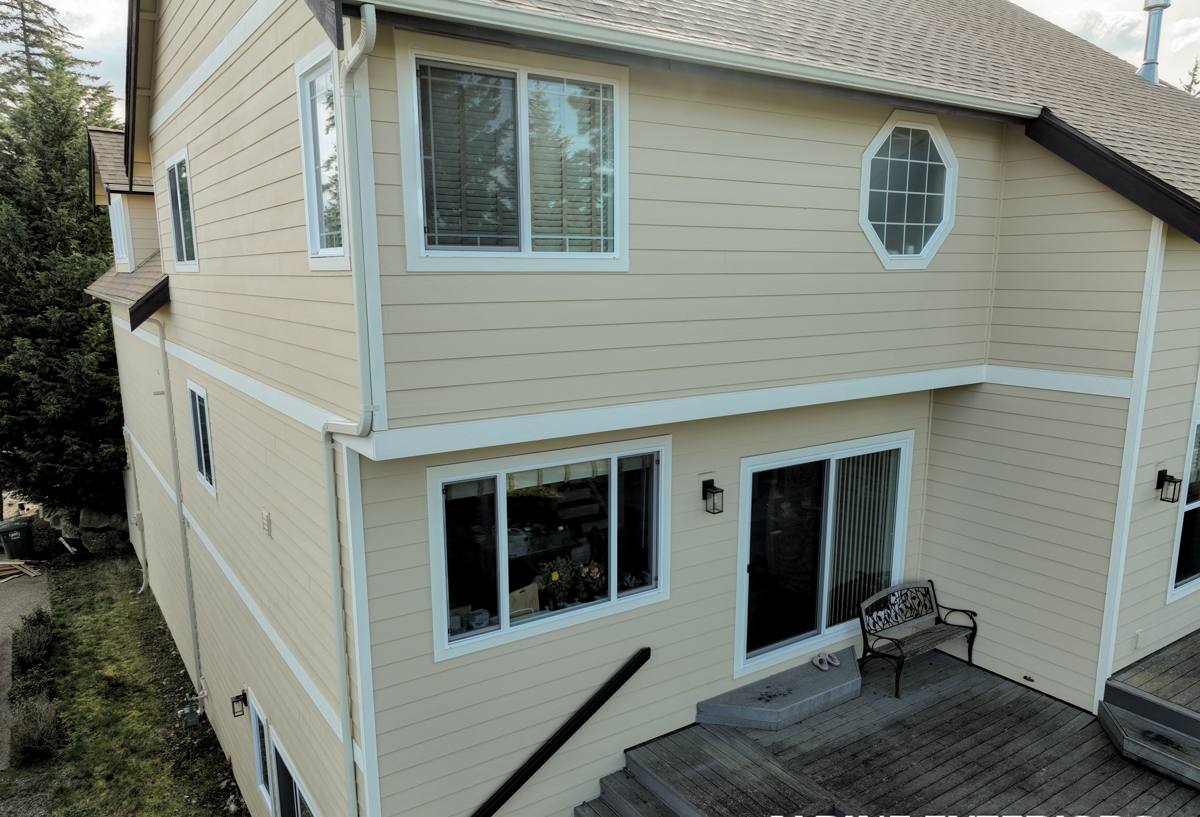
Why Decks Near the Harbor Wear Out Faster
Salt Air and Metal Fasteners
Airborne salt doesn't need direct wave spray to do damage — it travels on the wind and settles on every exposed surface, including under the decking where you can't see it. Standard interior-grade screws, nails, and joist hardware corrode from the inside out. You'll often see it first as rust streaking down the face of a fascia board or a joist hanger that's gone soft and flaky at the edges, long before the wood itself looks bad.
Driving Rain and Moisture Intrusion
Wind off the water pushes rain at angles that flat, inland weather doesn't produce. That means water finds its way behind rim joists, under poorly flashed ledger boards, and into end-grain cuts that weren't sealed. Once moisture gets trapped between framing members, it doesn't dry out quickly in this climate — it sits there, and that's where rot starts.
Moss, Algae, and Slick Surfaces
Whatcom County's moss season runs long, and a deck in a shaded or harbor-side location can stay damp for most of the fall, winter, and spring. Moss and algae don't just look bad — they hold moisture against the decking surface and make stairs and walking areas genuinely slippery, which is a safety issue as much as a maintenance one.
Repair or Replace? Signs to Look For
Not every aging deck needs a full teardown. But there's a point where patching individual boards stops being a repair and starts being a way to delay an inevitable, more expensive job. Look for these signs before deciding which path makes sense:
- Soft or spongy decking boards, especially near the ledger or around post bases
- Rust streaks bleeding out from screw heads or joist hangers
- Gaps opening up where the ledger board meets the house
- Railing posts that flex or wobble when you lean on them
- Persistent moss or algae that comes back within weeks of cleaning
- Visible daylight or soft wood where support posts meet footings
- A deck more than 20-25 years old that has never had the substructure inspected
If the framing underneath is sound and it's just surface boards showing wear, a resurfacing or partial repair can make sense. Once the ledger, joists, or posts are compromised, replacement is the honest recommendation — patching structural problems just moves the failure point somewhere else.
What a Correct Deck Replacement Actually Involves
Ledger Board and Flashing
The ledger board — where the deck attaches to the house — is the single most common failure point on any deck, and it's even less forgiving in a driving-rain environment. A correct replacement uses proper flashing that directs water away from the house wall rather than letting it wick behind the ledger, plus fasteners rated for the exposure rather than whatever was on hand.
Framing and Footings
Joists, beams, and posts get sized to current code for the actual span and load, not just matched to what was there before. Footings get checked for frost depth and bearing, since a deck that was adequate when it was built decades ago may not meet what's required for a replacement permit today.
Fasteners and Hardware
This is where a lot of coastal deck failures start and where cutting corners shows up fastest. We use stainless steel or hot-dip galvanized fasteners and connectors rated for exterior and coastal exposure, not the standard-duty hardware that's fine sixty miles inland but corrodes visibly within a few seasons near the water.
Decking Surface
Whether you go with wood or a manufactured decking product, the boards themselves need proper gapping for drainage and airflow, hidden or coated fasteners where the product calls for it, and end cuts sealed before installation — not after the fact.
Choosing a Decking Material for a Harbor-Adjacent Lot
There's no single "best" decking material — there's a best fit for how much maintenance you want to take on and how long you want the surface to last without attention. Here's an honest comparison for a salt-air, high-moisture setting like Blaine Harbor:
| Material | Moisture & Salt Resistance | Maintenance | Typical Lifespan Here | Upfront Cost |
|---|---|---|---|---|
| Pressure-treated lumber | Good if sealed and re-sealed on schedule | Higher — needs regular cleaning and re-sealing | 10-15 years with upkeep | Lowest |
| Cedar | Naturally decay-resistant but still needs sealing near saltwater | Moderate to high | 12-18 years with upkeep | Moderate |
| Composite decking | Very good — doesn't absorb moisture like wood | Low — occasional washing | 20-30 years | Higher |
| PVC/capped polymer | Excellent — fully moisture-sealed material | Lowest | 25+ years | Highest |
We'll walk you through the real trade-offs for your situation rather than push whatever has the best margin. A well-maintained cedar deck can look great for years; a composite or PVC deck makes sense if you'd rather not think about re-sealing every couple of seasons in a climate that doesn't give wood much time to dry out between rain events.
Our Deck Replacement Process
- On-site assessment — we inspect the existing ledger, framing, posts, and footings, not just the visible decking, and tell you honestly what's failing and what's still sound.
- Design and permitting — we confirm what the local permitting process requires for your project and handle the paperwork so you're not left figuring it out.
- Demolition — the old deck comes out cleanly, with attention to protecting siding, landscaping, and anything below the deck.
- Framing — new ledger flashing, joists, beams, and footings go in to current code, sized for the actual deck you're building.
- Decking and railing installation — boards and rail systems go in with proper spacing, fastening, and finish work.
- Final walkthrough — we go over the finished deck with you, including what maintenance it will need and on what schedule.
Railings, Stairs, and Code Requirements
Guard height, baluster spacing, and stair rail requirements aren't optional details — they're safety code, and they matter even more on a deck that's regularly wet, windy, and used by people carrying gear down to the water. We build railings and stairs to current code specifications as part of every replacement, not as an upsell, and we make sure post attachment is solid enough to handle real lateral load, not just look sturdy.
Maintaining a New Deck in a Salt-Air, Moss-Prone Climate
A correctly built deck still needs some seasonal attention in this environment. This is the realistic maintenance rhythm that keeps a Blaine Harbor deck performing for its full lifespan:
- Sweep debris and standing organic matter off the surface regularly, especially in fall
- Rinse salt residue off decking and railings a few times a year, particularly after storms
- Check and clear gaps between boards so water and debris don't build up
- Inspect fasteners and hardware annually for early rust or corrosion
- Treat visible moss promptly rather than letting it establish and spread
- Re-seal wood decking on the schedule the product calls for — don't stretch it out
- Have the substructure checked every few years, not just the surface boards
Why Local Experience in Blaine Harbor Matters
A contractor who mostly works drier, inland jobs will spec a deck the same way regardless of where it sits. A crew that regularly works Blaine Harbor knows which fastener grades actually hold up here, which orientations catch the worst of the wind-driven rain, and how fast moss re-establishes on a shaded, harbor-facing deck versus one that gets more sun. That local pattern recognition is the difference between a deck that needs attention again in five years and one that goes the distance. We also know the permitting expectations for decks in this part of Whatcom County, so there are no surprises partway through the job.
If your deck is showing its age or you're planning ahead for one that's clearly past its structural life, we're happy to take a look and give you a straight, no-pressure assessment. Fill out the form below for a free estimate on your Blaine Harbor deck replacement.