 Blaine Siding
 New Construction Windows Built for Blaine Harbor's Weather
Blaine Harbor sits close enough to Semiahmoo Bay and the open water of the Strait that salt-laden air, wind-driven rain, and long stretches of damp, shaded weather are just part of owning a home here. When you're framing a new house or a major addition in this part of Whatcom County, the windows you choose and how they're installed the first time matter more than almost any other exterior decision. Get it right during new construction and you avoid the leaks, fogged glass, and rotted trim that show up five or ten years later. Get it wrong, and the drywall, insulation, and framing around every opening pays the price.
This page is about one job done one way in one place: new-construction window installation for Blaine Harbor homes, not a retrofit or a repair. New construction gives us access to the wall assembly before it's closed up, which is the best chance we'll ever get to build a window opening that actually holds up to this coastline.
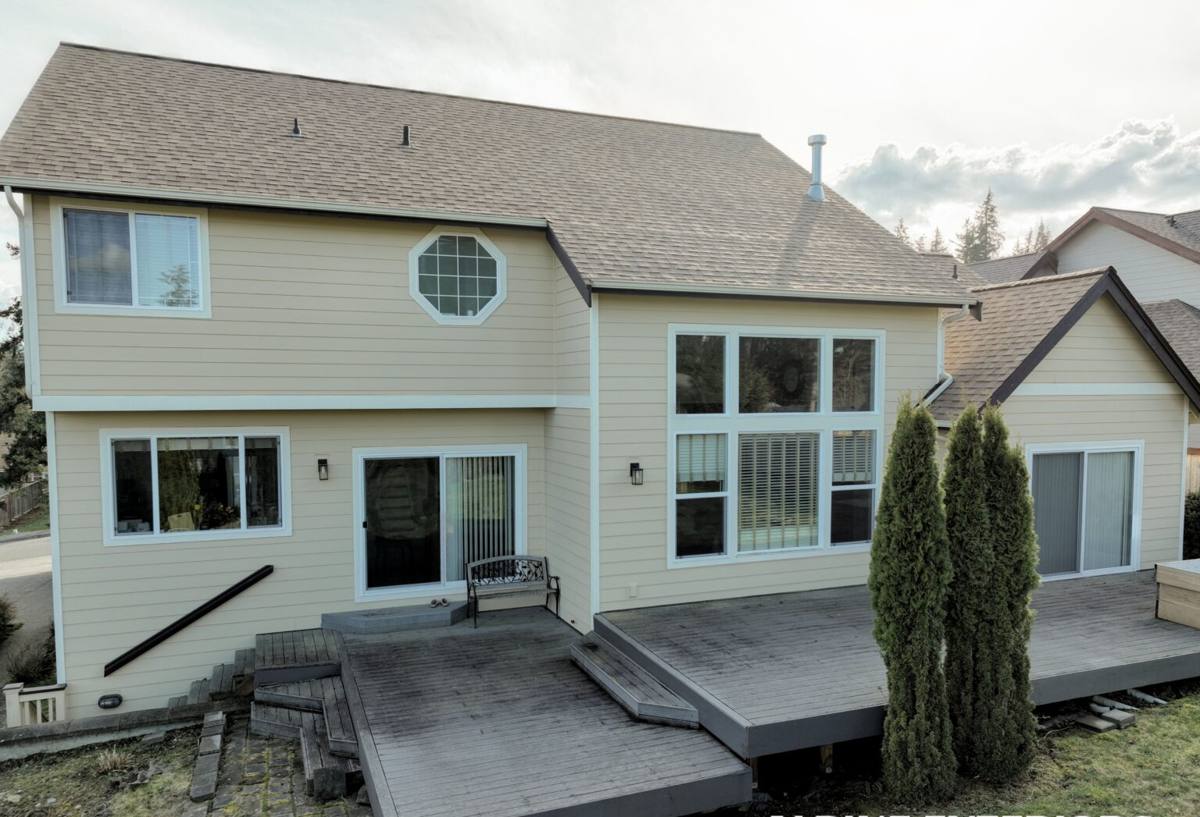
What Blaine Harbor's Climate Actually Does to Windows
Three things drive almost every window failure we see in this stretch of Whatcom County, and they compound each other:
Salt air
Airborne salt from the bay accelerates corrosion on hardware, screens, and unprotected metal fasteners. It also breaks down some sealants and finishes faster than manufacturers' standard warranties assume, which is why hardware and cladding choice matters more here than it would twenty miles inland.
Driving rain
Storms off the water don't just fall straight down — wind pushes rain sideways into wall assemblies and window openings. A window that would stay dry in a calm rain can take on water here if the flashing detail isn't built to shed wind-driven moisture, not just gravity-fed runoff.
Long moss and moisture season
Blaine's damp, mild, shaded winters mean surfaces stay wet longer than they would in a drier climate, and moss and algae get a long runway to establish themselves on sills, trim, and any spot where water sits instead of draining. Anywhere water can pool against a window frame becomes a spot where moss gets a foothold and wood trim starts to soften.
None of this means Blaine Harbor is a hard place to build — it means the window opening has to be detailed correctly the first time, because the climate won't forgive shortcuts the way a drier region might.
New Construction vs. Replacement: Why the Approach Is Different
We treat new-construction window work differently from a retrofit replacement, because the opportunities and constraints aren't the same.
| Factor | New Construction | Replacement (existing home) |
|---|---|---|
| Access to rough opening | Full access before siding, wrap, and trim go on | Limited — working around existing finishes |
| Flashing method | Full flanged window, integrated with house wrap and flashing tape in sequence | Often insert-style, relying on existing flashing |
| Sill pan option | Sloped sill pan flashing can be built in from scratch | Harder to add without removing siding |
| Best defense against wind-driven rain | Layered, sequenced flashing system | Sealant-dependent in many cases |
| Long-term maintenance burden | Lower, if done correctly the first time | Depends heavily on original install quality |
New construction is genuinely the best-case scenario for window durability in a coastal climate like Blaine Harbor's — but only if the installer actually uses that access correctly instead of treating it like a quick nail-and-caulk job.
What a Correct Installation Actually Involves
A window opening is a system, not a single product. In Blaine Harbor, we build every new-construction opening in this order:
- Rough opening check. Confirm the opening is square, level, and sized correctly before the window ever shows up on site.
- Sloped sill pan flashing. A back-dammed, sloped sill pan directs any water that gets past the window itself back to the exterior instead of into the wall cavity — this is the single most important detail for driving-rain climates.
- Window placement and shimming. Set plumb, level, and square, then shimmed at the manufacturer's specified points so the frame isn't stressed or bowed.
- Flange integration with house wrap. Flashing tape and house wrap are layered shingle-style — each layer overlapping the one below it — so water is shed downward and outward at every seam, never trapped behind a layer.
- Head flashing. A drip cap or head flashing above the window kicks wind-driven rain away from the top seam, which is the seam under the most pressure in a storm blowing off the water.
- Insulation and air sealing at the jambs. Low-expansion foam or backer rod and sealant fills the gap between frame and rough opening without bowing the frame — a poorly insulated gap is both an energy loss and a condensation risk.
- Exterior trim and final sealant. Trim goes on last, with sealant joints placed and sized to move with the building without failing prematurely in salt air.
Skip or shortcut any one of these steps and the window itself doesn't matter — water will find the gap.
Choosing Materials and Glass for a Salt-Air Coastline
Frame material
Vinyl, fiberglass, and clad-wood windows all have a place, but they behave differently near saltwater air. Vinyl holds up well against corrosion since there's no exposed metal to attack, and it's the most budget-friendly option for a full new build. Fiberglass costs more but resists expansion and contraction better across Blaine's swing between damp winters and warmer summers, which keeps seals tighter for longer. Wood-clad windows can look excellent, but the exposed wood interior needs consistent upkeep in a climate this damp — we're upfront with clients about that maintenance commitment rather than oversell a look that needs more attention than most new-construction budgets plan for.
Hardware and fasteners
Stainless steel or coated corrosion-resistant fasteners and hinges matter more in Blaine Harbor than they would inland — standard-grade hardware can start showing surface corrosion within a few years of salt exposure.
Glass package
Double-pane, low-E glass with argon fill is the practical standard for new construction here — it manages heat loss through our marine-influenced winters and cuts down on condensation on the interior pane, which is a common complaint in cold, damp climates when glass packages are undersized.
Cost Factors for New-Construction Window Packages
Every new build is different, so we won't quote a number without seeing the plans, but these are the variables that actually move the price:
| Factor | Why it affects cost |
|---|---|
| Number and size of openings | Larger and more numerous windows mean more material and labor |
| Frame material | Vinyl is the most economical; fiberglass and clad-wood cost more upfront |
| Glass package upgrades | Triple-pane or upgraded Low-E coatings add cost but improve performance |
| Wall height and access | Second-story or hard-to-reach openings take more time to flash correctly |
| Custom shapes or sizes | Non-standard openings require special-order units and more careful fitting |
| Exterior trim style | Custom trim profiles add labor beyond stock trim packages |
Our Process for Blaine Harbor New Builds
We coordinate with the builder or general contractor's schedule so windows go in at the right point in the framing sequence — not too early, not after the wrap is already closed up around a gap. Our on-site process looks like this:
- Walk the plans and rough openings with the builder before windows are ordered, catching sizing issues early
- Verify window units on delivery against the order — right size, right glass package, no shipping damage
- Install sill pan flashing and check it's sloped correctly before the window goes in
- Set and shim each window plumb, level, and square
- Sequence flashing tape and house wrap in the correct shingle-lap order
- Install head flashing above every opening
- Air-seal and insulate jambs without over-compressing the frame
- Final walkthrough with the builder before siding closes up the wall
That last step matters — once siding goes on, the flashing details are hidden for the life of the house. We treat that walkthrough as the last real chance to catch a problem before it's buried.
Why Local Experience in Blaine Harbor Matters
A crew that mostly works inland doesn't always plan for wind-driven rain the way a Blaine Harbor build demands, and a crew that hasn't dealt with a long moss season may not think as carefully about drainage paths on sills and trim. Working this stretch of Whatcom County regularly means we've seen which details hold up through a winter of storms off the water and which ones don't — and we build every new-construction opening to the standard that's actually needed here, not a generic one.
If you're framing a new home or addition in Blaine Harbor and want windows installed the right way the first time, we're happy to walk the plans with you and give you a straightforward, no-pressure estimate. There's a form below — reach out and we'll set up a time to talk through your project.