 Blaine Siding
 Board & Batten Siding for Semiahmoo Homes
Semiahmoo sits right up against the water, which is exactly why board and batten siding shows up so often on homes here. The vertical lines read clean against the shoreline and tree line, it pairs well with the craftsman and modern coastal styles common in the area, and — when it's the right material installed the right way — it holds up to conditions that chew through lesser siding fast. This page is specifically about board and batten in Semiahmoo: what the local climate demands from it, how we build the assembly, and why the product and installer you choose matter more here than almost anywhere else in Whatcom County.
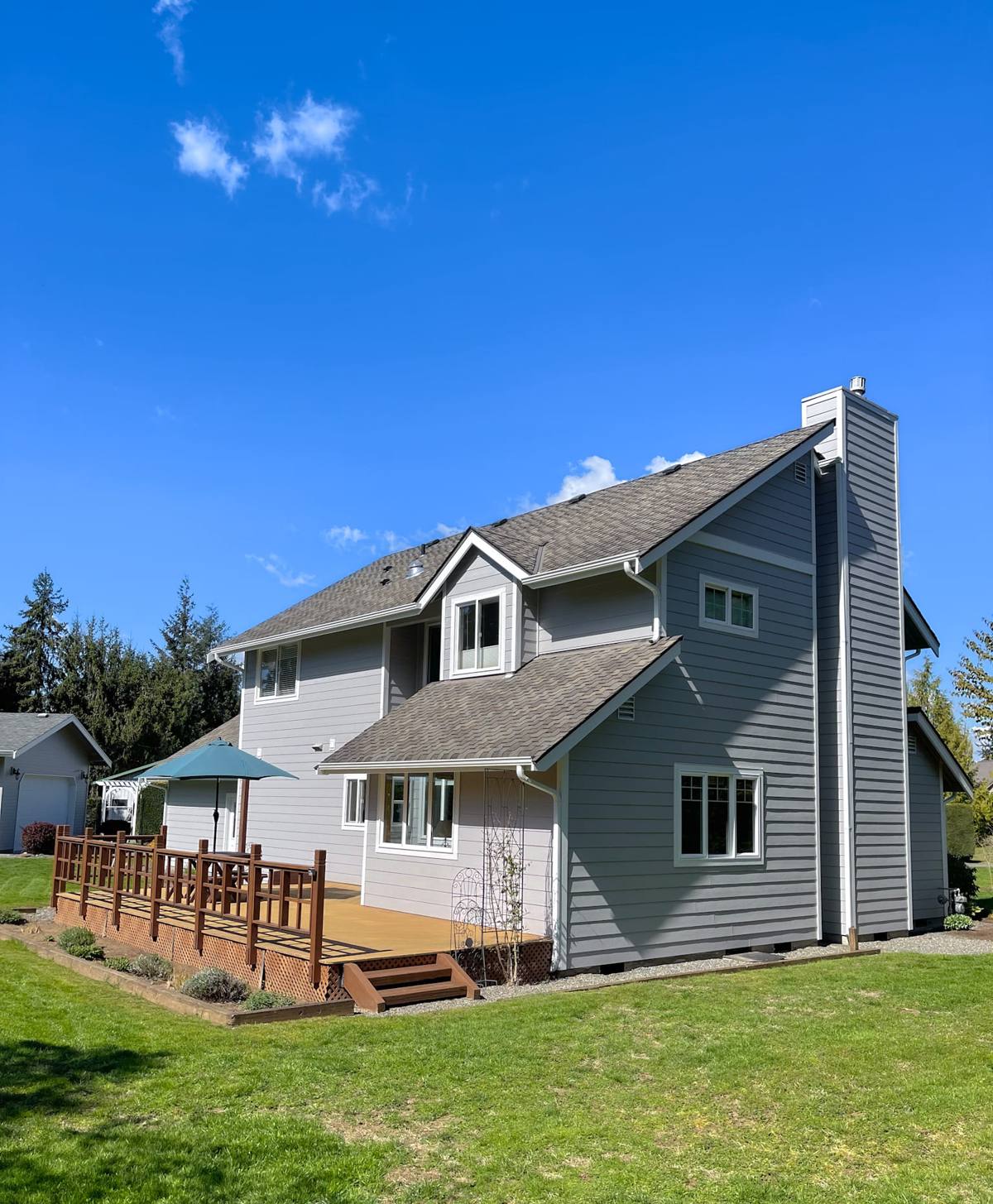
What Semiahmoo's Climate Does to Vertical Siding
Semiahmoo's exposure is a combination most siding products were never designed for: salt-laden air off the water, wind-driven rain that hits walls at an angle instead of falling straight down, and a moss season that can run the better part of the year in the Pacific Northwest. Each of these stresses a wall system differently, and board and batten — with its vertical seams and exposed battens — needs to be detailed correctly to handle all three at once.
Salt Air
Airborne salt accelerates corrosion on fasteners, flashing, and any metal trim, and it degrades some paint and coating systems faster than inland exposure would. Waterfront and near-waterfront homes need corrosion-resistant fastening and a factory finish that's actually engineered to hold color and film integrity in a marine-influenced environment — not just a coat of field paint.
Driving Rain
Wind off the strait doesn't let rain run straight down a wall — it drives it sideways and up under laps, seams, and trim edges. Vertical board and batten has more linear seam length per square foot than horizontal lap siding, which means more opportunities for water intrusion if the panel joints, battens, and flashing aren't detailed correctly. This is the single biggest factor separating a board and batten job that lasts decades from one that fails at the seams in five years.
Moss and Sustained Moisture
Long wet seasons keep exterior surfaces damp for extended stretches, which is exactly what moss, algae, and mildew need to take hold — especially on north-facing walls and anything shaded by mature trees. Siding that can't dry out between rain events stays wet longer, and organic growth follows. The material itself needs to resist moisture absorption, and the assembly behind it needs a way to drain and dry.
Why We Only Install James Hardie for Board & Batten
We don't install vinyl, LP SmartSide, cedar, or primed spruce board and batten, and Semiahmoo's exposure is a big part of why. Vinyl vertical siding can warp and its seams are a known weak point against wind-driven rain. Wood-based products — cedar and primed spruce — need consistent maintenance to keep moisture out of the substrate, and in a salt-air, high-moisture environment that maintenance window shrinks fast. Engineered wood products like LP SmartSide perform well in many climates but are still wood-based at the core, which means the same moisture-management sensitivity applies.
James Hardie fiber cement is non-combustible, doesn't absorb moisture the way wood-based products do, and comes factory-finished with ColorPlus Technology — a baked-on finish that's more consistent and more resistant to fading and chipping than field-applied paint, which matters when salt air is working against the coating year-round. Hardie's HZ5 product line is engineered specifically for climates like ours, with freeze-thaw and moisture-cycling performance built into the formulation. That's the whole reason we standardized on one manufacturer instead of offering several: we'd rather install one product correctly than install several products with trade-offs we'd have to talk homeowners around every time.
The Hardie Board & Batten Options
Board and batten with James Hardie isn't one single product — it's an assembly, and there's more than one way to build it depending on the look you want.
| Product | What It Is | Best For |
|---|---|---|
| HardiePanel Vertical Siding | Large-format fiber cement panels installed vertically, with HardieTrim battens fastened over the seams | Classic board and batten look, full elevations or accent walls |
| Artisan Vertical Siding | Hardie's premium collection with a smoother, more refined reveal and finish | Homeowners wanting a higher-end architectural finish |
| HardieTrim Boards | Fiber cement trim boards used as the "batten" element over panel seams and at corners/openings | Every board and batten job — this is what makes the pattern read correctly |
Panel width, batten spacing, and reveal all change the visual rhythm of the wall, and we walk through those choices with you before anything gets ordered — it's much easier to adjust on paper than after panels are cut.
What a Correct Installation Actually Involves
Board and batten looks simple from the street — vertical boards, thin strips covering the seams — but the part that determines whether it lasts is the part you can't see once it's finished.
Water-Resistive Barrier and Drainage Plane
Every installation starts with a code-compliant water-resistive barrier behind the siding. In a driving-rain environment like Semiahmoo's, we also build in a drainage gap so that any moisture that does get past the cladding has somewhere to go instead of sitting against the sheathing.
Flashing at Every Penetration
Windows, doors, hose bibs, light fixtures, deck ledgers — every penetration through the siding plane is a place water can get behind the wall if it isn't flashed correctly. This is the single most common source of failure we see on poorly installed vertical siding, board and batten included.
Panel Seams and Batten Placement
Panel joints need to land over framing, be properly gapped per manufacturer specification, and be covered by battens fastened in the correct pattern — not just for looks, but so the batten is actually doing its job of shedding water off the seam.
Fastening
Given the salt air, we use corrosion-resistant fasteners set to Hardie's specification — proper depth, proper spacing, proper substrate penetration. Overdriven or underdriven fasteners are a common cause of both cosmetic damage and water intrusion on fiber cement siding.
Caulking and Sealant
Sealant is a backup, not a primary water management strategy — but where it's called for, it needs to be a product rated for exterior, UV, and moisture exposure, applied at the joints Hardie's installation guide specifies.
Our Process for a Semiahmoo Board & Batten Job
- On-site assessment — we look at your wall's actual exposure: waterfront-facing, tree-shaded, wind corridor, existing moisture or moss damage.
- Design walkthrough — panel layout, batten spacing, color selection, and trim details reviewed with you before ordering.
- Removal and substrate check — old siding comes off and we inspect the sheathing underneath for rot or damage before anything new goes up.
- Water-resistive barrier and drainage plane installation — the part that determines long-term performance, done to spec every time.
- Panel and batten installation — fastened, flashed, and sealed to James Hardie's published installation requirements.
- Final walkthrough — we go over the finished job with you, seam by seam, before we call it done.
Cost Factors for Board & Batten in Semiahmoo
| Factor | Why It Matters Here |
|---|---|
| Wall exposure | Waterfront and wind-exposed walls need more attention to flashing and drainage detail, which affects labor time |
| Existing substrate condition | Rot or moisture damage found during removal has to be repaired before new siding goes on |
| Panel and batten configuration | Batten spacing and panel width affect material quantities and installation time |
| Color and finish | Factory ColorPlus finishes vs. field-painted options carry different upfront and long-term costs |
| Full elevation vs. accent application | Board and batten used as an accent (gables, entries) costs less than full-elevation coverage |
We give firm numbers after seeing the house — broad estimate ranges over the phone aren't useful when exposure and substrate condition vary this much house to house, even within the same neighborhood.
Living With Board & Batten in a Moss-Prone Climate
Correctly installed James Hardie board and batten is low-maintenance, but "low" isn't "none." A yearly rinse-down keeps organic growth from establishing on shaded or north-facing sections, and it's worth walking the exterior once a year to check for anything that looks off — a gap at a batten, a stained seam, growth concentrated in one spot. Caught early, these are small fixes. Left alone through another wet season, they can turn into substrate repair.
Signs Worth a Call
- Moss or algae concentrated at seams or battens rather than spread evenly
- Soft spots or discoloration around window and door trim
- Visible gaps where battens have pulled away from panels
- Peeling or bubbling at the factory finish
- Staining below fastener heads
- Water stains on interior walls near exterior corners
Why Local Experience in Semiahmoo Matters
A crew that regularly works Semiahmoo and the surrounding Blaine waterfront knows how differently a house facing the water performs compared to one a half mile inland — same town, different exposure, different detailing needs. We've seen what wind-driven rain and salt air actually do to siding installed without those factors accounted for, and we build every job to handle them from the start rather than treating this stretch of Whatcom County like anywhere else in the region.
If you're weighing board and batten for a home in Semiahmoo, we're happy to take a look and give you a straight, no-pressure estimate — just fill out the form below.