 Blaine Siding
 Why Decks in California Creek Wear Out Faster Than the Manual Says
Every deck material comes with a rated lifespan, and almost none of those numbers were tested a few miles from the Salish Sea. In California Creek, a deck sits under a combination that most manufacturers never designed for at once: salt-laden air blowing in off the water, long stretches of driving rain through the fall and winter, and a moss season that can run from October well into spring. None of these factors is dramatic on its own. Together, over ten or fifteen years, they're what turns a deck that "still looks fine" into one with soft joists, corroded fasteners, and a surface that's slick every morning.
Salt air accelerates corrosion in anything metal — nails, screws, joist hangers, post bases — long before the wood or composite decking around it shows obvious damage. Driving rain, especially the wind-driven rain common to this stretch of Whatcom County, gets pushed sideways into gaps and seams that a calmer climate would never test. And moss doesn't just look bad; it holds moisture against the deck surface and framing for months at a time, which is exactly the condition that rot and mildew need to take hold.
What This Means for a Replacement, Not Just a Repair
A repair patches the symptom. A replacement is the chance to actually correct for the local climate — better flashing, corrosion-resistant fasteners, proper drainage slope, and decking that handles moss and moisture the way this area actually demands. If your deck is past the point where sanding, sealing, or swapping a few boards will hold, replacement is usually the more honest recommendation, not the more expensive one.
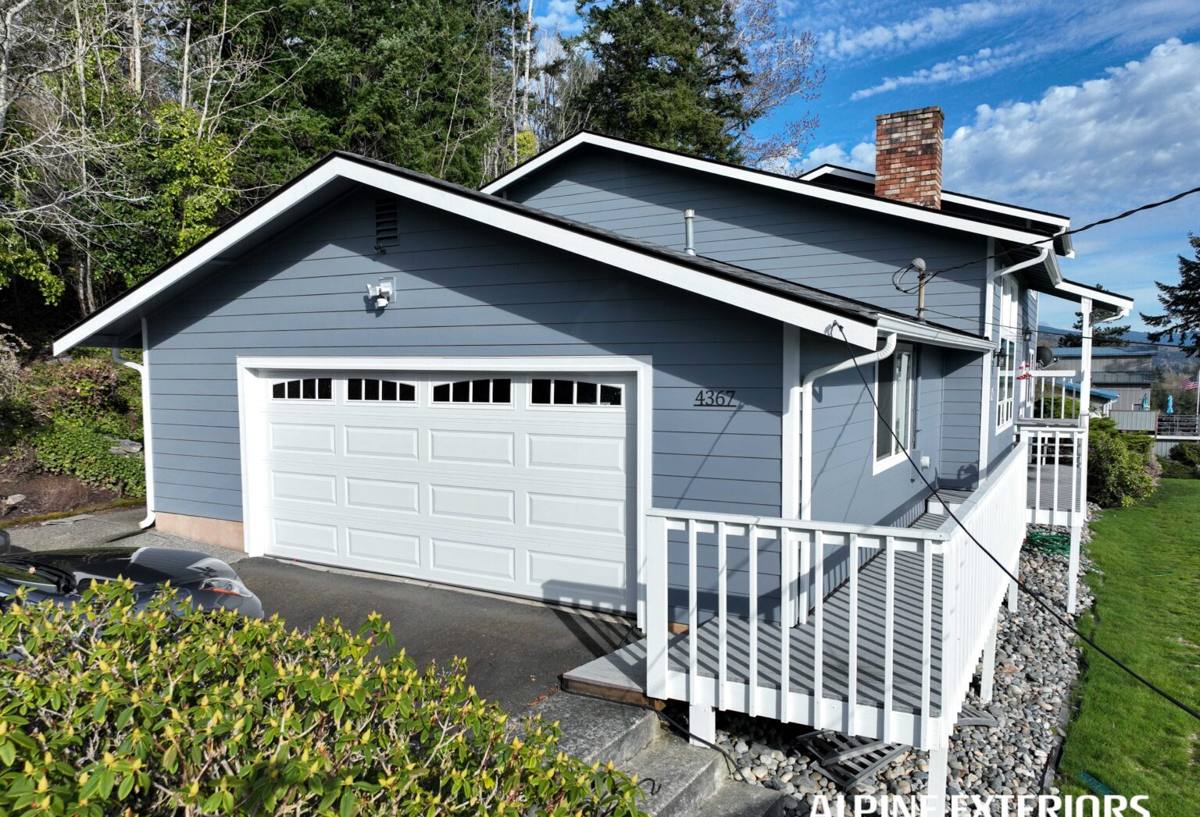
Signs a California Creek Deck Needs Full Replacement
Homeowners often ask us to "just replace a few boards," and sometimes that's genuinely all that's needed. But there are signs that point to structural issues underneath, where board-by-board repair won't fix the real problem.
- Soft or spongy spots when you walk across the deck, especially near the ledger board where it attaches to the house
- Visible gaps or separation where the deck meets the siding or foundation wall
- Rust streaks running down from screws, nails, or hardware
- Joists or posts that feel loose, or a railing that flexes more than it should
- Persistent green or black growth that comes back within weeks of cleaning
- Boards that have cupped, split, or delaminated across a large portion of the surface
Any one of these on its own might be repairable. Several together, especially structural ones like a soft ledger connection or loose posts, usually mean the framing has been compromised and a full rebuild is the safer, more cost-effective path.
What a Correct Deck Replacement Actually Involves
A deck replacement done right is mostly invisible once it's finished — the parts that matter most are the ones you'll never see again. That's also where a rushed job cuts corners.
Demolition and Inspection
Tearing out the old deck is also our first real inspection of the framing, ledger connection, and any footings. This is where we find out whether the substructure is sound or whether moisture has already worked its way into places that weren't visible from above.
Footings and Framing
Footings need to sit below frost depth and bear on solid, undisturbed soil — something worth checking rather than assuming, especially on older homes in this area where original construction standards varied. Framing lumber should be rated for ground contact or exterior use where it's exposed to weather, with joist spacing tight enough to handle the decking material chosen and the loads the deck will actually see.
Fasteners and Hardware
This is the detail that matters most in a marine climate and gets skipped most often. Standard galvanized fasteners corrode faster here than in drier inland areas. Stainless steel or heavy-duty coated fasteners rated for coastal exposure cost more up front but are what keeps a deck's structural connections sound for the long haul instead of rusting out from the inside in eight or ten years.
Flashing and Drainage
The ledger board — where the deck attaches to the house — is the single most common source of hidden rot in this region. Proper flashing directs water away from that connection instead of letting it wick into the house's rim joist. The decking surface itself should also be sloped slightly away from the house so rain doesn't pool against the siding.
Choosing the Right Decking Material for This Climate
There's no single "best" decking material — there's a best material for your budget, your maintenance appetite, and how much this particular climate is going to test it. Here's how the common options actually perform once salt air, rain, and moss are part of the equation.
| Material | Moisture & Salt Air Behavior | Moss/Algae Resistance | Maintenance | Typical Lifespan |
|---|---|---|---|---|
| Pressure-treated wood | Prone to warping and checking if not sealed regularly | Low — needs regular cleaning and treatment | Annual cleaning, periodic sealing/staining | 10–15 years |
| Cedar | Naturally moisture-resistant but still needs sealing near the coast | Moderate | Sealing every 1–2 years | 15–20 years |
| Composite decking | Very good — doesn't absorb water or rot | Moderate to good depending on the product's surface texture | Occasional washing, no sealing/staining | 25–30 years |
| PVC/capped composite | Excellent — fully sealed surface resists moisture and salt | Good, especially with a textured or capped finish | Low — washing only | 25–30+ years |
We install all of these depending on what a homeowner wants, but for a deck exposed to the salt air and rain pattern typical of California Creek, we generally steer people toward composite or capped PVC products for anything that isn't shaded or protected from the weather. The trade-off is upfront cost versus long-term maintenance — a real wood deck can look excellent, but it asks for consistent upkeep that a lot of busy households don't keep up with, and that's when rot gets ahead of you.
Fasteners, Flashing, and the Ledger Connection — Where Failures Actually Start
If you take one thing from this page, make it this: the majority of deck failures we see in this area don't start with the decking boards. They start at the ledger board and the hardware holding the frame together. Wood decking that's cupped or gray is a cosmetic problem you can see and plan around. A rotted ledger connection or a corroded joist hanger is a structural problem you usually can't see until it's serious.
A correct replacement addresses this with continuous flashing at the ledger, proper fastener spacing rated for the loads involved, and hardware chosen for coastal exposure rather than whatever's cheapest at the yard. It's not a glamorous part of the job, but it's the part that determines whether your new deck is still solid in fifteen years or starting to feel spongy in six.
Cost Factors That Actually Move the Number
Every deck is different, but the estimate mostly moves on a few factors: total square footage, height off the ground (railing and stair requirements add up), decking material chosen, and how much of the existing framing and footings can be reused versus rebuilt. We'll walk through all of that on-site so the number you get reflects your deck, not a generic average.
Our Process, Start to Finish
- On-site assessment — we look at the existing deck, framing, and ledger connection, and talk through what you actually want out of the new one
- Written estimate — clear scope, material options, and pricing, no pressure to decide on the spot
- Permitting — we handle the paperwork where a permit applies, based on the deck's size and height
- Demolition and framing inspection — old deck comes out, and we confirm the substructure before building
- Rebuild — footings, framing, flashing, decking, and railings installed to code and to the standard this climate needs
- Final walkthrough — we go over the finished deck with you before calling the job done
Permits and Local Considerations
Deck permitting in Whatcom County and the City of Blaine generally depends on the deck's height above grade and its size — many smaller, lower decks fall under simpler rules than a large elevated deck with stairs and full railings. Requirements can also differ slightly depending on whether a property is inside city limits or in the surrounding county area. Rather than guess, we confirm what applies to your specific property and pull the right permit before work starts, so you're not left with an inspection problem after the fact.
Keeping a New Deck Looking Good Through Moss Season
A well-built deck still needs some basic upkeep in this climate — the difference is that it's maintenance, not damage control.
- Sweep leaves and debris off the deck regularly in fall, before they trap moisture against the surface
- Rinse off salt residue and grime a few times a year, especially after storms
- Check gaps between boards each fall and clear out any buildup that could hold water
- Inspect railings and stair connections once a year for looseness
- Address any moss growth early with a gentle wash rather than letting it establish
- Keep gutters and downspouts near the deck clear so runoff isn't draining directly onto it
Why It Matters to Hire a Crew That Already Works California Creek
Deck construction standards are the same everywhere on paper. What isn't the same is judgment — knowing which fastener grade actually holds up a block from the water, how much slope is enough to shed the rain this area gets, and where moss tends to establish first on a given lot orientation. A crew that's built and replaced decks throughout California Creek and the rest of Blaine has already made the adjustments a general contractor from somewhere drier would have to learn the hard way, on your project.
It also means we're not guessing at permitting requirements or showing up without the right materials for a coastal job. We're familiar with this stretch of Whatcom County, and we build decks meant to hold up in it — not decks that happen to have been built here.
If your deck is showing its age or you're planning ahead of a sale, we're happy to take a look and give you an honest read on repair versus replacement. Reach out for a free, no-pressure estimate — someone will walk the deck with you and give you real numbers, not a guess.