 Blaine Siding
 Why Cherry Point Homes Need Windows Built for This Climate
Cherry Point sits right up against the Strait of Georgia, and that shoreline exposure shapes everything about how windows perform out here. Homes on this stretch of Whatcom County take a different kind of weather beating than houses a few miles inland in Blaine proper or Ferndale. If you've owned a home here for any length of time, you already know it: window frames that chalk and pit faster than they should, hardware that seizes up, glass that fogs between the panes years before it's supposed to.
Custom windows aren't about luxury upgrades or architectural flourishes. Out here, "custom" usually just means "sized and specified correctly for this house, in this location" — which is a very different job than ordering whatever's on the shelf at a big-box store and hoping it fits.
Salt Air and Coastal Exposure
Airborne salt is corrosive to standard aluminum hardware, steel fasteners, and lower-grade vinyl components. On a Cherry Point property, especially one with a clear line to the water, that salt load is constant — it doesn't take a storm to deposit it, just wind off the strait. Over years, that's what causes pitted latches, stained sills, and seals that give out early.
Driving Rain and Wind-Driven Moisture
This part of Whatcom County gets rain that doesn't just fall straight down — it comes in sideways on a west or southwest wind, especially during fall and winter systems. A window that's watertight in a still-air test can still leak under real wind-driven rain if the flashing detail or the frame's drainage path wasn't done right. That's one of the most common failure points we find on older installs here.
Long Moss and Damp Season
Whatcom County's moss season runs long — often eight months or more of the kind of low light and persistent damp that lets moss and algae get a foothold anywhere moisture sits still. On windows, that shows up as green growth in bottom sill tracks, in exterior trim joints, and around any spot where water isn't shedding cleanly. It's not just cosmetic; sustained dampness under trim and around frames is what eventually leads to rot in the wood behind them.
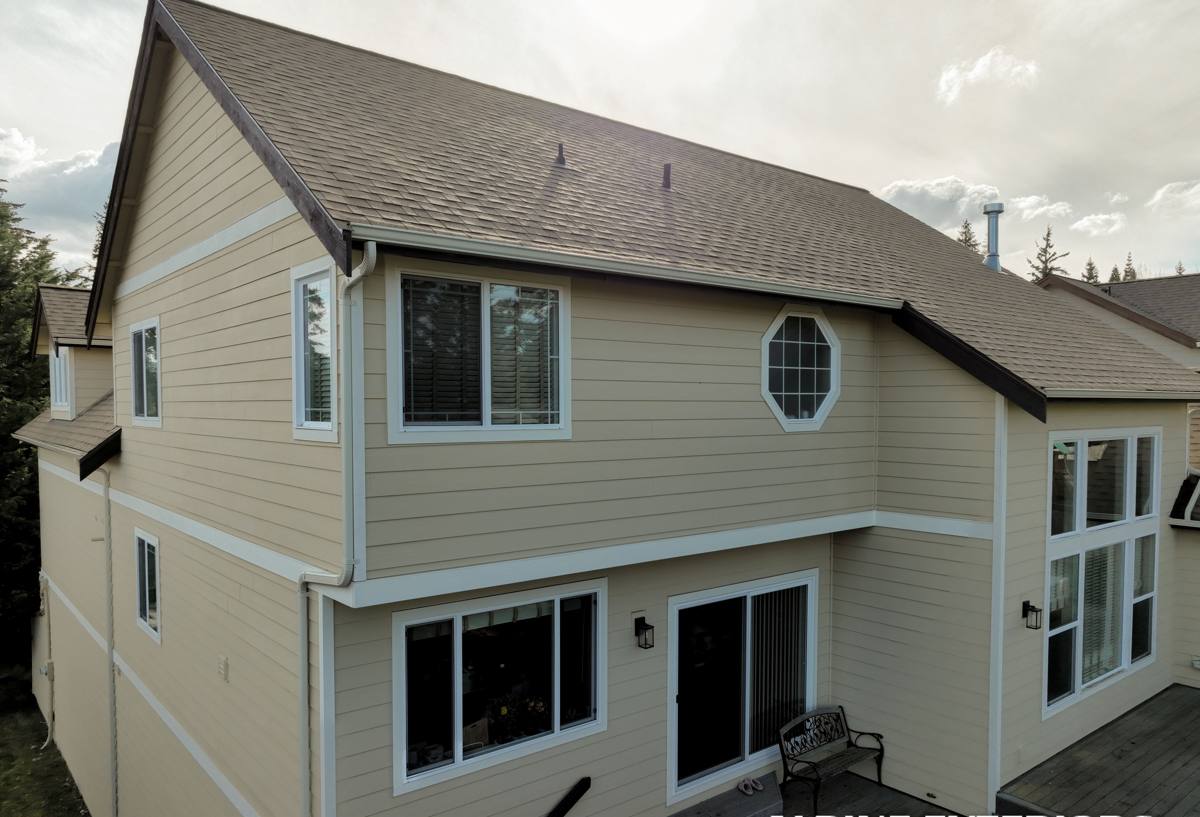
What "Custom Windows" Actually Means for This Kind of Home
A lot of homeowners assume "custom" means expensive or decorative. In practice, it mostly means the window is built or specified to fit an actual opening, an actual wall assembly, and an actual exposure — rather than forcing a standard size into a rough opening and packing the gaps with foam and hope.
Matching Window Openings vs. Standard Sizes
Cherry Point has a real mix of housing stock — older farmhouses and cottages with irregular, hand-framed openings, alongside newer waterview builds with taller, wider window sizes meant to take advantage of the view. Standard stock sizes often don't match either one cleanly. Custom sizing means we measure the actual opening, not a catalog number, and either order a true custom unit or a made-to-size standard unit that fits without excessive shimming or trimming down the rough opening.
Common Window Styles That Work Well Here
- Casement windows — crank-out sash compresses against the frame for a tight seal, which holds up well against wind-driven rain
- Single-hung and double-hung — traditional look for older homes, good option when matching existing farmhouse or cottage styling
- Fixed picture windows — no moving parts to seal against water, often paired with operable units on view-oriented homes
- Awning windows — hinge at the top, shed water naturally, useful in spots that catch a lot of direct rain
Signs Your Current Windows Are Failing
Because the climate here works on windows steadily rather than all at once, failure often shows up gradually. These are the signs worth acting on before they turn into a bigger repair:
- Fogging or a hazy film between panes of double-pane glass (means the seal has failed)
- Soft or discolored wood trim around the window, especially at the bottom corners
- Moss or dark green growth building up in the sill track or exterior trim joints
- Drafts or a noticeable temperature difference near the window on windy days
- Hardware that's stiff, corroded, or won't latch fully anymore
- Visible daylight or gaps around the frame from outside
- Paint or finish that's peeling specifically around the window opening, not the wall generally
What a Correct Custom Window Installation Involves
The window unit itself is only part of the job. Most leaks and premature failures we see on Cherry Point homes trace back to installation details, not the window product itself.
Flashing and Weather Barrier Details
Correct flashing means water that gets behind the siding or trim has a clear path back out, layered so each piece overlaps the one below it — never the reverse. On a house exposed to driving rain off the strait, this detail matters more than almost anything else in the install. We also tie the window's flashing into the home's existing weather-resistive barrier so there's no gap where water can find its way to the framing.
Frame Material Choices
There's no single "best" frame material for every Cherry Point home — it depends on exposure, budget, and how the rest of the house is finished. Here's how the common options actually compare for this climate:
| Frame Material | Salt Air Resistance | Maintenance | Typical Fit |
|---|---|---|---|
| Vinyl | Good — won't corrode, some UV fading over decades | Low — occasional cleaning | Budget-conscious replacements, most home styles |
| Fiberglass | Very good — dimensionally stable, resists pitting | Low | Higher-exposure walls facing the water |
| Aluminum-clad wood | Fair — cladding needs to be intact to protect wood core | Moderate — watch clad seams over time | Homeowners wanting a wood interior look |
| Solid wood | Poor in direct salt exposure without diligent upkeep | High — regular repainting/sealing | Historic or period-style homes, interior-facing walls |
Our Process for Cherry Point Custom Window Projects
Assessment and Measuring
We start at the house, not the showroom. We look at each opening's exposure — is it a wall that takes the brunt of the weather off the water, or a more sheltered side of the house — and measure the actual rough openings rather than assuming they match. We'll also check the condition of the framing and sheathing around each window while we're there, since that tells us what we're really working with.
Install Day
Old units come out carefully so we can inspect the framing underneath before anything new goes in. Any soft wood or compromised sheathing gets addressed before a new window goes anywhere near that opening — installing a good window into bad framing just buys you the same problem again in a few years. New flashing and weather barrier tie-in happens before the window is set, then the unit is shimmed square and plumb, fastened per the manufacturer's spec, and insulated around the frame.
Sealing and Cleanup
Exterior sealant goes on last, in the right locations — not everywhere, since sealing the wrong spots can actually trap water instead of letting it drain. We clean up the work area and walk the finished windows with you before we consider the job done.
Why Hiring a Crew That Already Works in Cherry Point Matters
A contractor who mostly works inland doesn't always think about salt exposure, driving-rain flashing details, or moss-prone trim joints as a default part of the job — because it isn't, where they usually work. A crew that's used to Whatcom County's coastal edge treats those details as standard practice, not an afterthought. That shows up in fastener choice, sealant selection, and how flashing gets layered — small decisions that add up to a window system that actually holds up here instead of one that looks fine for the first couple of winters.
Maintenance After Installation
Even a correctly installed custom window benefits from a little seasonal attention in this climate:
- Clear moss and debris from sill tracks and exterior trim a couple of times a year, especially heading into the wet season
- Rinse accumulated salt film off glass and frames periodically if the home has direct water exposure
- Check that weep holes (drainage points on the bottom of the frame) stay clear of dirt and debris
- Look over exterior caulking annually and touch up before hairline cracks turn into gaps
None of this is heavy maintenance — it's the kind of upkeep that takes an afternoon and adds years to the life of the installation.
Getting Started
If your windows are showing their age, fogging, drafting, or just weren't installed with this stretch of coastline in mind, we're happy to take a look and give you a straight assessment of what's going on and what it would take to fix it right. Reach out for a free, no-pressure estimate using the form below.