 Blaine Siding
 Building a Deck in Dakota Creek: What the Climate Actually Demands
Dakota Creek sits close enough to the water that homes here deal with a different set of conditions than a deck built ten miles inland. You've got salt-laden air coming off the marine waters near Blaine, long stretches of driving rain in fall and winter, and shaded, damp corners where moss and algae get a head start on wood, fasteners, and footings that aren't built for it. A deck that would hold up fine in a drier part of Whatcom County can start showing corrosion, soft spots, or slick moss growth within a couple of seasons if it wasn't designed with this specific environment in mind.
That's the difference between a deck that's "built" and a deck that's built right for Dakota Creek. It's not about using more expensive materials across the board — it's about knowing which parts of the structure take the brunt of the salt air and rain, and spending the extra attention and better hardware exactly there.
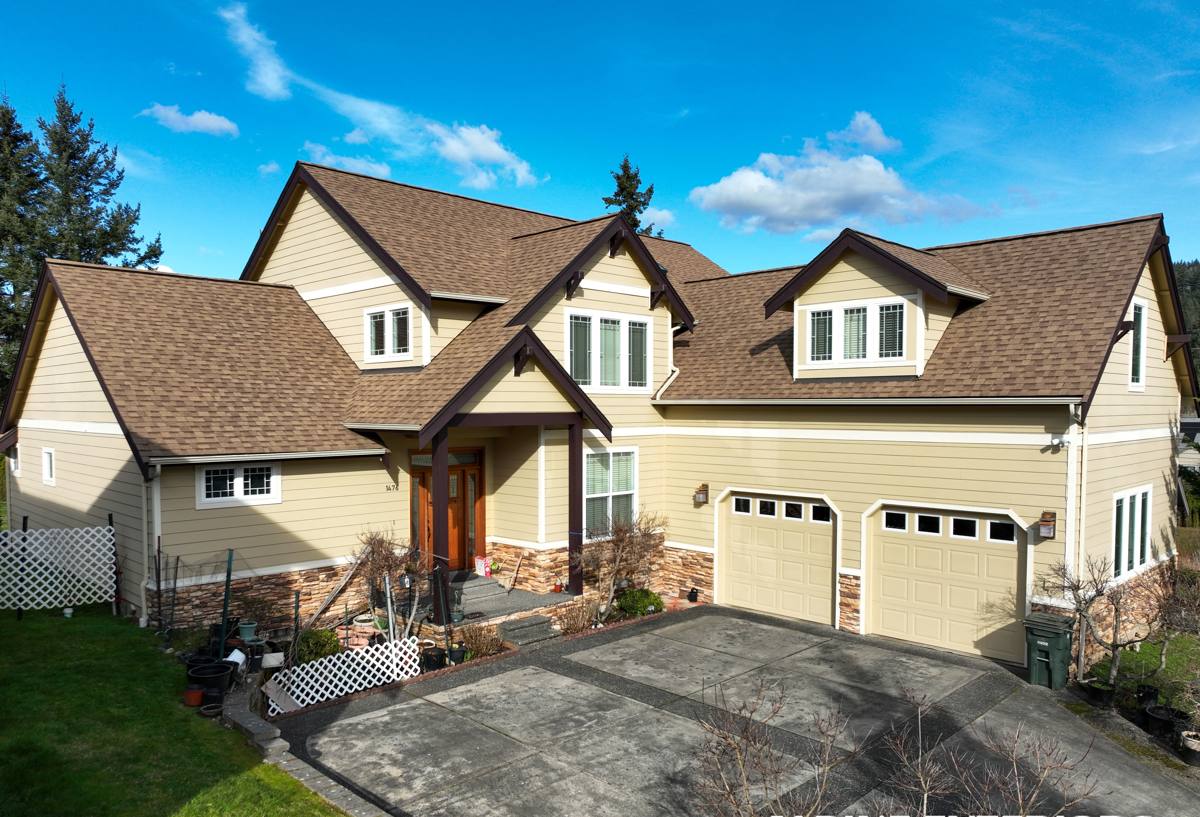
Why Waterfront-Adjacent Neighborhoods Need a Different Approach
Salt Air and Corrosion
Airborne salt doesn't need a direct ocean view to do damage — it travels on wind and settles on any exposed metal, and Dakota Creek's proximity to the water means fasteners, brackets, and hardware corrode faster here than they would further inland. Standard galvanized screws and joist hangers that are fine in a lot of the country will rust prematurely in this kind of exposure, and once a fastener starts to fail, it's often hidden under decking boards until it's already a structural problem.
Moss, Algae, and a Long Wet Season
Blaine's moss season runs long — shaded decks, north-facing structures, and anything under tree cover stay damp for months at a stretch. Moss isn't just cosmetic; it holds moisture against the deck surface and framing, which accelerates wood rot and turns boards slippery and unsafe underfoot. Deck design that ignores sun exposure and airflow is asking for a moss problem within the first year or two.
Drainage and Grading
Creek-adjacent lots often have soil that stays saturated longer after storms, and some yards in this area have limited slope for water to run off naturally. Footings, post bases, and ledger connections all need to account for water sitting nearby rather than draining away quickly, which changes how we approach both the substructure and the flashing details where the deck meets the house.
Choosing the Right Decking Material for This Location
There's no single "best" decking material — there's a best material for your budget, your sun exposure, and how much upkeep you're willing to do. Here's how the common options actually perform in a salt-air, high-moisture environment like Dakota Creek:
| Material | Moisture/Salt Air Performance | Moss Resistance | Maintenance |
|---|---|---|---|
| Pressure-treated wood | Good if properly sealed and re-coated on schedule | Needs regular cleaning; moss takes hold if neglected | Annual inspection, periodic staining/sealing |
| Cedar | Naturally moisture- and insect-resistant, but softer surface | Still requires cleaning in shaded areas | Regular oiling/sealing to hold color and resist graying |
| Composite decking | Excellent — doesn't absorb water or rot | Can still grow surface algae/moss if never cleaned, but doesn't degrade from it | Occasional washing; no staining or sealing |
| PVC/capped polymer | Excellent, fully sealed surface | Same as composite — surface growth possible but no structural risk | Lowest maintenance of the group |
We'll walk you through the honest trade-offs for your specific lot — a well-sealed cedar deck under an open sky can outperform a cheap composite in the wrong spot, and vice versa. What matters more than the surface material is what's underneath it, which brings us to framing and hardware.
Why We're Selective About Certain Composite Lines
Not every composite or capped-polymer product handles this climate the same way. Some earlier-generation composite boards are more prone to moisture wicking at cut edges and fastener points, which matters a lot in a spot that stays wet as long as Dakota Creek does. Our standard is to spec boards and fastening systems with a track record in high-moisture Pacific Northwest conditions, and to always seal or cap cut ends per manufacturer requirements — skipping that step is one of the most common causes of early composite failure, and it's an easy thing to get wrong if a crew isn't used to building for this kind of exposure.
What a Correctly Built Deck Involves Here
The decking material is the part homeowners notice, but the structure underneath it is what determines whether the deck lasts 10 years or 25. For Dakota Creek specifically, that means:
- Stainless steel or heavy-coated corrosion-resistant fasteners and joist hangers — not standard galvanized — in areas with direct salt air exposure
- Properly flashed ledger board connection where the deck attaches to the house, sealed to shed water away from the framing and siding
- Post bases set above grade with drainage gaps, not buried or sitting in standing water after storms
- Joist spacing and decking gaps sized to let water and debris pass through rather than pool
- Footings sized and set to local frost depth and soil conditions, not just poured to a generic minimum
- Guardrail and stair framing built to current code height and baluster spacing requirements
- Ventilation underneath the deck where skirting is used, so trapped moisture doesn't sit against the framing
Skipping any one of these doesn't usually show up right away — it shows up two or three winters later as a soft ledger board, a rusted-through hanger, or a post base that's started to heave. That delay is exactly why cutting corners on framing is such a common and costly mistake in this climate.
Our Deck Building Process
1. On-Site Consultation and Design
We walk the property with you, look at sun exposure, drainage patterns, and how the deck will connect to the house, and talk through material options that fit your budget and how you plan to use the space.
2. Permitting
Most attached decks and any deck above a certain height require a permit through the local jurisdiction. We handle the permit application and make sure the design meets current code before framing starts, so you're not stuck with an inspection failure mid-project.
3. Framing and Structural Work
This is where the corrosion-resistant hardware, proper ledger flashing, and footing work happen — the parts that don't show once the decking goes down but determine the deck's real lifespan.
4. Decking, Railing, and Stairs
Once the frame passes inspection, we install the decking surface, railings, and any stairs, with attention to consistent gaps for drainage and clean fastener patterns.
5. Final Walkthrough
We go over the finished deck with you, explain what maintenance it needs (if any) based on the material you chose, and answer questions before we consider the job done.
Maintenance Through a Long Moss Season
Whatever material you choose, a little seasonal attention goes a long way in this climate. A basic yearly checklist:
- Sweep debris out of decking gaps before fall rains so water keeps draining properly
- Rinse or scrub shaded areas where moss and algae tend to establish first
- Check fastener heads and railing connections for early rust or looseness
- Re-seal or re-stain wood decking on the schedule appropriate to the product used
- Inspect under the deck for standing water or vegetation growth against footings
- Trim back overhanging branches that keep sections of the deck shaded and damp longer than necessary
Cost Factors to Expect
Deck costs vary a lot based on size, material, height off grade, and how much structural work is involved — a ground-level deck is a very different project than one built over a slope or requiring engineered footings. Broadly, pressure-treated wood decks tend to be the lowest upfront cost, cedar sits in the middle, and composite or PVC systems cost more upfront but less over time in maintenance. We give straightforward, itemized estimates so you can see exactly where the budget is going, rather than a single lump-sum number.
Why Hire a Crew That Already Works in Dakota Creek
A contractor who's built decks throughout Blaine and this part of Whatcom County already knows which fastener specs hold up near the water, how the local permitting process works, and what drainage issues tend to show up on creek-adjacent lots. That local familiarity means fewer surprises during the project and a deck that's designed for the conditions it will actually sit in for the next couple of decades — not a generic build that happens to be located here.
If you're planning a new deck or replacing one that's showing its age, we're happy to come take a look and give you a straightforward, no-pressure estimate. Fill out the form below and we'll get in touch to schedule a time that works for you.