 Blaine Siding
 Why California Creek Puts Different Demands on Siding
California Creek sits close enough to the water and open farmland north of Blaine that homes here take a harder hit from the weather than siding manufacturers assume when they write their general installation guides. You've got salt-laden air drifting in off Semiahmoo Bay and the Strait, wind-driven rain that gets pushed sideways into wall assemblies instead of falling straight down, and a wet season that runs long enough to give moss and algae months to get established on anything that stays damp. None of that is exotic weather. It's just relentless, and it's exactly the combination that exposes weak siding choices faster than almost anywhere else in Whatcom County.
A siding product or installation detail that would hold up fine in a drier inland climate can fail here in a fraction of the time. That's the lens we use on every California Creek job: not "does this meet code," but "does this actually survive what this specific property sees every winter."
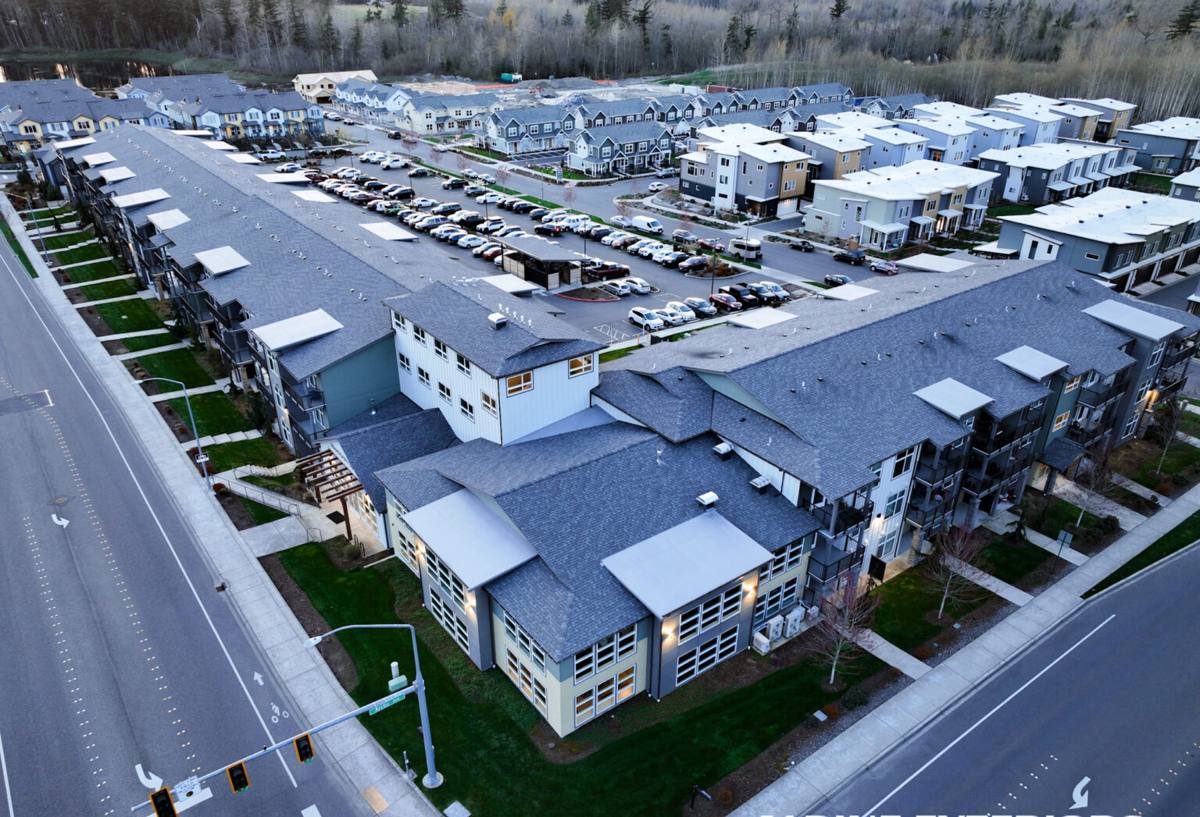
What Salt Air, Driving Rain, and Moss Actually Do to a Wall
Salt Air
Airborne salt is corrosive to fasteners and metal trim, and it accelerates the breakdown of finishes that aren't formulated to resist it. Siding with a weak factory finish will chalk, fade, and lose adhesion faster in a coastal-influenced airflow than the same product would a few miles inland. Fastener choice matters here more than most homeowners realize — the wrong nail or screw becomes the first point of failure.
Driving Rain
Wind off the water doesn't just wet the face of a wall — it drives moisture up under laps, into butt joints, and behind trim that isn't properly flashed. Siding that depends on paint film alone to stay waterproof, rather than being dimensionally stable and correctly lapped and flashed, will eventually let water behind it. Once water gets behind siding, the siding material itself matters less than what happens to the sheathing and framing behind it.
Extended Moss Season
Whatcom County's wet stretch runs long, and California Creek's tree cover and proximity to water keep humidity and shade in play on north- and west-facing walls well into the parts of the year other areas have already dried out. Any surface that stays damp for weeks at a time will grow moss and algae. The question isn't whether growth will try to get a foothold — it's whether the siding surface and finish resist it, and whether the wall assembly dries out between wet spells instead of staying saturated.
Why We Install James Hardie Specifically Here
We are a James Hardie-only contractor. We don't install vinyl, LP SmartSide, Cemplank, Allura, primed spruce, or cedar, and California Creek is one of the clearest examples of why that standard exists. Fiber cement is dimensionally stable — it doesn't expand and contract with moisture the way wood-based products do, which matters when a wall is getting soaked and dried repeatedly through a Whatcom County winter. It's also non-combustible, which is a real, if secondary, benefit for coastal Pacific Northwest properties.
Two things about James Hardie's system matter most for this specific location:
- ColorPlus factory finish — baked on in a controlled environment rather than field-applied, giving better adhesion and fade resistance than site-painted siding, which matters where salt air is already working against any finish.
- HZ10 climate-engineered formulation — Hardie's HZ10 product line is engineered for cold, wet, moisture-heavy climates like ours, as opposed to the HZ5 formulation built for hot, dry regions. Installing the wrong regional formulation is a mistake we see on plenty of older homes that were sided by out-of-area crews.
We're not going to tell you every other product is worthless — LP SmartSide and vinyl both have legitimate uses in the right conditions. But for a property exposed to salt air, driving rain, and a long moss season, the trade-offs on moisture sensitivity, finish durability, and long-term maintenance tipped this company toward standardizing on one product we can install to spec and stand behind.
What a Correct James Hardie Installation Involves
The siding board itself is only part of the job. Most siding failures we get called out to inspect — regardless of brand — trace back to installation details, not the material. On a California Creek home, these details carry extra weight:
Water Management Behind the Siding
A weather-resistive barrier installed correctly, with proper laps and taped seams, plus rainscreen or drainage gap where the wall assembly calls for it, gives incidental moisture a way to escape instead of sitting against the sheathing. In a driving-rain environment, this layer is doing as much work as the siding itself.
Flashing at Every Penetration
Windows, doors, hose bibs, vents, and any other wall penetration need proper flashing that sheds water outward and downward. This is the single most common place we find corners cut on prior installs — a missing head flashing or a caulk-only detail where metal flashing belongs.
Fastener Selection and Placement
Hardie specifies fastener type, length, and placement for a reason, and in a salt-air environment, using corrosion-resistant fasteners installed at the correct spacing and depth isn't optional. Overdriven or underdriven nails are a common defect that shows up as cracking or loosening within a few years.
Proper Clearances
Hardie's installation manual specifies minimum clearance from grade, roofing, decks, and other horizontal surfaces. Skipping these clearances is one of the fastest ways to trap moisture against the bottom of a wall — exactly where California Creek's wet ground and long damp season make that mistake worst.
Caulking and Joint Treatment
Butt joints and trim transitions need to be treated correctly — the right sealant, applied to the right surfaces, not used as a substitute for flashing. Caulk fails; it's a maintenance item, not a primary water barrier.
Our Process for a California Creek Project
- On-site assessment — we look at wall exposure by direction, existing moisture damage, current siding condition, and drainage around the foundation before we talk product.
- Product and color selection — HZ10 boards, panels, or trim matched to the home's design, with ColorPlus finish options reviewed on-site in actual light conditions.
- Tear-off and sheathing inspection — removing old siding is when hidden rot or moisture damage shows up. We address any sheathing issues before anything new goes on the wall.
- Water-resistive barrier and flashing installation — done to manufacturer spec, not shortcut, since this layer is permanent once the siding goes back on.
- Hardie installation — correct fasteners, clearances, and joint treatment throughout.
- Final walkthrough — we go over the finished work with you before calling the job done.
Cost Factors for a California Creek Home
Every home is different, but the variables that move the price on a project out here are consistent. We won't quote a number without seeing the house, but here's what drives the range:
| Factor | Why It Matters Here |
|---|---|
| Extent of tear-off and sheathing repair | Coastal moisture exposure means older siding jobs more often hide rot that has to be fixed before new siding goes on |
| Wall complexity (dormers, trim detail) | More flashing points and cut boards means more labor and more places water management has to be done right |
| Product mix (lap, panel, shingle, trim) | Combining Hardie profiles for architectural detail adds material and install time versus a single lap profile |
| Color (ColorPlus vs. field-painted) | Factory-finished ColorPlus costs more upfront but avoids a repaint cycle sooner in a salt-air environment |
| Site access and staging | Rural or wooded California Creek lots can add setup time compared to an open in-town lot |
What to Check Before Hiring Any Siding Contractor Out Here
Whether you go with us or someone else, use this list before signing a contract:
- Ask specifically whether the crew is factory-trained on the product being installed, not just "experienced with siding" in general
- Confirm in writing which Hardie climate zone product (HZ5 vs. HZ10) is being specified for your home
- Ask how they handle flashing at windows and penetrations — a vague answer is a red flag
- Get the manufacturer's fastener spec in writing, not just "we use good nails"
- Ask what happens if they find rotten sheathing during tear-off, and how that's priced
- Confirm the warranty terms are transferable if you sell the home
- Ask for references from other jobs in Blaine or nearby Whatcom County coastal areas specifically, not just anywhere in the region
Why Local Experience in This Exact Area Matters
A crew that's already worked California Creek and the surrounding Blaine-area properties knows which walls take the worst of the wind-driven rain, how long moss season really runs here versus a more sheltered inland lot, and which installation shortcuts show up as callbacks in two years instead of twenty. That's not something you can fully substitute with a general installation manual — it's pattern recognition built from working this specific stretch of coastline repeatedly. We'd rather spend a little more time on flashing and drainage details up front than have a homeowner call us back in five years with water damage that a generic install would have missed.
If you're weighing a siding replacement or repair on a California Creek property, we're happy to come take a look, walk the exterior with you, and give you a straight assessment — no pressure, no obligation. Reach out through the form below to set up a free estimate.