 Blaine Siding
 Why Decks in Cherry Point Wear Differently
Cherry Point sits right up against the Strait of Georgia, which means homes here deal with a combination most inland Whatcom County properties don't: near-constant marine air, driving rain that comes in sideways off the water, and long stretches of overcast, damp weather that keep every wood surface wet longer than it should be. Add in the tree cover common on the rural and wooded lots out this way, and you get shaded, slow-drying deck surfaces that grow moss and algae for a good chunk of the year, not just in the depths of winter.
None of that is unique to any one house — it's just what this stretch of coastline does to exterior wood and fasteners over time. A deck that would hold up fine in a drier, sunnier part of the state can develop soft spots, rust streaks, and slick moss growth here years earlier if it wasn't built or maintained with this climate in mind. Deck repair in this area isn't about chasing a single failure — it's about understanding how salt air, standing moisture, and shade work together on a structure that's outdoors 365 days a year.
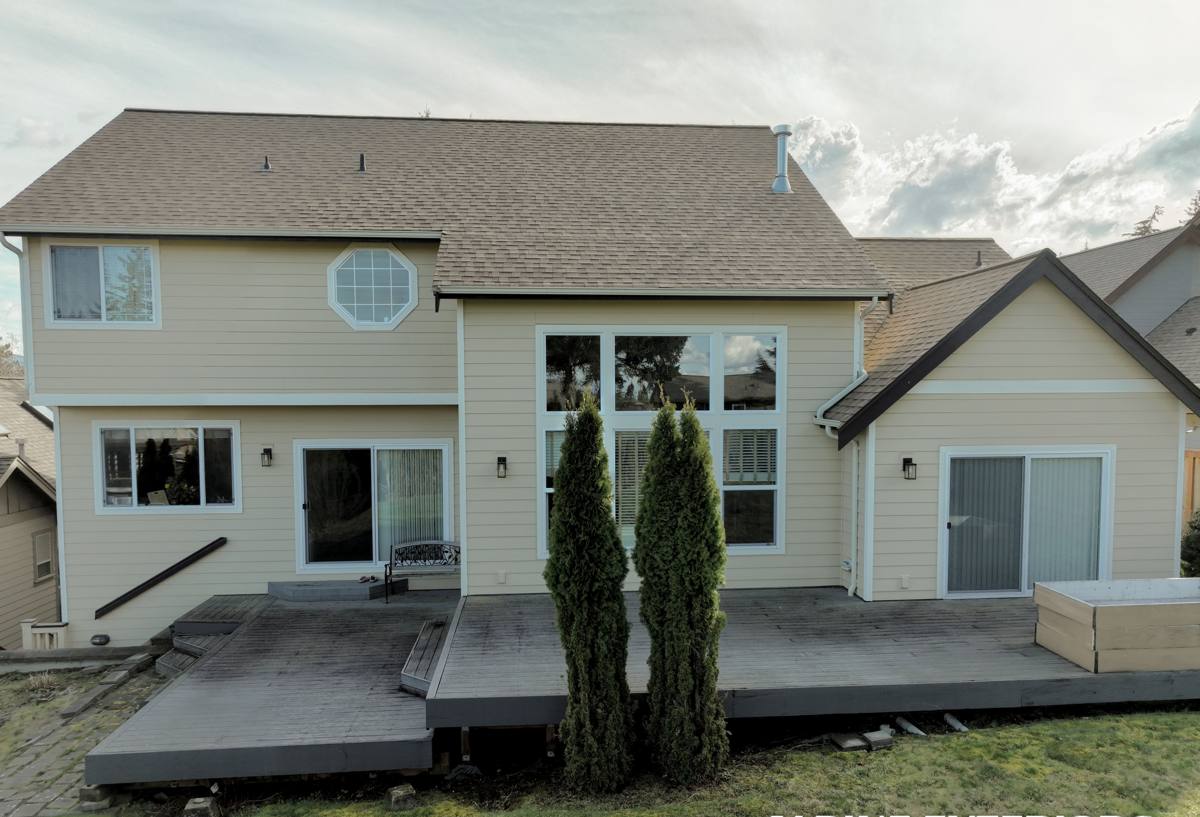
The Early Warning Signs Homeowners Miss
Most deck failures don't happen suddenly. They show up first as small, easy-to-ignore details that get worse every wet season they go unaddressed.
What to look for
- Boards that feel spongy or flex more than neighboring boards when you walk across them
- Rust-colored streaks running down from fastener heads or metal connectors
- Green or black film on the deck surface, especially in shaded corners or under furniture
- Gaps opening up between boards, or boards that have started to cup or crown
- Railing posts that wiggle at the base, or a top rail that feels less solid than it used to
- Visible daylight or water staining where the deck ledger board meets the house
Any one of these on its own might be minor. Several at once, or any sign of movement at the ledger connection to the house, means it's worth having someone look at the structure underneath, not just the surface.
What a Correct Deck Repair Actually Involves
A repair that only replaces what's visible from the top often misses the reason the deck failed in the first place. On homes in this area, the underlying moisture path usually matters more than the board that finally rotted through.
Structure first
We check the ledger board attachment (the point where the deck ties into the house), the joists underneath for soft or delaminating wood, and the posts and footings for movement or rot at ground contact. This is also where flashing gets inspected — a ledger without proper flashing is one of the most common hidden causes of deck rot in wet coastal climates, because water gets trapped between the deck and the siding and never fully dries.
Fasteners and hardware
Salt-laden air accelerates corrosion on standard fasteners. We check for the right corrosion-resistant hardware for the wood species and framing in use, and we don't reuse rusted screws or connectors just because the hole is already there.
Decking surface
Boards that are cupping, splitting, or holding moss get replaced or resurfaced, with attention to consistent gapping so water and debris can actually drain instead of pooling and feeding more growth.
Railings and stairs
Anything load-bearing that shows movement gets reset, re-fastened, or rebuilt to code — this isn't a place to patch and hope.
Repair vs. Replace: How We Help You Decide
Not every deck problem calls for a full tear-off, and not every "small repair" request is actually a small repair once we're underneath the boards. Here's the general breakdown we use when advising Cherry Point homeowners:
| Factor | Leans Toward Repair | Leans Toward Replacement |
|---|---|---|
| Framing condition | Joists and ledger are solid, dry, well-fastened | Soft or crumbling wood at ledger, joists, or posts |
| Extent of damage | Isolated boards or one section | Rot or moss damage spread across most of the deck |
| Age of the deck | Under 10-15 years, built to a reasonable standard | Original construction is older and undersized by current code |
| Fastener condition | Hardware is mostly sound, isolated corrosion | Widespread rust or failing connectors throughout |
| Design/layout | Layout still works for how the home is used | Deck is undersized, poorly placed, or drains badly by design |
We'll always tell you honestly which side of that table your deck falls on. A repair that only buys you one more damp season before the same problem resurfaces isn't a good use of your money.
Our Deck Repair Process
- On-site inspection — we walk the full deck, check underneath where accessible, and inspect the ledger connection and framing, not just the surface
- Honest scope and estimate — you get a clear explanation of what's failing, why, and what it will take to fix it correctly, including if replacement makes more sense than repair
- Structural repairs first — any framing, ledger flashing, or footing issues get corrected before surface work starts
- Surface and railing work — damaged boards, railings, and stairs are replaced or rebuilt with corrosion-resistant fasteners suited to this environment
- Final walkthrough — we check the deck is solid, drains properly, and go over any maintenance recommendations specific to your site conditions
Material Considerations for a Marine Climate
What we recommend for a repair often depends on how much sun exposure and airflow the deck actually gets, since a shaded deck near mature trees dries out much slower than one in the open.
Pressure-treated lumber
Affordable and widely used, but it needs consistent maintenance — cleaning and sealing on a regular schedule — to hold up against the long wet season here. It's a reasonable choice when the budget calls for it and the homeowner is willing to keep up with upkeep.
Cedar
Naturally more rot- and insect-resistant and common on older decks in this region, but it still needs periodic sealing to prevent graying, splitting, and moss uptake, especially on shaded sections.
Composite decking
Higher upfront cost, but far less susceptible to rot and moss adhesion, and it doesn't need staining or sealing. The trade-off is that composite is less forgiving of poor installation — hidden framing or moisture problems underneath don't go away just because the surface looks maintenance-free, and warranty coverage varies by manufacturer and depends on correct installation.
We don't push one material over another as a default. We tell you the honest maintenance and moisture trade-offs for your specific deck's sun exposure and how the framing underneath is holding up, and let that guide the decision.
Maintenance That Actually Extends Deck Life Here
Most of what shortens a deck's life in Cherry Point is preventable with a short seasonal routine, not a major project.
- Sweep leaves and debris off the deck regularly, especially in fall — trapped organic matter holds moisture and feeds moss
- Rinse or scrub visible moss and algae off the surface before it gets established, particularly in shaded corners
- Keep gutters and downspouts near the deck clear so runoff isn't draining directly onto or under it
- Check fastener heads once a year for early rust staining
- Reapply sealant or stain on wood decking on the manufacturer's recommended schedule, not just when it looks faded
- Keep furniture and planters up off the deck surface periodically to let boards dry evenly and check for hidden soft spots
Why Hiring a Crew That Already Works This Area Matters
A deck built or repaired using specs meant for a drier, sunnier climate is starting from a disadvantage the day it's finished. Crews who regularly work sites along this stretch of Whatcom County know which details actually matter here — ledger flashing that accounts for driving rain, fastener choices that hold up to salt air, and gapping and drainage that account for a moss season that runs longer than most of the state deals with. That's not something you can fully judge from a bid on paper; it comes from having repaired decks in these exact conditions and seeing what fails and what doesn't over time.
It also matters for follow-through. A local crew is easy to reach if a question comes up after the work is done, and understands that a deck repair here isn't a one-and-done job — it's part of a maintenance relationship with a structure that's exposed to this climate year-round.
If you've got a deck in Cherry Point that's showing rust, moss, soft spots, or movement, we're happy to take a look and give you a straight answer on what it needs. Fill out the form below for a free, no-pressure estimate.