 Blaine Siding
 Metal Roofing Built for Custer's Weather
Custer sits close enough to the water and the Canadian border that its roofs take a specific kind of beating: salt-laden air rolling in off the Strait, long stretches of driving rain through fall and winter, and a moss season that seems to start earlier and last longer every year. A roof that would hold up fine in a drier inland climate can start showing problems here inside a few seasons if it wasn't installed with this exposure in mind. Metal roofing, done correctly, handles all three of these stressors better than most other roofing materials — but "done correctly" is doing a lot of work in that sentence, and it's where a lot of installs fall short.
We work on homes throughout the Blaine area, including Custer, and we see the same failure patterns often enough to know they're not random bad luck. They're the predictable result of panels, fasteners, or flashing details that weren't matched to this specific climate.
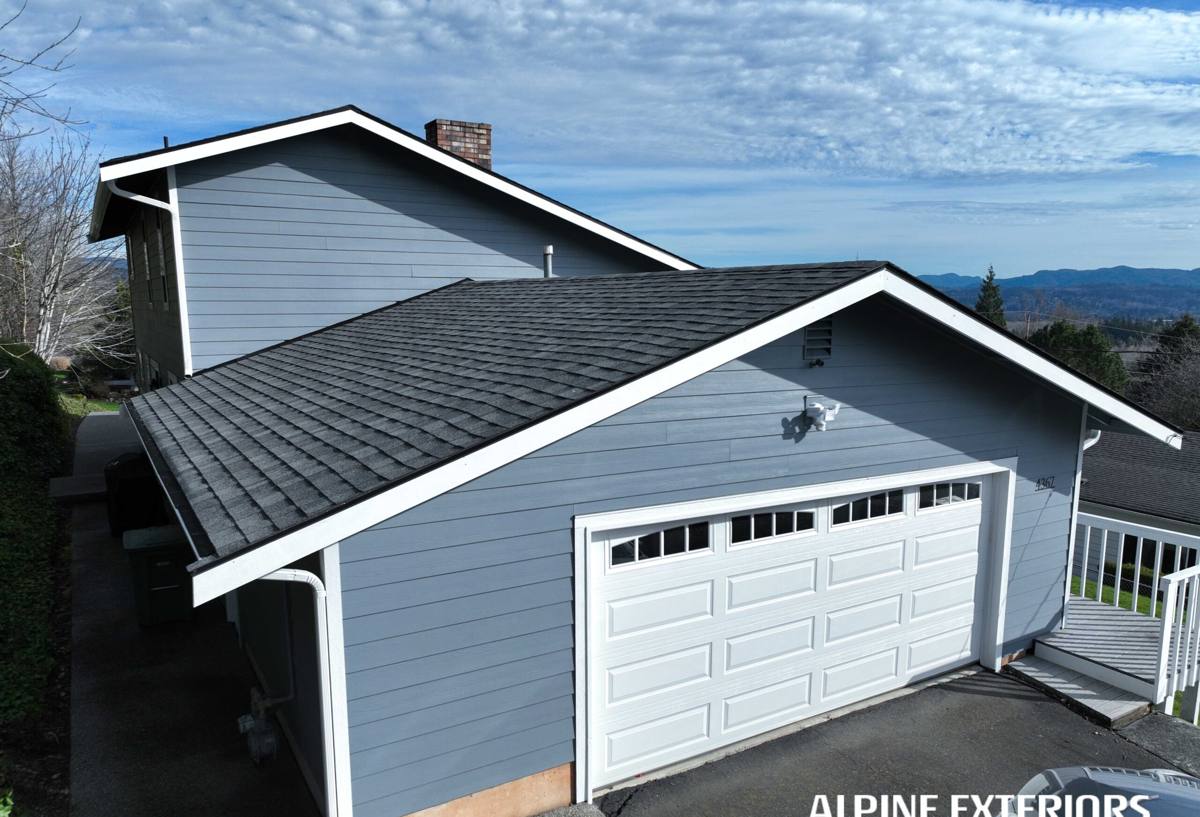
What This Climate Actually Does to a Roof
Salt Air and Corrosion
Proximity to Semiahmoo Bay and the Strait of Georgia means airborne salt is a real factor for Custer roofs, even on properties that aren't waterfront. Salt accelerates corrosion on any exposed metal — fasteners, flashing, panel edges — faster than it will a few miles inland. Standard galvanized steel or uncoated fasteners can start rusting years ahead of schedule out here. The fix isn't complicated, but it does mean choosing coatings and fastener grades deliberately rather than defaulting to whatever's cheapest at the supply house.
Driving Rain
Rain in this part of Whatcom County rarely falls straight down. Wind off the water pushes it sideways and up under laps, at ridge caps, and around any penetration — vent pipes, chimneys, skylights. A roof that's watertight in a light vertical rain can still leak in a wind-driven storm if the underlayment, flashing overlaps, and fastener sealing weren't built to handle that angle of attack.
Moss Season
Moss thrives in the shaded, damp conditions common under Custer's tree cover, and it doesn't need much of a foothold — a little debris in a panel seam or around a fastener head is enough to get it started. On metal roofing, moss growth is much less common than on asphalt or wood because there's no organic material for it to root into directly, but debris buildup at valleys, low-slope transitions, and gutter lines can still hold enough moisture to let moss establish nearby and eventually creep onto the roof edge.
What a Correct Metal Roof Install Involves
A metal roof is only as good as the details underneath and around the panels. The visible surface is the easy part. Here's what actually determines whether it performs for the next several decades in this environment:
- Underlayment: A high-temp synthetic or self-adhered membrane at eaves, valleys, and penetrations — not just builder's felt — to back up the panels against wind-driven rain.
- Fastener selection: Coated or stainless fasteners matched to the panel metal, to avoid galvanic corrosion and premature rust in salt air.
- Flashing details: Properly lapped and sealed flashing at every valley, wall intersection, chimney, and vent — this is where the vast majority of leaks actually originate, not in the field of the panels.
- Panel fastening pattern: Correct spacing and clip or screw pattern for the panel profile, accounting for thermal expansion so panels don't oil-can or work loose over time.
- Ventilation: Balanced intake and exhaust airflow so moisture from inside the attic doesn't condense against the underside of cold metal panels during our damp winters.
- Edge and ridge treatment: Closures and trim that block wind-driven rain and debris intrusion at the most exposed parts of the roof.
Skip or shortcut any one of these and the roof may look fine for a year or two before the climate finds the weak point.
Choosing the Right Metal Roofing System
Not every metal roofing product is a good fit for every home, and the right choice depends on roof slope, budget, and how much visible seam or fastener exposure you're comfortable with over time.
| Panel Type | Best For | Climate Trade-offs in Custer |
|---|---|---|
| Standing seam (concealed fastener) | Most roof slopes, long-term low maintenance | No exposed fasteners to corrode or work loose; higher upfront cost, best wind and rain performance |
| Exposed-fastener panels | Budget-conscious projects, outbuildings, some low-slope applications | Lower cost, but fastener gaskets degrade with age and UV/salt exposure and need periodic checking |
| Metal shingles/shakes | Homes wanting a traditional look with metal durability | More seams than standing seam; good option where architectural style matters more than absolute lowest maintenance |
For most Custer homes we recommend standing seam where budget allows, specifically because it removes the exposed-fastener corrosion risk that salt air makes worse over time. Exposed-fastener systems can still be a sound choice — they just come with a maintenance commitment to keep an eye on gasket condition.
Coatings and Materials Matter More Here
We steer clients toward panels with marine-grade or high-performance coatings (like PVDF-based finishes) over bare or lower-grade coated steel for anything within a few miles of the water. It costs more up front. It also means you're not repainting or dealing with rust bleed at cut edges and fasteners in eight years instead of twenty-five. This is a professional standard we hold to, not a knock on any particular manufacturer — every panel system has an appropriate use case, and matching the coating grade to the exposure is just good practice in a salt-air environment.
Our Process for Custer Metal Roofing Projects
- On-site assessment: We look at slope, existing decking condition, ventilation, and how exposed the roof is to prevailing wind and rain direction — this varies noticeably even between properties a short distance apart in Custer.
- Tear-off or overlay decision: Where the existing roof deck is sound, some situations allow overlay; where there's rot, inadequate ventilation, or the existing roofing would trap moisture against new metal, we recommend full tear-off.
- Underlayment and flashing install: This is where most of our time and attention goes, because it's where long-term leak resistance actually gets built.
- Panel installation: Fastening pattern, clip spacing, and seam work matched to the manufacturer's specifications and adjusted for this climate's wind and rain exposure.
- Final inspection and walkthrough: We check every penetration, valley, and edge detail before we call the job done, and walk the homeowner through basic care.
Maintenance in Moss Season
Metal roofing needs far less maintenance than asphalt shingles or wood shakes, but "far less" isn't "none," especially with Custer's tree cover and rainfall. A simple seasonal routine goes a long way:
- Clear leaves, needles, and debris from valleys and low-slope sections before fall rains set in.
- Keep gutters and downspouts flowing freely — backed-up water at the eaves is a common source of moss establishment and ice-related stress in cold snaps.
- Trim back overhanging branches to cut down shade and debris drop, both of which encourage moss and slow drying after rain.
- Do a visual check of flashing and fastener condition once a year, ideally before winter.
- Address any moss or algae staining promptly with gentle, roof-safe methods rather than pressure washing, which can damage coatings and seals.
Why Local Experience with Custer Homes Matters
Custer isn't a uniform climate zone — properties closer to open water deal with more direct salt exposure and wind-driven rain, while more inland or tree-covered lots deal more with shade, moisture retention, and moss. A crew that already works this specific area knows which factors to weight for a given property instead of applying a generic Whatcom County or Pacific Northwest template. We also know how local wind patterns tend to drive rain into certain roof orientations, which affects where we put extra attention on flashing and underlayment during install.
There's also a permitting and code angle — Whatcom County requirements and local wind/snow load considerations factor into fastening schedules and material specs, and getting that right the first time avoids costly rework.
Cost Factors to Expect
| Factor | Why It Matters |
|---|---|
| Panel type and coating grade | Standing seam and higher-grade coatings cost more upfront but reduce long-term maintenance and corrosion risk in salt air |
| Roof complexity | More valleys, penetrations, and slope changes mean more flashing work and labor time |
| Tear-off vs. overlay | Full tear-off costs more but is often necessary where decking or ventilation issues exist |
| Underlayment upgrade | High-temp synthetic or self-adhered membrane adds cost but is a worthwhile investment against wind-driven rain |
| Roof access and pitch | Steeper or harder-to-access roofs increase labor and safety equipment needs |
Metal roofing generally costs more upfront than asphalt shingles, but the trade-off is a much longer service life and far less recurring maintenance — a relevant consideration when the local climate is actively working against lower-grade materials year-round.
Signs Your Current Roof Needs Attention
If any of the following sound familiar, it's worth having someone take a look before the next wet season:
- Rust streaking at panel edges, fasteners, or flashing
- Visible moss or algae buildup at valleys, edges, or shaded slopes
- Water stains on interior ceilings after wind-driven storms specifically
- Loose, lifting, or oil-canning panels
- Gutters or downspouts consistently clogged with granules, needles, or moss debris
If you're weighing a new metal roof, a repair, or just want an honest opinion on what your current roof needs, we're happy to take a look and walk you through the options. Reach out for a free, no-pressure estimate using the form below.