 Blaine Siding
 Building Decks for Bellingham's Climate, Not Just Any Climate
Bellingham sits close enough to the Salish Sea that homes here deal with a specific combination of weather stresses: salt-tinged marine air, long stretches of driving rain from fall through spring, and a moss season that can run eight months or more depending on how much shade and moisture a yard gets. A deck built to a generic national spec will survive here for a while. A deck built for this specific stretch of Whatcom County coastline holds up a lot longer, and looks better doing it. That's the difference we aim for on every custom deck we build in the Bellingham area.
We're a Blaine-based crew, and Bellingham is well within our regular service area — close enough that we're not learning the local conditions on your project, we already know them from the decks we've built and maintained up and down this part of the county.
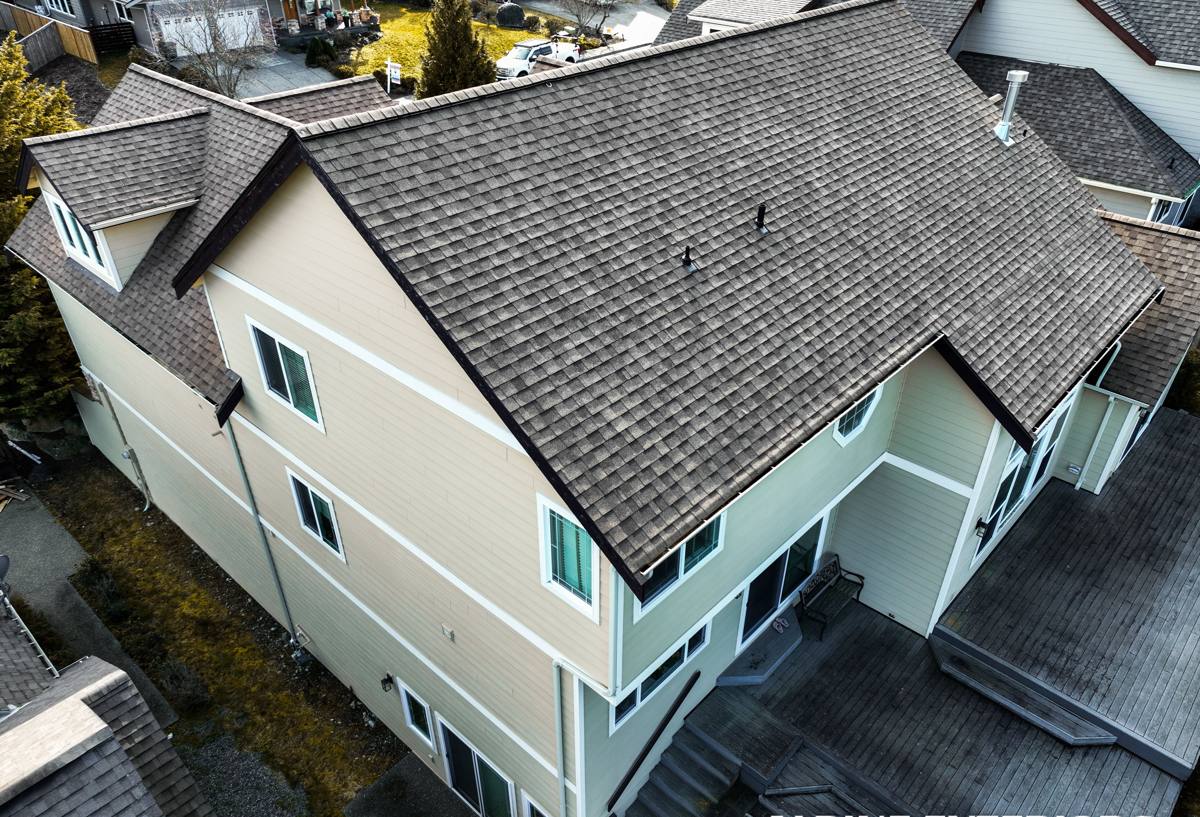
What Bellingham Homes Actually Need From a Deck
Three regional factors drive almost every decision on a Bellingham deck build:
Salt Air and Metal Corrosion
Even homes that aren't directly on the water get some salt exposure carried in on wind off the Strait of Georgia and Bellingham Bay. Salt air accelerates corrosion in fasteners, joist hangers, and any exposed metal hardware. Standard galvanized hardware can start showing rust streaks and pitting well before a deck's structural life is up. That staining isn't just cosmetic — it's an early signal that the hardware is degrading, and once fasteners weaken, the whole structure's safety margin shrinks.
Driving Rain and Water Management
Whatcom County rain isn't always gentle — it often comes sideways, driven by wind off the water. That means water gets forced into joints, ledger connections, and fastener holes that would stay dry in a calmer climate. A deck here needs real water-shedding details at every connection point, not just a good-looking surface.
Moss, Algae, and Surface Traction
Shaded decks, north-facing decks, and decks under tree cover develop moss and algae growth fast in this climate — often within the first damp season if the surface material and airflow underneath aren't accounted for. Beyond looking neglected, a mossy deck surface gets genuinely slick, which is a real slip hazard on stairs and landings.
What a Correctly Built Deck Includes Here
A deck that's built right for Bellingham conditions isn't about upgrading everything to the most expensive option — it's about getting a handful of details right that matter more here than they would somewhere drier and inland.
- Stainless or heavy-duty coated fasteners and hardware at every connection exposed to weather, not just at the ledger
- Proper ledger flashing where the deck attaches to the house, since ledger rot from trapped water is one of the most common failure points we see on older decks
- Adequate joist spacing and blocking sized for the actual decking material, not a generic default
- Airflow underneath the deck so wood and composite surfaces can dry out between rain events instead of staying damp
- Gapping and drainage at board seams so water sheds rather than pools and refreezes or feeds moss growth
- Footings set to local frost and soil requirements, confirmed for your specific lot rather than assumed from a plan set
Decking Material Choices for This Climate
There's no single "best" decking material — the right choice depends on your budget, how much maintenance you want to take on, and how much shade and moisture exposure the deck will see. Here's how the common options actually perform in a Bellingham setting:
| Material | Moisture & Moss Behavior | Maintenance | Typical Lifespan Here |
|---|---|---|---|
| Pressure-treated wood | Absorbs moisture readily; needs sealing to resist staining and moss | Annual cleaning, periodic sealing/staining | 15–20 years with upkeep |
| Cedar | Naturally rot-resistant but still needs sealing in a wet marine climate | Regular sealing to hold color and resist moisture | 15–25 years with upkeep |
| Composite decking | Doesn't rot, but shaded/damp spots still need periodic cleaning to prevent surface algae | Occasional washing, no sealing or staining | 25–30+ years, manufacturer-dependent |
| PVC/capped polymer | Fully moisture-resistant surface; least prone to moss adhesion | Lowest — mostly rinsing | 25–30+ years, manufacturer-dependent |
We'll walk you through these trade-offs honestly during your estimate. If you want the warmth of real wood and don't mind the maintenance rhythm, cedar or treated lumber done right is a perfectly good choice here. If you'd rather spend your weekends doing something other than deck upkeep, composite or capped polymer earns its higher upfront cost over the life of the deck.
Our Process for a Bellingham Deck Build
1. On-Site Assessment
We walk the site in person — sun exposure, drainage patterns, tree cover, and how the deck will tie into the house. Shade and moisture patterns vary a lot from lot to lot even within the same neighborhood, and that assessment shapes material and design recommendations more than any generic checklist would.
2. Design and Material Selection
We talk through layout, railing style, stair placement, and decking material against your budget and how much maintenance you actually want to do. This is where we're upfront about trade-offs rather than steering you toward whatever's easiest to install.
3. Permitting
Deck permitting requirements vary by jurisdiction and by deck height and attachment method. We handle the permit process so you don't have to track down the right forms or inspection schedule yourself.
4. Structural Build
Footings, framing, ledger flashing, and hardware go in first, with every connection point built to the standards outlined above — this is the part of the job that determines how the deck performs in year ten, not just how it looks on day one.
5. Decking, Railing, and Finish Work
Surface material, railings, stairs, and any built-in features go on last, followed by a final walkthrough with you before we call the job done.
Maintenance That Actually Matters Here
Every deck needs some upkeep, but in Bellingham's climate a few habits make an outsized difference in how long your deck stays solid and safe:
- Sweep debris and standing leaves off the surface regularly, especially in fall — trapped organic matter holds moisture and feeds moss
- Rinse or scrub shaded, north-facing areas at the start of the wet season before moss gets established
- Check fastener heads and hardware annually for early rust or looseness, particularly near the ledger and stair stringers
- Keep gutters and downspouts near the deck clear so runoff isn't dumping extra water directly onto or under the structure
- Reseal wood decking on the manufacturer's recommended schedule — skipping a cycle in this climate shows up fast
Common Problems We See on Older Bellingham Decks
When we're called out to repair or replace an existing deck in the area, the failures tend to repeat:
- Ledger rot from missing or failed flashing where the deck meets the house — often invisible until the deck starts to feel spongy near the house
- Rusted-through hardware on decks built with standard galvanized fasteners instead of stainless or marine-grade hardware
- Moss buildup on stairs creating a slip hazard, usually on north- or east-facing stairs that don't get much sun
- Undersized footings that have shifted with seasonal ground saturation, leading to a deck that feels less solid than it used to
- Board cupping or splitting on wood decking that wasn't gapped or sealed correctly for the amount of moisture it sees
Most of these are preventable with correct original construction, and most of them are also fixable — but catching them early is a lot cheaper than waiting for a structural problem.
Why a Crew That Already Works Bellingham Matters
Deck-building fundamentals — footings, framing, drainage — don't change from town to town. What does change is how aggressively you need to plan for salt exposure, how much you need to think about moss and shade patterns, and how local jurisdictions handle permitting and inspections. A crew that already works Bellingham and the surrounding Whatcom County coastline has already worked through those specifics on other projects nearby, instead of treating your deck as the first time they've had to think about it.
We're based in Blaine, and Bellingham is a regular part of our service area — not an occasional drive-out job. That means we're familiar with the area's typical lot conditions, we're not guessing at local permitting norms, and we're around for follow-up if a question comes up after the build is done.
Ready to Talk About Your Deck?
If you're planning a new deck, replacing an aging one, or just want an honest read on whether your current deck's hardware and framing are holding up, we're happy to take a look. Reach out for a free, no-pressure estimate using the form below, and we'll talk through what makes sense for your home, your budget, and this stretch of Whatcom County weather.