 Blaine Siding
 Windows Built for the Dakota Creek Climate
Dakota Creek homes sit close enough to the water and to open, wind-exposed terrain that windows here take a different kind of beating than windows twenty miles inland. Salt-laden air off the Strait and Drayton Harbor works into aluminum hardware and unsealed wood over time. Driving rain, pushed sideways by winter storms, finds any gap in flashing or caulking within a season or two. And the long gray stretch from fall through spring — Whatcom County's moss season — keeps humidity high against north- and west-facing walls for months at a time. A window that's fine in a dry inland climate can fail early here if it wasn't chosen and installed with these conditions in mind.
This page covers what we actually do when we install or replace custom windows for Dakota Creek homeowners: what the climate demands, what a correct installation looks like, and why local experience matters more than most people expect going in.
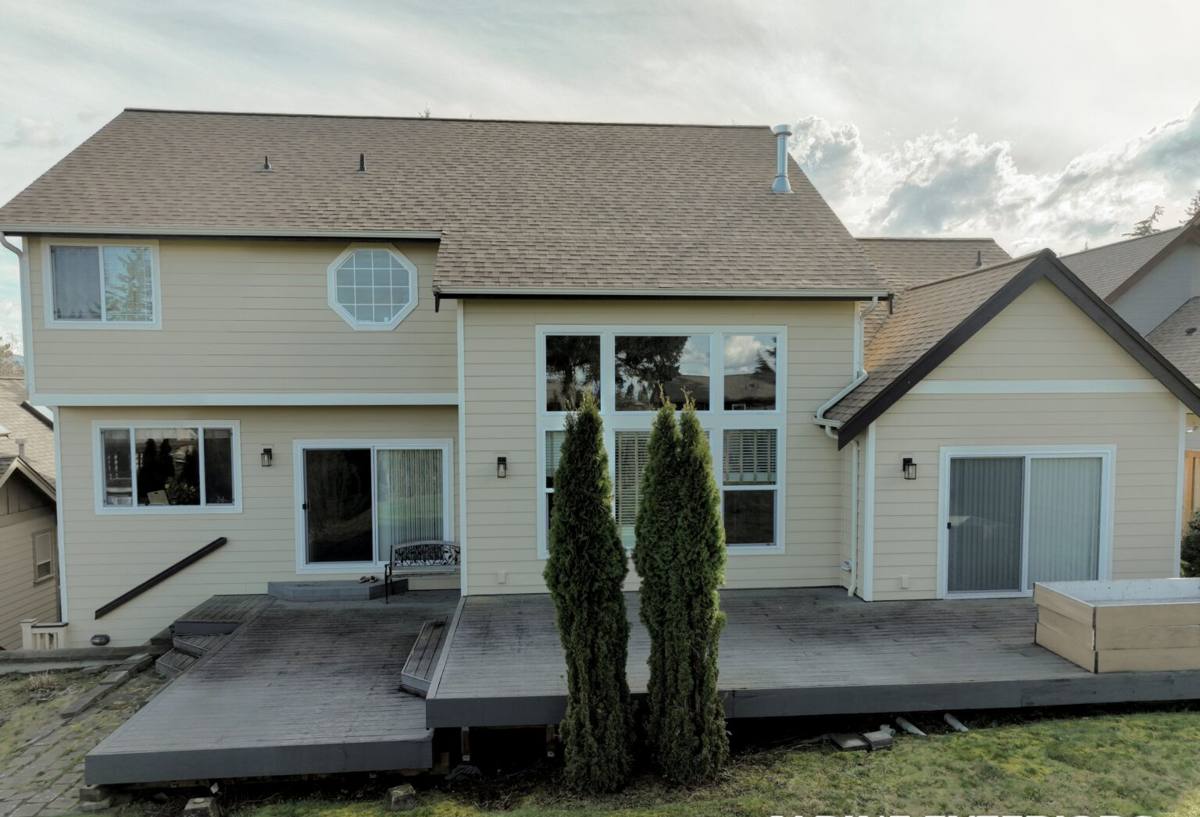
What Dakota Creek Homes Need From Their Windows
Corrosion-Resistant Hardware
Standard mill-finish aluminum hardware and cheap steel fasteners corrode faster near the coast. We spec stainless or coated hardware on window frames, cranks, and locks for homes in this area, and we flag it as an upgrade worth the small cost difference when it's not already standard on a given product line.
Real Weatherproofing, Not Just Caulk
A window is only as good as the flashing and sealing around it. Driving rain in this area doesn't fall straight down — it hits siding at an angle and pushes water sideways and upward under trim if the window isn't properly flashed with a drainage path built in. Caulk alone is not a weatherproofing system; it's a backup to correct flashing, not a substitute for it.
Moisture-Tolerant Materials Near Grade and Shaded Walls
Walls that stay shaded or damp for long stretches — common on north-facing sides of homes tucked near trees or drainage areas around Dakota Creek — need frame and trim materials that won't wick moisture or hold it against the wall. This is where material choice matters as much as the window unit itself.
Comparing Window Frame Materials for This Climate
There's no single "best" window material for every home — the right call depends on budget, the home's exposure, and how much upkeep an owner wants to take on. Here's how the common options actually perform in a salt-air, high-rainfall, moss-prone environment like this one.
| Material | Coastal/Moisture Performance | Maintenance | Typical Trade-Off |
|---|---|---|---|
| Vinyl | Good — won't rot or corrode; UV-stable frames hold up well | Low — occasional wash | Fewer color/finish options than wood or fiberglass |
| Fiberglass | Excellent — dimensionally stable, doesn't absorb moisture | Low | Higher upfront cost |
| Wood (clad exterior) | Good if cladding is intact and fully sealed; vulnerable where clad fails | Higher — exposed wood needs monitoring | Best interior look; more sensitive to installation quality |
| Bare aluminum | Poor in salt air unless marine-grade and well-maintained | High — corrosion risk over time | We generally steer clients away from this near the coast |
We don't push one brand or material on every job. What we push is honesty about how each option behaves once it's been through a few Whatcom County winters — including where a product's own warranty terms line up (or don't) with coastal exposure.
What a Correct Window Installation Actually Involves
Most window failures we get called out to fix aren't the window unit's fault — they're installation shortcuts that don't show up until water starts finding its way in, sometimes years later. A correct job includes:
- Removing old units carefully enough to inspect the rough opening and sheathing underneath for hidden rot or prior water damage before anything new goes in
- Installing self-adhered flashing membrane at the sill and jambs, lapped correctly with the house wrap so water sheds outward, never inward
- Sloping the sill pan so any water that does get past the sash drains back out, not into the wall cavity
- Setting the window plumb, level, and square, then shimming and fastening per the manufacturer's structural requirements — not just "close enough"
- Sealing the interior air barrier separately from the exterior water barrier, so the assembly can manage moisture in both directions
- Finishing exterior trim and caulk joints designed to be inspected and refreshed over time, not sealed shut and forgotten
Skip any one of these steps and the window may look fine for a year or two before a leak shows up behind the drywall — by then it's a much bigger repair than the window itself.
Signs Your Dakota Creek Home's Windows Need Attention
Inside the House
Fogging between double-pane glass means the seal has failed and the insulating gas has escaped — that's a glass unit replacement, not a full window necessarily, depending on the frame's condition. Soft or discolored drywall or trim below a window sill is a strong sign water is getting past the flashing.
Outside the House
Peeling paint or soft wood on exterior trim around a window frame, moss or algae growth concentrated right at the window's edges, and visible gaps between the frame and siding are all worth a look before they become an interior problem. In this climate, moss growth right at a window edge is often the first visible clue that moisture is sitting where it shouldn't.
Our Process for Dakota Creek Window Projects
- On-site assessment — we look at each window's exposure (which walls take the worst of the wind and rain), current condition, and what's driving the replacement, whether it's failed seals, drafts, or a full remodel.
- Material and product recommendation — based on that exposure, budget, and how the home is used, not a one-size answer applied to every wall.
- Written scope and estimate — what's being removed, what's going in, and what the flashing and sealing plan looks like, before any work starts.
- Installation — including rough opening inspection, so if we find hidden rot or old damage behind an existing window, you hear about it immediately, not after the fact.
- Final walkthrough — checking operation, seals, and finish work with you before we consider the job done.
Why Local Experience Matters for This Job
A crew that mostly works drier, inland jobs can still install a technically correct window — but they're less likely to catch the details that matter specifically here: which wall orientations around Dakota Creek take the worst wind-driven rain, how fast moss and algae take hold on north-facing trim in this microclimate, and which hardware upgrades are worth the cost given the salt exposure off the water. We work Whatcom County exteriors regularly, and that means we've seen how different window and material choices actually hold up here over years, not just on paper.
It also means we're not guessing about permitting or code requirements for window replacement in Blaine and the surrounding county — we handle that as a normal part of the job rather than something that slows a project down.
Budgeting for a Custom Window Project
Costs vary widely based on window size, material, number of openings, and whether it's a straightforward swap or a project that involves resizing openings or matching custom shapes. Rather than quote a number that won't reflect your actual home, we walk every project's cost drivers with you directly: material choice, glass package, hardware finish, and the condition of the rough openings once we're inside them. A vinyl replacement in an existing opening is a very different budget than a custom fiberglass unit in a resized opening with new trim work — we'll be specific with you once we've actually seen the job.
Questions to Ask Before You Hire
- Do you inspect the rough opening for hidden rot before installing, or just install over what's there?
- What flashing method do you use, and how does it handle wind-driven rain specifically?
- Is the sill pan sloped to drain, or just caulked flat?
- What's the warranty on both the window product and your installation labor, and who do I call if a seal fails in three years?
- Have you worked on homes in this specific area, and what have you seen go wrong here that you now build around?
If a contractor can't answer those clearly, that's worth noting before you sign anything.
If you're weighing a window project for a Dakota Creek home — whether it's a few problem windows or a full-house replacement — we're happy to come take a look and walk you through what we'd recommend and why. The estimate is free, there's no pressure, and you'll get a straight answer about what your home actually needs. Use the form below to get started.