 Blaine Siding
 Windows Built for Grandview's Weather, Not Just the Showroom
Grandview homes sit close enough to the water and open farmland around Blaine that they take a different kind of weather than a house twenty minutes inland. Salt-laden air off Semiahmoo Bay and the Strait, wind-driven rain that comes in sideways rather than straight down, and a wet season that stretches for months all put extra stress on window seals, frames, and glazing. A window that's rated "energy efficient" on paper can still underperform here if it isn't matched to this specific exposure. This page walks through what actually matters for Grandview homeowners considering window replacement — not generic window-shopping advice, but what we've learned installing and servicing windows in this exact stretch of Whatcom County.
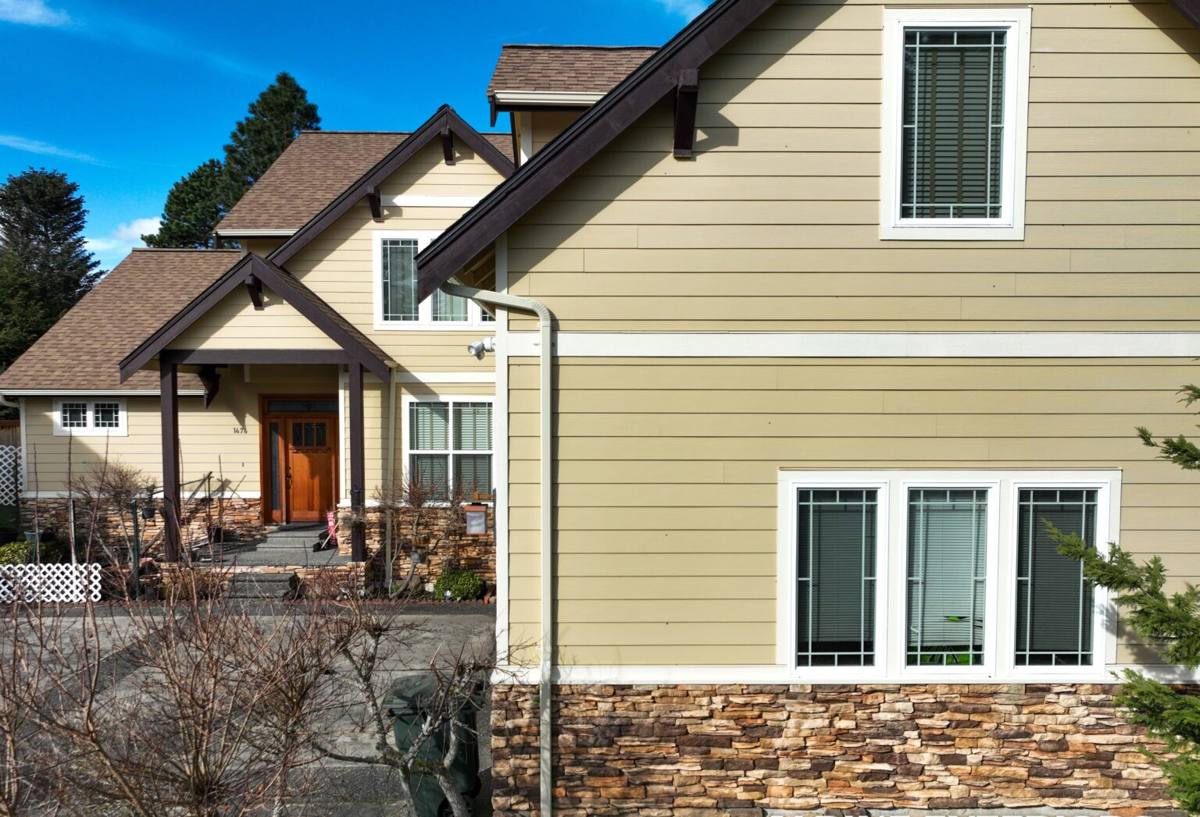
What This Climate Actually Does to Windows Over Time
Salt Air and Metal Fatigue
Proximity to salt water accelerates corrosion on window hardware — hinges, cranks, locks, and especially aluminum components. Cheaper aluminum-clad or all-aluminum windows show pitting and stiffness in operation years before a comparable vinyl or fiberglass unit would. Salt film also degrades certain sealant formulations faster, which shows up as tiny gaps at the frame perimeter long before the glass itself fails.
Driving Rain and Water Intrusion
Blaine's storms don't just fall, they push. Wind-driven rain finds any weakness in flashing, sill pans, or the seal between the window unit and the rough opening. Most window "failures" we're called out for in this area aren't actually failed glass units — they're water getting behind the frame through a flashing detail that was never done correctly at installation, then rotting the framing member behind the wall. The window gets blamed; the installation is usually the real culprit.
The Long Moss and Mildew Season
Whatcom County's moss season isn't a few weeks — it's most of the year on north- and west-facing exposures. Moss and algae hold moisture against wood trim and sills, which is exactly the kind of standing dampness that rots wood window components and stains vinyl. Sills that don't shed water quickly, or trim that traps organic debris, will show damage sooner here than in a drier climate.
What "Energy-Efficient" Should Mean in Grandview
Energy efficiency isn't just an R-value on a sticker. In this climate, it's the combination of glass performance, frame material, and — just as important — how well the unit is sealed against wind-driven moisture. A window can have excellent U-factor and still leak air and water if the frame material warps, the weatherstripping degrades in salt air, or the installation wasn't sealed correctly. We look at all three together, not just the glass spec.
Glass and Gas Fill
Double-pane windows with low-E coatings and argon gas fill are the practical standard for this region — they cut heat loss and reduce condensation on interior glass during our cold, damp winters. Triple-pane adds marginal benefit for most Grandview homes unless you're dealing with unusual noise or an especially exposed elevation, and the added cost doesn't always pencil out against the efficiency gain.
Frame Material Matters More Here Than Most Places
| Frame Material | Salt Air / Coastal Behavior | Moisture Resistance | Maintenance |
|---|---|---|---|
| Vinyl | Won't corrode; UV-stable options hold color well | Good — won't rot; seams need quality welds | Low — occasional cleaning |
| Fiberglass | Excellent — dimensionally stable in temperature swings | Excellent — very low expansion/contraction | Low — most durable long-term option |
| Aluminum | Poor without marine-grade coatings — prone to pitting near salt air | Fair — conducts cold, prone to condensation | Moderate — hardware needs monitoring |
| Wood (clad or unclad) | Vulnerable if cladding or paint is compromised | Poor unmaintained — rot risk in wet, mossy conditions | High — regular painting/sealing required |
For most Grandview homes, we steer people toward vinyl or fiberglass. Both hold up against salt exposure without ongoing refinishing, and neither gives moss and mildew the organic material they need to take hold the way wood trim does. We're not against wood-framed windows as a design choice, but we're honest about the maintenance commitment they require in this climate — it's a real trade-off, not a knock on the product.
Signs a Grandview Home Needs Window Replacement, Not Just Repair
- Visible fogging or a hazy band between the glass panes — the seal has failed and the gas fill is gone
- Windows that are difficult to open, close, or lock, especially after damp weather
- Soft or discolored wood trim or sills, or paint that bubbles and peels repeatedly in the same spots
- Cold drafts near the frame even when the window is fully latched
- Condensation forming on the inside of the glass regularly through fall and winter
- Visible corrosion or stiffness on hardware — cranks, hinges, or locks that used to move smoothly
- A noticeable jump in heating costs without any other explanation
- Moss or algae staining building up on sills or lower frame edges faster than you can keep it cleaned
What a Correct Installation Actually Involves
The window unit itself is maybe half the job. The other half — the part that actually determines whether you get a call back in three years about water damage — is the installation detail work:
- Opening inspection. Before anything goes in, we check the rough opening and surrounding framing for existing rot or moisture damage, which is common on older homes in this area.
- Flashing sequence. Proper flashing — sill pan first, then side flashing, then head flashing — layered so water is always directed outward and down, never trapped behind the siding.
- Sill pan with a positive slope. A sill pan that actually sheds water outward is one of the single biggest differences between an installation that lasts and one that leaks in a few years, especially with the wind-driven rain this area gets.
- Air sealing and insulation around the frame. Gaps around the window unit are backed with proper low-expansion foam or backer rod, not just caulked over — caulk alone isn't an air seal.
- Exterior sealant matched to the siding material. The right sealant for the substrate, applied where it actually needs to be — not just a bead around the trim for appearance.
- Interior finish and hardware check. Trim reinstalled cleanly, hardware tested through a full open-close-lock cycle before we consider the job done.
Skipping or rushing any one of those steps is how a good window ends up performing like a bad one within a few wet seasons.
Our Process, Start to Finish
Estimate and Assessment
We start with a walk-through of the home, looking at each window's exposure — which sides face prevailing wind and rain, which get the most moss and shade, and where existing moisture damage might already be hiding behind trim. That exposure assessment shapes which product and installation details we recommend for each opening, since a south-facing window and a north-facing window on the same house can have very different needs here.
Product Selection
We walk through frame material, glass package, and grille or hardware style options based on your home's style and budget, without pushing a single "one size fits all" product. If a lower-cost option is genuinely a good fit for a particular window, we'll say so.
Installation
Old units are removed carefully to limit disturbance to surrounding siding and trim. We inspect the opening as described above, address any hidden rot or damage before the new unit goes in, and follow the full flashing and sealing sequence — not a shortcut version of it.
Final Walkthrough
Every window gets operated, checked for square and level, and inspected for a clean seal inside and out before we consider the job finished. We clean up the work area and haul away the old units.
What Windows Typically Cost, and What Drives the Range
Exact pricing depends on the specifics of your home, but the factors below are what usually move the number up or down for Grandview projects:
| Cost Factor | How It Affects Price |
|---|---|
| Frame material | Vinyl is generally the most affordable; fiberglass costs more upfront but needs less maintenance |
| Window size and configuration | Larger units, bays, and custom shapes cost more than standard double-hung or slider sizes |
| Existing damage | Rot or moisture damage found in the opening adds repair work before the new window can go in |
| Number of windows | Replacing an entire home's windows at once is usually more cost-effective per unit than one-off replacements |
| Glass package | Upgraded low-E coatings or triple-pane glass add cost for marginal efficiency gains in most cases |
| Access and site conditions | Second-story or hard-to-access windows can add labor time |
We'll give you a written estimate that breaks these out so you can see exactly what you're paying for, rather than a single lump number.
Why It Matters That We Already Work in Grandview
A contractor who already works this part of Whatcom County knows which exposures on a Grandview lot take the worst of the wind and rain, what kind of moisture damage is common in homes of a certain age here, and how aggressively moss and algae build up on north-facing trim through the wet months. That familiarity shows up in small but real ways — knowing to check specific spots for hidden rot before we start, sequencing the flashing correctly the first time because we've seen what happens when it isn't, and recommending frame materials that actually hold up against salt air instead of ones that just look good on a spec sheet. It also means we're not learning the local weather patterns on your dime.
Caring for Your Windows After Installation
Even a well-installed, well-matched window benefits from basic upkeep in this climate:
- Rinse salt residue off frames and glass periodically, especially after storms with strong onshore wind
- Keep moss and algae from building up on sills and lower frame areas — a soft brush and mild cleaner is usually enough
- Check weatherstripping annually for gaps or wear, particularly on the sides that take the most wind
- Make sure gutters and downspouts near windows are clear so water isn't sheeting down across the glass and frame
- Address any new drafts, sticking hardware, or interior condensation promptly rather than waiting
If you're weighing whether it's time to replace windows on a Grandview home, or you just want a straight answer about what condition yours are in, we're happy to take a look. Use the form below to request a free, no-pressure estimate.