 Blaine Siding
 Point Roberts Asks More of Siding Than Most of Whatcom County
Point Roberts sits on its own peninsula, exposed to open water on three sides, which means homes here take a steadier, harder dose of weather than siding just a few miles inland in Blaine. Salt-laden wind off the water, wind-driven rain that hits walls sideways instead of falling straight down, and a wet season that stretches long enough to grow a real moss problem on north- and west-facing walls — all of it adds up. Siding that would hold up fine in a more sheltered part of Whatcom County can start failing early out here if it isn't matched to the exposure and installed correctly.
This page is about one thing specifically: installing James Hardie fiber cement siding on a Point Roberts home, done right, for this climate. We don't install vinyl, LP SmartSide, or other fiber cement brands — this is the system we've standardized on, and here's what it takes to get it right in a marine exposure like this one.
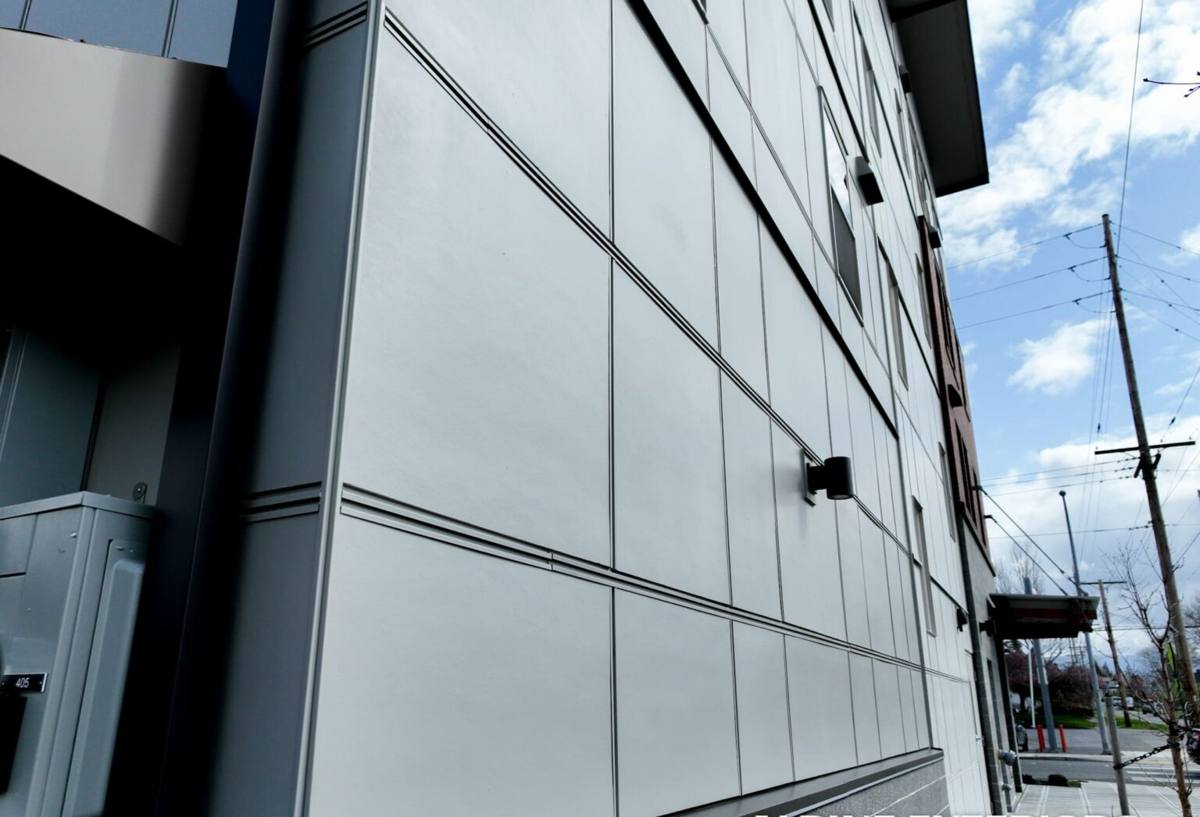
What Salt Air and Driving Rain Actually Do to a Wall Over Time
Salt air is more than a smell. Airborne salt is corrosive, and it settles on every exterior surface — siding, trim, fasteners, flashing — and stays there until rain washes it off or it gets scrubbed away. Left alone, it accelerates corrosion on any exposed metal fastener or flashing detail, and it can degrade certain paint films and coatings faster than in a non-coastal setting.
Driving rain is the other half of the equation. When rain comes in at an angle instead of falling straight down, it gets pushed into every horizontal seam, butt joint, and penetration on a wall — places that stay mostly dry on a calmer site. That means:
- Joints and seams need to be detailed tighter and flashed more carefully, not just caulked and hoped for
- Water-resistive barriers behind the siding have to actually be continuous, not just present
- Any gap, miter, or fastener pattern that's "close enough" inland becomes a real weak point on an exposed wall
- Trim-to-siding transitions need proper clearance and drainage, not a tight caulked seal that traps moisture
None of this is exotic — it's standard building science. But it only works if the crew installing the siding actually follows it, every wall, every time. A lot of siding failures we get called out to inspect aren't a product problem; they're a handful of installation shortcuts that a coastal climate eventually finds and exploits.
Why James Hardie Fits This Exposure
James Hardie fiber cement is engineered from cement, sand, and cellulose fibers — it doesn't rot, it isn't a food source for pests, and it's non-combustible. For a site like Point Roberts, the two properties that matter most are moisture behavior and finish durability.
Moisture Behavior
Fiber cement doesn't swell, cup, or delaminate the way wood-based siding products can when they take on repeated moisture exposure. That matters here because Point Roberts walls don't get a dry season the way some parts of the state do — they get a long, gray, wet stretch where siding stays damp for days at a time. James Hardie's HZ5 product line is specifically formulated for the wetter, more humid climate zones on the West Coast, which is the right specification for this location.
Finish Durability
James Hardie's ColorPlus finish is baked on at the factory in a controlled environment, with multiple coats and a UV-cured process, rather than sprayed on-site after installation. In a salt-air environment, a factory finish holds its color and resists fading, chipping, and cracking longer than field-applied paint typically does, because it isn't fighting the same on-site variables — humidity, temperature swings, salt film on the surface — that a painter has to work around outdoors.
What Correct Installation Looks Like Here
James Hardie publishes specific installation requirements, and in a high-exposure coastal setting, following them isn't optional — it's the difference between a wall that performs for decades and one that develops problems in a handful of years. On a Point Roberts job, that means:
Clearances and Gaps
Hardie panels and lap siding need proper clearance from grade, roofing, decks, and other flatwork — typically a minimum of several inches — so water has somewhere to go instead of wicking up into the bottom edge of the siding. Butt joints get gapped and flashed, not butted tight and caulked over.
Water-Resistive Barrier and Flashing
A continuous water-resistive barrier goes behind the siding, lapped correctly at every seam, with flashing at every window, door, deck ledger, and penetration. On a wall that takes driving rain regularly, this layer is doing real work — it's the backup system for anything that gets past the siding itself.
Fastening
Corrosion-resistant fasteners, set to the manufacturer's spacing and depth pattern — not overdriven, not underdriven. In a salt environment, fastener quality and placement matters more than it would a few miles inland, because a fastener that starts to corrode can telegraph rust staining and eventually loosen the panel.
Caulking and Sealant
Sealant gets used at penetrations and transitions where James Hardie's install guide calls for it — not as a substitute for proper flashing and gapping elsewhere. Sealant is a maintenance item; flashing is the permanent line of defense.
Moss, Algae, and the Shaded Side of the House
Point Roberts' tree cover and marine humidity make for ideal moss and algae growing conditions, especially on north-facing walls and anywhere siding stays shaded most of the day. Moss itself doesn't destroy fiber cement the way it can degrade wood siding over time, but it does hold moisture against the surface longer than a clean wall would, and it looks bad fast. A few things reduce the problem at the design and install stage:
- Keeping vegetation and tree limbs trimmed back from walls so airflow and sun exposure aren't fully blocked
- Proper gutter and downspout function, so runoff isn't sheeting down a wall section repeatedly
- Correct siding clearance from grade and landscaping beds, so soil and mulch aren't holding moisture against the bottom courses
- Routine rinsing on the shaded, moss-prone elevations — this is a maintenance item, not a one-time fix
Cost Factors on a Point Roberts Hardie Job
Every project is different, and we'll give you real numbers after walking your home — but these are the main factors that move the price on a job in this specific area:
| Factor | Why It Matters Here |
|---|---|
| Existing siding removal | Tear-off and disposal of failing wood, vinyl, or damaged fiber cement adds labor and haul-off cost |
| Sheathing and WRB condition | Coastal moisture exposure sometimes means sheathing repair is needed before new siding and barrier go on |
| Trim and flashing detail level | Homes with more window/door openings and roof transitions need more flashing work, which is labor-driven |
| Product line and profile | HZ5 panels, lap width, and ColorPlus color selection all affect material cost |
| Site access and logistics | Point Roberts' location affects material delivery scheduling and needs to be planned into the project timeline |
| Elevation exposure | Walls taking direct wind-driven rain may warrant extra flashing detail versus more sheltered elevations |
Our Process for a Point Roberts Project
Point Roberts is a U.S. exclave — reaching it by land means crossing through Canada, which is a real logistical factor for scheduling crews and coordinating material deliveries, and it's one reason a lot of general contractors treat it as an afterthought rather than a regular stop. We plan Point Roberts jobs around that reality instead of being surprised by it: material orders get staged and timed so the crew isn't standing around waiting, and the whole job gets scheduled as a defined block of consecutive days rather than piecemeal visits.
On-site, the process is straightforward:
- Walk the home and assess the existing siding, sheathing condition, and exposure on each elevation
- Identify problem areas — moss-prone walls, flashing points, deck and roof transitions — before any material shows up
- Confirm product line, profile, and color, and get an itemized estimate
- Remove old siding, inspect and repair sheathing as needed, install a continuous water-resistive barrier
- Install James Hardie panels or lap siding to manufacturer spec, with full flashing and correct fastening
- Final walk-through to check every seam, joint, and trim line before we call it done
Why It Matters That We Already Work Out Here
A contractor who's done Point Roberts jobs before already knows the access logistics, already understands what a west-facing wall on this peninsula is up against compared to a sheltered lot in town, and isn't learning those lessons on your house. That experience shows up in small decisions throughout the job — where extra flashing makes sense, which elevations need closer attention to fastening and sealant, how to sequence the work around delivery timing. None of that is guesswork once you've done it a few times; it's just knowing the site.
Signs Your Current Siding Is Losing the Fight
Whether you're on original wood siding, aging vinyl, or fiber cement that wasn't installed to spec, these are the signs worth a closer look:
- Soft or spongy spots when you press on the siding, especially near the bottom courses
- Visible gaps opening up at butt joints or trim transitions
- Paint that's peeling, bubbling, or chalking faster than it should
- Persistent moss or algae staining that comes right back after cleaning
- Rust streaking from fasteners or flashing
- Warping, cupping, or bowing panels, particularly on the most exposed elevation
Any one of these on its own might just need monitoring. Several at once, or moisture showing up on the interior side of an exterior wall, usually means it's time for a real inspection rather than a patch.
Get a Straight Look at Your Home
If you're in Point Roberts or anywhere else in the Blaine area and want an honest read on what your siding needs — repair, a partial section, or a full James Hardie install built for this exposure — we're happy to walk the property and give you a clear estimate. No pressure, no upsell script, just a straightforward look at what your home actually needs. The form below gets you started.