 Blaine Siding
 Board & Batten in Lynden: A Look That Has to Earn Its Keep
Board and batten has become one of the most requested siding styles in Lynden over the past several years, and it's easy to see why. The vertical lines read as clean and modern on newer builds, but they also sit comfortably on the older farmhouses and barns that give this part of Whatcom County its character. It's a style that works on both a brand-new build near the edge of town and a decades-old property that's ready for a facelift.
The problem is that board and batten gets chosen for its looks far more often than it gets evaluated for how it will actually perform here. This is not Phoenix or Denver siding. Lynden sits inland from the coast but still gets plenty of the same weather that punishes the rest of Whatcom County — long stretches of driving rain, humid air that carries salt inland from the Strait of Georgia and Puget Sound, and a moss season that can run most of the year on shaded, north-facing walls. A board and batten installation that isn't detailed correctly for that combination will show problems years before a comparable lap siding job would.
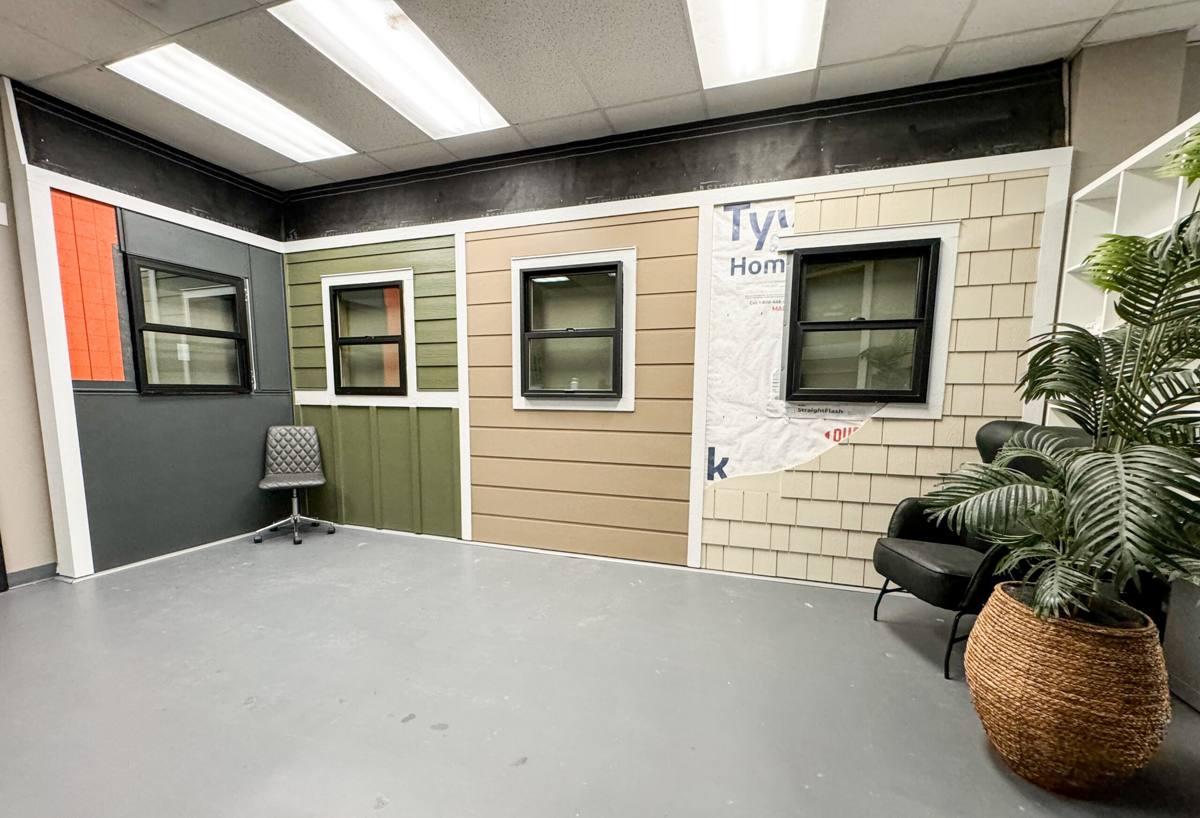
Why the Local Climate Changes How This Siding Should Be Built
Driving Rain and Vertical Seams
Board and batten relies on vertical seams where the batten strips overlap the field boards. Every one of those seams is a place water can find its way behind the cladding if the flashing, fastening, and gapping aren't done right. In a drier climate that's a minor risk. In Lynden, where wind-driven rain off the Nooksack Valley and marine weather systems can push moisture sideways against a wall for days at a time, those seams need to be built assuming they will get wet — not hoping they won't.
Salt Air and Fastener Corrosion
Whatcom County's proximity to salt water means airborne salt reaches well inland, especially on days with a steady onshore flow. Salt accelerates corrosion in fasteners, flashing, and any exposed metal trim. A board and batten job fastened with the wrong hardware can develop rust streaks and loosening battens years before the siding material itself would fail.
Moss and Shaded Exposures
Lynden's tree cover, cloudy stretches, and northern latitude add up to long moss and algae seasons on shaded walls. Board and batten's vertical battens create narrow ledges and shadow lines that hold moisture longer than a flat lap profile. If the siding material itself absorbs water, that moss problem becomes a rot problem underneath it.
What a Correctly Built Board & Batten Wall Actually Involves
A board and batten installation is more than nailing strips over sheets. Done right, it's a layered assembly where every layer has a job:
- Weather-resistive barrier — a continuous water-resistive barrier behind the field panels, lapped correctly at every seam and penetration.
- Rainscreen gap — a drainage gap behind the siding so any water that does get past the surface can drain and the wall can dry, rather than sitting against sheathing.
- Flashing at every horizontal break — window heads, trim boards, and any horizontal transition need proper flashing, not just caulk.
- Batten spacing and fastening — battens fastened into structural framing or blocking, not just through the field panel, with spacing that follows the manufacturer's engineering.
- Corrosion-resistant fasteners — hardware rated for coastal exposure, not standard interior-grade fasteners.
- Correct caulking and sealant at penetrations — used sparingly and in the right places, not as a substitute for proper flashing.
Skip any one of these and the wall may look identical on installation day. The difference shows up two, five, or ten years later, usually as staining, soft spots, or battens that have started to cup or pull away.
Why We Only Install James Hardie for This Style
Board and batten is available in a lot of materials — vinyl, engineered wood, primed spruce, cedar, and fiber cement among them. We install James Hardie fiber cement exclusively, and board and batten is actually one of the styles where that decision matters most.
Vertical board and batten in vinyl tends to show its seams and can warp or bow with temperature swings, which is more noticeable on a plain vertical profile than it is on a lap pattern. Wood-based board and batten — whether cedar or primed spruce — looks excellent on day one but is the most exposed to exactly the risks this climate creates: swelling at the seams, moisture absorption at cut edges, and an ongoing repainting and caulking schedule to keep ahead of it.
James Hardie's fiber cement board and batten panels are engineered specifically to resist moisture intrusion, and the HZ5 product line is formulated for the kind of freeze-thaw and moisture cycling this region sees. The ColorPlus factory finish is baked on rather than field-applied, which matters on a style where touch-up painting on visible vertical seams is hard to make look invisible. It's also non-combustible, which is worth factoring in given how dry late summers in Whatcom County can get despite the wet winters.
Board & Batten Style Options Compared
| Style Variant | Board Width / Reveal | Best Suited For |
|---|---|---|
| Traditional wide-board | Wider field boards, moderate batten spacing | Farmhouse and craftsman-style homes common in Lynden |
| Narrow modern board and batten | Narrower boards, tighter batten spacing | Newer builds and contemporary remodels |
| Mixed with lap siding | Board and batten on gables/accents, lap on main walls | Homeowners who want the look without full vertical exposure on every wall |
How We Handle Board & Batten Projects in Lynden
Assessment
We start by walking the exterior and identifying the walls most exposed to wind-driven rain and shaded, moss-prone areas. That assessment drives decisions on rainscreen detailing, flashing priorities, and where extra attention is needed — it's not the same wall-by-wall plan for every house.
Tear-off and Sheathing Check
Old siding comes off and the sheathing underneath gets inspected before anything new goes up. This is where hidden moisture damage from a previous installation often turns up, and it needs to be dealt with before new siding goes over it, not after.
Barrier and Rainscreen Installation
We install a continuous weather-resistive barrier and a drainage gap behind the field panels. This step is invisible once the project is finished, which is exactly why it's the step that gets skipped on lower-quality jobs.
Panel and Batten Installation
Field panels and battens go up following James Hardie's fastening and spacing specifications, with corrosion-resistant fasteners driven into framing or blocking.
Flashing and Trim
Window heads, trim boards, and any horizontal transitions get flashed properly before the batten strips close over them.
Final Walkthrough
We walk the finished exterior with the homeowner, checking seams, fastening, and paint lines before calling the job complete.
Maintenance: What Board & Batten Owners in Whatcom County Should Watch For
Even a correctly installed board and batten wall benefits from periodic attention, especially given the local moss and moisture conditions. A short seasonal check can catch small issues before they become expensive ones:
- Look for moss or algae buildup on shaded, north-facing battens, especially under trees or near downspouts.
- Check caulking at window and trim transitions once a year for cracking or separation.
- Watch for rust streaking around fasteners or trim, which can signal the wrong hardware was used or is starting to fail.
- Inspect the base of the wall near grade for splashback staining, which points to a drainage or grading issue rather than a siding problem.
- Note any battens that feel loose or look like they're pulling away from the wall — this is worth a prompt look rather than a wait-and-see approach.
Why Hiring a Crew That Already Works in Lynden Matters
Board and batten detailing isn't identical everywhere. A crew that mostly works drier inland climates will make different assumptions about flashing, gapping, and fastener choice than a crew that installs siding regularly in Whatcom County. Working in Lynden and the surrounding area means seeing firsthand how driving rain and salt-laden air behave against a wall over multiple seasons, not just reading a spec sheet.
That familiarity shows up in small decisions — where to add extra flashing attention, which walls need the most conservative detailing, how much drainage capacity to build in behind a rainscreen. Those decisions are hard to get right from a general playbook, and they're exactly where a locally experienced crew earns its value.
Get a Straightforward Estimate
If you're weighing board and batten for a home in Lynden, we're happy to walk the exterior with you, talk through what your specific walls need given their sun and rain exposure, and give you a clear, no-pressure estimate. There's no obligation — just an honest look at what the job actually involves for your house.