 Blaine Siding
 Building a Deck That Actually Holds Up Near Blaine
Nooksack-area homes near Blaine sit in one of the more demanding pockets of Whatcom County when it comes to outdoor structures. You've got salt-laden air rolling in off the Strait, long stretches of driving rain through fall and winter, and a moss and algae season that can run eight months or more. A deck that would be fine in a drier inland climate can start failing here in a fraction of the time if it wasn't built with this specific environment in mind. We build and repair decks in this area as an extension of our siding and exterior work, which means we think about moisture management, flashing, and material behavior the same way whether we're covering a wall or framing a deck.
This page is about deck building specifically for the Nooksack and greater Blaine area — what the local climate actually does to a deck over time, what a properly built one requires here, and how we approach the work so it's still solid a decade or two from now.
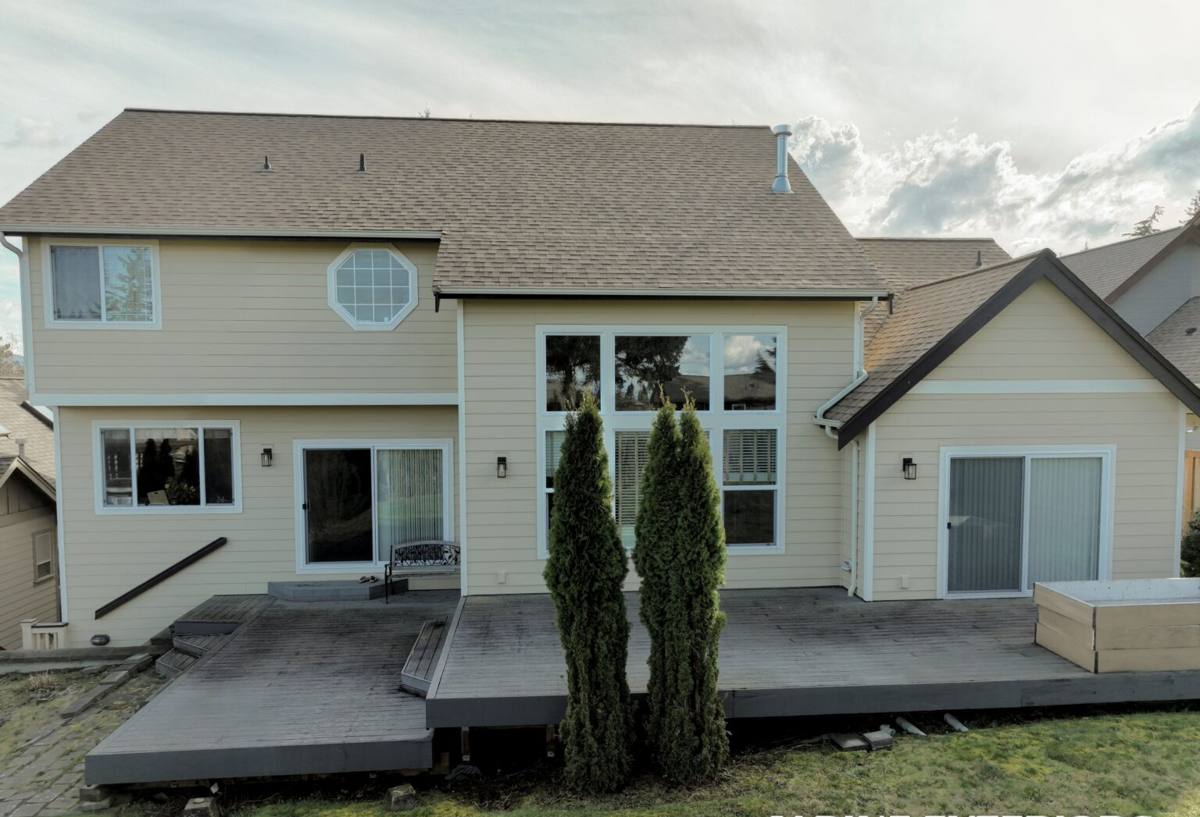
What the Local Climate Does to a Deck
Salt Air and Metal Fasteners
Proximity to the water means airborne salt settles on everything, including deck hardware. Standard fasteners and connectors that would be fine forty miles inland can start corroding here within a few years. Corroded fasteners aren't just a cosmetic problem — a joist hanger or ledger bolt that rusts through is a structural failure waiting to happen, and it usually happens quietly, hidden under decking boards where nobody's looking.
Driving Rain and Ledger Rot
Blaine-area storms don't just fall straight down — wind-driven rain gets pushed sideways into ledger boards, stair stringers, and any spot where the deck meets the house. The ledger board connection (where the deck attaches to the structure) is the single most common failure point on decks in this region, because water gets behind it and rots the framing from the inside where it's invisible until the deck starts to sag or pull away.
Moss, Algae, and Surface Wear
With a moss season stretching much of the year, deck surfaces here stay damp longer than in drier climates. Damp wood surfaces grow moss and algae, which hold even more moisture against the board and make the surface slick and slippery — a real safety issue on stairs and landings, not just an appearance problem.
What a Correctly Built Deck Requires Here
None of the problems above are exotic — they're well understood in coastal Pacific Northwest construction. The issue is that a lot of decks, especially older ones or ones built to a minimum standard, skip the details that actually matter in this climate. A deck built right for Nooksack conditions includes:
- Ledger board flashing that sheds water away from the house wall rather than trapping it against the rim joist
- Stainless steel or heavy hot-dip galvanized fasteners and structural connectors rated for coastal exposure, not standard zinc-coated hardware
- Joist tape or a self-adhering membrane over the tops of joists and beams to stop water from soaking into end grain and cut surfaces
- Proper footing depth and drainage so posts aren't sitting in standing water through the wet months
- Gapping and board spacing that lets the deck surface actually dry out between rain events instead of holding moisture
- Under-deck airflow — skirting and framing that doesn't seal off ventilation, since trapped humid air under a low deck accelerates rot
Skip any of these and you're not saving real money — you're just moving the cost of the repair five to ten years down the road, usually into a bigger job than it would have been to do right the first time.
Decking Material Comparison for This Climate
Material choice matters more here than in a drier climate because everything is exposed to more moisture, more of the year. Here's how the common options actually perform under Blaine-area conditions:
| Material | How It Handles This Climate | Maintenance Burden | Typical Lifespan Here |
|---|---|---|---|
| Pressure-treated wood | Resists rot chemically but still absorbs moisture; needs sealing to control cupping and splintering | Annual cleaning, re-sealing every 1-2 years | 10-15 years with upkeep |
| Cedar | Naturally rot-resistant and handles moisture well, but softer surface means more wear from foot traffic and moss growth if left unsealed | Regular cleaning, staining/sealing every 2-3 years | 15-20 years with upkeep |
| Composite / PVC decking | Doesn't absorb water or rot, resists moss staining much better, holds up well to salt air | Occasional washing, no sealing or staining | 25+ years, backed by manufacturer warranty |
We install all three depending on budget and what the homeowner wants long-term. Composite costs more up front but makes the most sense for anyone who doesn't want a recurring maintenance chore in a climate that's damp most of the year. Wood decks aren't a bad choice — they just require someone who's honest with you about the upkeep, and we always are.
Substructure: The Part Nobody Sees, But Everything Depends On
The decking boards get all the attention because they're what you see and walk on, but the framing underneath is what determines whether the deck is still safe in fifteen years. We treat the substructure — footings, posts, beams, joists, and the ledger connection — as the part of the job that can't be shortcut, because it's also the part that's expensive and disruptive to fix later once decking, railing, and stairs are built on top of it.
Footings and Posts
Footings need to sit below frost depth and have proper drainage so water doesn't pool around the post base. In lower-lying or poorly draining yards around Nooksack, this sometimes means adjusting footing design rather than using a one-size approach.
The Ledger Connection
Where the deck ties into the house, we flash it so water sheds outward and down, not into the wall assembly. This is also where deck work and siding work overlap directly — if the flashing detail is wrong, you can end up with hidden moisture damage behind the siding right at the deck attachment point, which is exactly the kind of problem we get called to fix on older decks that were never flashed correctly to begin with.
Cost Factors to Understand Before You Budget
Every deck quote is different, but the line items that actually move the price are consistent. Understanding them helps you compare bids honestly instead of just looking at a bottom-line number.
| Factor | Why It Matters |
|---|---|
| Decking material | Composite runs higher upfront than wood but eliminates recurring sealing/staining costs |
| Height and stairs | Elevated decks need more substantial framing, guardrails, and stair structures, which adds labor and material |
| Footing conditions | Poor drainage or difficult access can require deeper or additional footings |
| Ledger vs. freestanding | A ledger-attached deck needs careful flashing work at the house; a freestanding deck avoids that but needs its own beam support on both sides |
| Railing style | Cable, glass, and custom railing systems cost more than standard baluster railing |
| Removal of an old deck | Demo and disposal of an existing structure, especially one with rot, adds to the timeline and cost |
How We Approach a Deck Project
- On-site assessment — we look at drainage, sun/shade exposure, how the deck will tie into the house, and what condition any existing structure is in
- Material and layout discussion — we walk through decking options, framing approach, and railing style based on your budget and how you'll use the space
- Permitting — most deck construction in Whatcom County requires a building permit depending on height and size; we handle that process as part of the job
- Framing and flashing — footings, posts, beams, joists, joist tape, and ledger flashing done to hold up under coastal moisture, not just to pass inspection
- Decking, stairs, and railing installation — fastener and hardware choices matched to the material and to salt-air exposure
- Final walkthrough — we go over maintenance expectations specific to whatever material you chose, so there are no surprises a year in
Maintaining a Deck in This Climate
Whatever material a deck is built from, a little seasonal attention goes a long way in an environment with this much rain and moss pressure. We tell every deck customer the same thing:
- Sweep debris and standing leaves off the surface regularly, especially in fall — trapped organic matter holds moisture and feeds moss growth
- Clean moss and algae off the surface and stairs before it gets slick, particularly on shaded sections that dry out slower
- Check railing posts and stair connections annually for looseness, which can be an early sign of moisture getting into a connection point
- Re-seal or re-stain wood decking on the schedule the product calls for — skipping a cycle in this climate lets moisture in faster than in a drier region
- Keep gutters and downspouts near the deck clear so runoff isn't dumping directly onto the structure or footings
- Look underneath the deck once a year if access allows — this is where early rot and fastener corrosion show up first, long before it's visible from the top
Why It Matters That We Already Work in Nooksack and Blaine
A deck built to a generic national spec doesn't account for the specific combination of salt exposure, rain volume, and moss season that Whatcom County homes deal with. We work on homes throughout the Blaine area regularly, which means we've seen how decks built to lesser standards actually fail here — not in theory, but in the ledger boards, footings, and fastener corrosion we get called to repair. That local track record shapes every material and flashing decision we make on a new build, and it's also why we're realistic with homeowners about what a given material or design will actually cost to maintain once it's exposed to this climate year-round.
We also stand behind the work with the same accountability we bring to siding and exterior jobs — because in this region, deck problems and siding problems often come from the exact same source: water finding a way in where flashing or detailing was skipped.
Get a Straightforward Estimate
If you're planning a new deck, replacing an aging one, or just want an honest opinion on whether an existing deck near Nooksack or Blaine is holding up the way it should, we're happy to take a look. Reach out for a free, no-pressure estimate using the form below.