 Blaine Siding
 Roofing in Point Roberts Has Its Own Set of Problems
Point Roberts sits on its own peninsula, cut off from the rest of Whatcom County by the U.S.-Canada border, and that geography shapes what a roof out there has to put up with. You've got salt-laden air coming straight off Boundary Bay and the Strait of Georgia, near-constant marine moisture, and long stretches of shade under Douglas fir and cedar canopy that never really dry out between fall and spring. Add in driving rain off the water and a moss season that can run eight or nine months, and you've got a climate that's genuinely harder on a roof than most of the rest of Whatcom County, let alone drier parts of the state.
We work Point Roberts regularly out of Blaine, and the roofs we replace out there tend to fail in specific, predictable ways: moss lifting shingle edges and holding water against the deck, valleys and low-slope sections that never fully dry out, and fasteners and flashing corroding faster than they would a few miles inland because of the salt air. None of that means a roof out there is doomed — it means the install has to account for those conditions from day one, not just meet a generic code minimum.
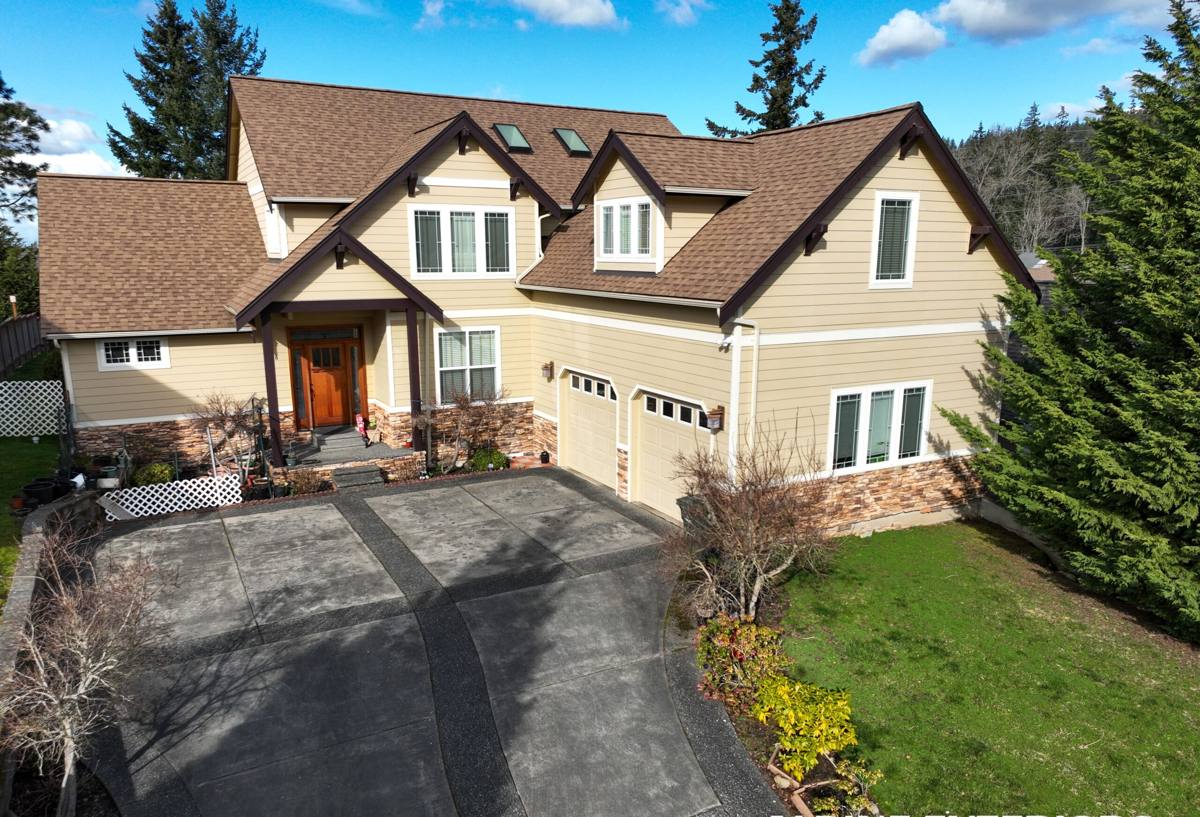
What Point Roberts' Climate Actually Does to a Roof
Salt Air and Metal Components
Every roof has metal in it somewhere — flashing, drip edge, vent stacks, nail heads, and often a ridge vent system. Standard galvanized fasteners and cheaper flashing stock corrode noticeably faster this close to saltwater than they would even ten or fifteen miles inland. Once flashing starts to pit and rust, it's not just cosmetic — that's where leaks start, usually at valleys, chimneys, and roof-to-wall transitions.
Moss and Constant Shade
A lot of Point Roberts lots carry mature tree cover, and shaded, north-facing slopes barely see direct sun for months at a time. Moss and algae take hold in that environment, and once moss establishes on a shingle roof, its root structure works up under the shingle tabs and holds moisture against the deck year-round. That's a slow leak waiting to happen, and it's one of the more common reasons we get called out to look at a roof that's only 12-15 years old but already showing deck rot.
Driving Rain and Wind-Driven Wet
Storms coming off the water don't just drop rain straight down — wind pushes it sideways under shingle edges, around vents, and into any flashing detail that isn't sealed correctly. A roof built for a drier, calmer climate can get away with looser tolerances at these details. A roof out here can't.
What a Correct Roof Replacement Looks Like Here
A roof replacement isn't just stripping old shingles and nailing down new ones. Done right for this location, it includes:
- Full tear-off and deck inspection — not just a re-layer over old material, so we can catch and repair any rot or soft spots before they're covered up again
- Ice-and-water shield or self-adhering underlayment at eaves, valleys, and any low-slope transitions where moisture sits longest
- Corrosion-resistant flashing and fasteners at every penetration, sized for coastal exposure rather than standard-grade hardware
- Balanced intake and exhaust ventilation, so moist attic air isn't condensing on the underside of the deck
- Proper valley and roof-to-wall flashing details, since these are where wind-driven rain finds its way in first
- A finished roof surface and slope pitch matched to shed water fast, especially on shaded sections prone to moss
Skip any one of these and you're not saving money — you're just moving the cost to a future leak repair or a premature second replacement.
Choosing Roofing Materials for This Environment
There's no single "best" roofing material for every Point Roberts home — it depends on the roof's slope, sun exposure, and what you're trying to balance between upfront cost and long-term maintenance. Here's how the common options actually perform under salt air, shade, and moss pressure:
| Material | How It Handles This Climate | Maintenance Reality |
|---|---|---|
| Architectural asphalt shingle | Solid performer when installed with coastal-grade fasteners and flashing; algae-resistant granule options help on shaded slopes | Needs periodic moss removal on shaded sections; typical 25-30 year lifespan here with good ventilation |
| Standing seam metal | Sheds water and moss growth well due to slick, steep-shed surface; needs marine-grade coatings and fasteners near saltwater | Low maintenance once installed correctly; higher upfront cost, longer service life |
| Cedar shake | Traditional look, but holds moisture in shaded, humid conditions and is more moss-prone than shingle or metal | Requires regular treatment and moss control; shortest realistic lifespan of the three in this specific climate |
We'll walk through these trade-offs with you on-site rather than push one option — the right call often comes down to how much shade your particular roof sits under and how much upkeep you want to sign up for.
Our Process for a Point Roberts Roof Replacement
1. On-Site Inspection and Honest Assessment
We look at the current roof from the deck up — moss patterns, flashing condition, ventilation, and any soft spots we can identify. We'll tell you straight if a roof can be patched or repaired instead of replaced; we don't push a full replacement when it isn't warranted.
2. A Written Scope You Can Actually Read
You get a clear breakdown of materials, underlayment, flashing, and ventilation work — not just a single lump-sum number. That way you know exactly what you're paying for and can compare it against any other quote.
3. Tear-Off and Deck Repair
Full removal of old roofing, deck inspection, and repair of any rotted sheathing before new underlayment goes down. This is the step that gets skipped on cheap re-roofs and it's the one that matters most for a roof that has to survive this kind of moisture exposure.
4. Installation With Coastal-Grade Details
Corrosion-resistant flashing and fasteners, proper underlayment at vulnerable points, and ventilation balanced for the home — not a generic package applied the same way it would be forty miles inland.
5. Final Walkthrough
We walk the finished roof with you, cover care and moss-prevention basics, and make sure you know what a normal maintenance schedule looks like for your specific roof and tree exposure.
Why Local Experience With Point Roberts Specifically Matters
Point Roberts is logistically its own animal — it's a border crossing to reach, and that changes how a roofing job needs to be scheduled and supplied. A crew that doesn't regularly work the peninsula has to figure out material delivery, crossing logistics, and timing on the fly, which can turn a straightforward replacement into a scheduling headache. We plan around that because we've done it before, not because we're guessing.
More importantly, a crew that's replaced roofs across Whatcom County's coastal communities has already seen how salt air, shade, and moss interact on real roofs out here — which flashing details actually hold up, which ventilation setups keep moss from coming right back, and which shortcuts show up as leaks in year three instead of year twenty. That's not something you get from a crew that mostly works drier, inland jobs and treats every roof the same.
Signs Your Point Roberts Roof May Need Replacement Soon
- Moss buildup that comes back within months of cleaning, especially on north-facing or shaded slopes
- Shingle edges that look lifted, curled, or granule-bare, particularly on sections exposed to driving rain
- Rust streaking below flashing, vents, or valleys — a sign the metal underneath is corroding
- Daylight visible through the attic deck, or musty smells suggesting trapped moisture
- A roof original to the home and past 20-25 years old, even if it looks intact from the ground
- Interior ceiling stains that appear after wind-driven rain events specifically, not just heavy downpours
Catching these early is usually the difference between a roof replacement and a much more expensive interior repair after water gets into the framing.
What Affects the Cost of a Roof Replacement Out Here
Every roof is different, but the main cost drivers we run into for Point Roberts homes are roof size and pitch, the number of valleys and penetrations (chimneys, skylights, vents), the condition of the existing deck, and the material you choose. Homes with heavy tree cover and multiple shaded valleys generally need more underlayment and flashing work than a simple, sun-exposed gable roof — that's a real cost difference, not an upsell. We give straightforward, itemized estimates so you can see exactly where the money's going before you commit to anything.
If your roof is showing moss, rust streaking, or you're just not sure how much life it has left, we're happy to come take a look. Estimates are free, there's no pressure to sign anything on the spot, and you'll get a straight answer about whether you need a full replacement or something less.