 Blaine Siding
 Semiahmoo's Coastal Climate Puts Extra Demands on a Roof
Semiahmoo sits right where the marine air off the Strait of Georgia and Semiahmoo Bay meets the roofline of every home in the area, and that air is not neutral. Salt-laden moisture works its way into exposed metal fasteners, flashing seams, and vent boots over time, and it does this quietly, long before a homeowner sees a stain on the ceiling. Add the driving, wind-pushed rain that comes through this part of Whatcom County in the fall and winter, and you have water that doesn't just fall straight down onto a roof — it gets pushed sideways under shingle tabs, around chimney flashing, and into any gap that a rushed installation left behind.
Then there's moss. Semiahmoo's tree cover, shaded north-facing slopes, and long stretch of damp months give moss and algae months at a time to take hold on a roof that isn't shedding water fast enough. A roof built for a drier climate, or installed without this area's conditions in mind, simply doesn't hold up the same way here. The right asphalt shingle system for Semiahmoo isn't a different product line so much as a different set of installation priorities — sealing, fastening, and ventilation choices that respect what this specific stretch of coastline does to a roof year after year.
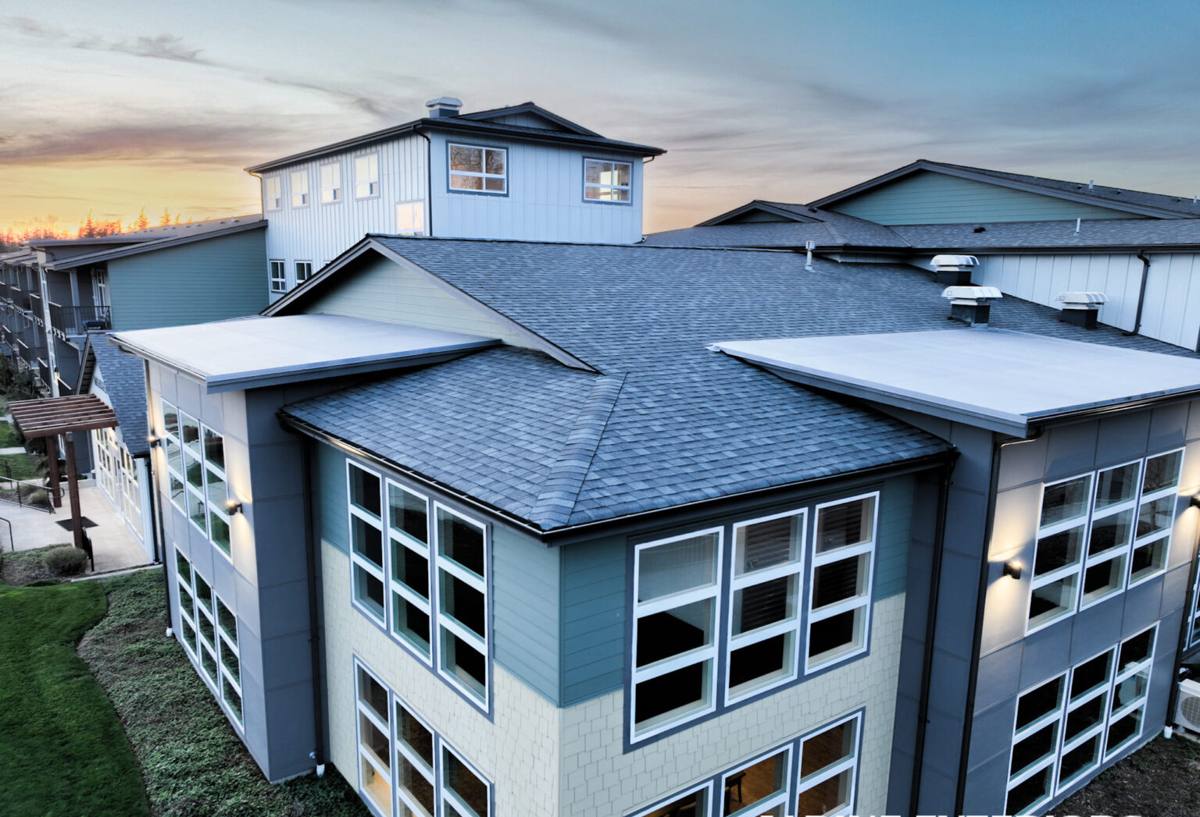
What a Correctly Installed Asphalt Shingle Roof Needs Here
Asphalt shingles are a proven, cost-effective roofing material almost anywhere in the Pacific Northwest, but "correctly installed" means something more specific along the Whatcom County coastline than it does further inland. A handful of details separate a roof that will handle a Semiahmoo winter from one that will start showing leaks within a few years:
- Ice-and-water shield at eaves and valleys — this self-adhering underlayment is the backup line of defense where wind-driven rain and any wind-driven debris are most likely to find a way in.
- Synthetic underlayment across the full deck, not just felt paper, for a more consistent moisture barrier under long stretches of sustained rain.
- Corrosion-resistant fasteners and flashing — galvanized or stainless components hold up far better against salt air than standard hardware, and this is one of the first places a lower-grade install starts to fail near the water.
- Proper nailing pattern and shingle sealing rated for the wind exposure this area actually sees, not just a manufacturer's minimum spec.
- Balanced attic ventilation (intake at the eaves, exhaust at the ridge) so moisture from inside the home doesn't condense against the underside of the deck and shorten the roof's life from below.
- Clean, correctly step-flashed transitions at chimneys, skylights, and sidewall intersections, which is where the large majority of shingle roof leaks actually originate.
None of this is exotic. It's disciplined, unglamorous work — the kind that doesn't show up in a photo of a finished roof but shows up ten years later in whether that roof is still dry.
Picking the Right Shingle for a Salt-Air, Moss-Prone Roof
Most asphalt shingle roofs in Semiahmoo fall into one of three tiers. Each has a real place, but the trade-offs matter more here than they would in a drier, calmer climate.
| Shingle Type | Wind Performance | Moss/Algae Resistance | Typical Lifespan |
|---|---|---|---|
| 3-tab (standard) | Lower wind rating; more seams for wind to catch | Standard granules only, unless algae-resistant option is chosen | 15–20 years |
| Architectural / dimensional | Higher wind rating from a heavier, laminated construction | Available with algae-resistant (AR) granules as standard on most product lines | 25–30 years |
| Impact-resistant / premium laminate | Highest wind rating of the three; built for sustained coastal exposure | Algae-resistant granules plus a heavier mat that sheds moisture faster | 30+ years |
For a home directly exposed to open water views and wind, or with a lot of shade and slow-drying roof slopes, we typically steer homeowners toward architectural or impact-resistant shingles with algae-resistant granules built in. It costs more up front than a basic 3-tab, but the maintenance burden and moss regrowth cycle on a standard shingle in this climate usually outweighs the initial savings within the first decade.
A Note on Zinc and Copper Strips
Zinc or copper strips installed near the ridge are a legitimate, low-cost way to slow moss regrowth on any shingle roof — rain washing over the metal releases trace ions that inhibit moss and algae growth downslope. We'll walk you through whether this makes sense as an add-on for your specific roof orientation and tree coverage, since it works better on some roof shapes than others.
Our Asphalt Shingle Roofing Process
Whether the job is a full replacement or a targeted repair, we run the same disciplined process on every Semiahmoo roof:
- On-site inspection. We walk the roof (weather permitting) and check the attic from inside, looking at ventilation, existing moisture damage, and the condition of the deck itself — not just the shingles.
- Written scope and estimate. You get a clear breakdown of materials, labor, and any deck repair or ventilation upgrades we recommend, with the reasoning explained, not just a number.
- Tear-off and deck check. Old shingles come off, the deck is inspected for soft spots or rot (common wherever a prior leak went unnoticed), and any damaged sheathing is replaced before anything new goes down.
- Underlayment and flashing. Ice-and-water shield at vulnerable areas, synthetic underlayment across the field, and new corrosion-resistant flashing at every penetration and transition.
- Shingle installation. Installed to the manufacturer's wind-rated nailing pattern, with attention to valleys, hips, and ridge for a tight, sealed finish.
- Ventilation check. We confirm intake and exhaust are balanced so the new roof isn't fighting trapped moisture from day one.
- Cleanup and final walkthrough. Magnetic sweep for stray fasteners, debris hauled off, and a walkthrough so you understand what was done and what to watch for going forward.
Living With an Asphalt Shingle Roof in Semiahmoo
A well-installed roof still needs some seasonal attention in this climate, particularly given how long the moss season runs here. A short list of habits goes a long way toward protecting the investment:
- Clear gutters and downspouts before the fall rains start, so water isn't backing up under the shingle edge.
- Have moss and debris removed from the roof surface before it builds up thick enough to hold moisture against the shingles — soft-washing rather than pressure-washing to avoid stripping granules.
- Trim back overhanging branches to cut down on shade, debris, and the moisture retention that lets moss take hold in the first place.
- Check attic ventilation isn't blocked by insulation or storage, especially after any attic work.
- Have flashing around chimneys and skylights checked every few years, since these are the first spots to show wear from wind-driven rain.
- Address any granule buildup in gutters early — heavy granule loss is often the first visible sign a shingle roof is aging out.
Repair or Replace? Signs to Watch For
Not every issue means a full tear-off. Some situations call for a targeted repair, and being honest about that difference is part of doing this work right.
Repair is usually the right call when: the damage is isolated (a section of flashing, a handful of blown-off shingles after a windstorm, a single valley leak) and the rest of the roof is still within its expected service life with good granule coverage.
Replacement makes more sense when: shingles are curling or cupping across large sections, granule loss is widespread, there are multiple past repair patches, the deck shows soft spots in more than one area, or the roof is approaching or past the upper end of its expected lifespan for its shingle type. In a climate like Semiahmoo's, a roof nearing the end of its life that's also carrying moss damage tends to fail faster than the same roof would somewhere drier, since trapped moisture accelerates deck rot once shingles stop shedding water cleanly.
What Affects the Cost of a Semiahmoo Roofing Job
Every roof is different, so we don't quote sight-unseen, but the main cost drivers on jobs in this area are consistent:
| Factor | Why It Matters Here |
|---|---|
| Roof size and pitch | Steeper pitches and complex rooflines take longer to work safely and use more material for waste and cuts. |
| Shingle tier chosen | Architectural and impact-resistant shingles cost more up front but reduce moss and wind-related maintenance over time. |
| Deck condition | Rot found under old shingles (common after long-term moss or flashing issues) adds sheathing replacement to the scope. |
| Access and tree cover | Heavy tree coverage near the roofline can add setup time and affects how much moss-prevention work is worth doing. |
| Ventilation upgrades | Adding or correcting ridge and soffit ventilation is a smaller line item during a full re-roof than as a standalone project later. |
We'd rather walk your roof and give you real numbers than throw out a broad range that doesn't mean much for your specific home.
Why a Crew That Already Works in Semiahmoo Matters
Roofing crews that mostly work drier, inland climates tend to default to standard underlayment, standard nailing patterns, and standard ventilation — because that's what holds up where they usually work. On a coastal Whatcom County roof, those defaults leave gaps. A crew that regularly works Semiahmoo and the surrounding Blaine area already knows which roof orientations collect moss fastest, which flashing details tend to fail first under sustained wind-driven rain, and how local permitting and inspection expectations run for reroofing work in this jurisdiction. That familiarity shows up less in the sales pitch and more in the details you don't see once the roof is closed up — the flashing behind the chimney, the fastener grade, the ventilation balance — which is exactly where a roof in this climate either holds up or doesn't.
If you're weighing a repair, a full replacement, or just want an honest read on how much life is left in your current roof, we're happy to take a look. Reach out for a free, no-pressure estimate using the form below.