 Blaine Siding
 Siding Installation Built for the Bellingham Coastline
Homes around Bellingham sit close enough to the water, and far enough into the Pacific storm track, that siding takes a different kind of beating than it would twenty miles inland. Salt-laden air off Bellingham Bay and the Strait works into seams and fasteners. Driving rain off winter storms pushes water sideways into wall assemblies, not just down them. And a moss season that can run eight or nine months a year keeps north-facing walls and shaded siding damp far longer than most siding products were ever designed to tolerate. This page is about one thing: what it actually takes to install siding correctly on a Bellingham-area home, and why we install only James Hardie fiber cement siding to do it.
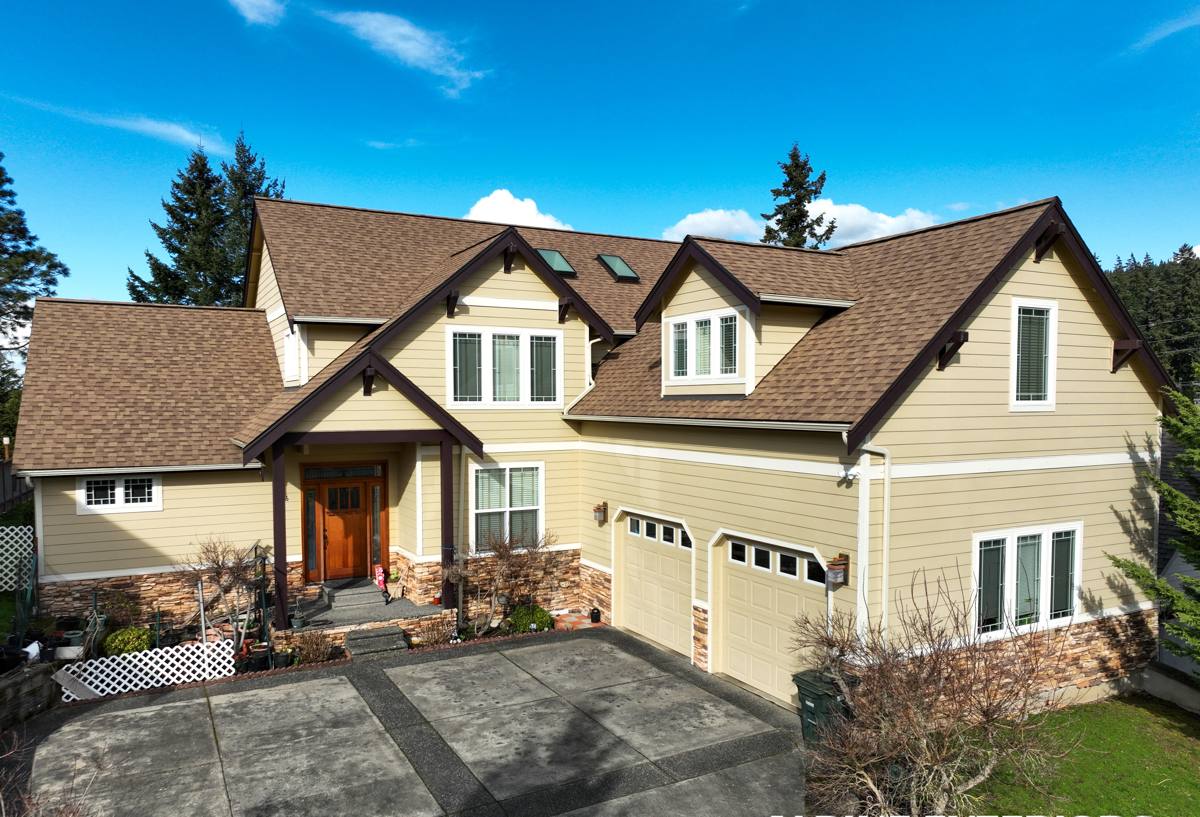
What This Climate Actually Does to Siding
It helps to be specific about the mechanisms at work here, because they're different from what a siding crew in Spokane or Eastern Washington deals with.
Salt Air and Metal Fasteners
Coastal air near Blaine and Bellingham carries fine salt particulate that accelerates corrosion on exposed or improperly coated fasteners, flashing, and trim hardware. Over years, corroding fasteners can loosen siding panels, stain the face of the siding, and create small gaps where water intrudes. It's a slow process, which is exactly why it's easy to overlook until the damage is already done.
Driving, Wind-Driven Rain
Bellingham gets a lot of rain, but the bigger issue for siding is the direction it comes from. Storms off the Strait of Georgia and the Salish Sea push rain sideways into wall faces, not straight down. That means water pressure at laps, seams, corners, and penetrations (hose bibs, light fixtures, vents) is higher than on a typical inland wall. Siding and flashing details that would be marginal in a calmer climate fail outright here.
Moss, Algae, and Prolonged Moisture
Shaded, north- and west-facing walls in this part of Whatcom County can stay damp for weeks at a stretch during fall and winter. That moisture supports moss and algae growth directly on siding surfaces, and more importantly, it keeps the substrate behind absorbent siding wet longer than it should be. Wood-based products in particular don't dry out fast enough between rain events, and that's where rot gets a foothold.
What a Correct Installation Involves
A siding job that's going to hold up here isn't just "panels on a wall." The materials matter, but so does everything behind and around them. A correct installation in this climate covers several layers of protection working together:
- A continuous, properly lapped water-resistive barrier (WRB) installed shingle-style so water always drains outward and down, never into a seam
- Rainscreen or drainage gap furring where conditions call for it, so any water that gets behind the siding has somewhere to go and can dry
- Corrosion-resistant fasteners rated for coastal exposure, driven to the manufacturer's specified depth and spacing — not just "close enough"
- Properly flashed and kick-out-flashed roof-to-wall intersections, window and door heads, and deck ledgers
- Correct panel gaps, caulk joints, and butt joint treatment sized for the specific product's expansion behavior
- Siding held to the manufacturer's minimum clearance above grade, roofing, decks, and hardscape so it never sits in standing water or snow
Skip any one of these and the siding itself becomes almost irrelevant — water will find the weak point regardless of what the face material is rated to withstand.
Why We Install Only James Hardie Fiber Cement
We've made a deliberate call to install one siding system: James Hardie fiber cement. We don't install vinyl, LP SmartSide, Cemplank, Allura, primed spruce, or cedar, and that's worth explaining rather than just stating.
Fiber cement is non-combustible and dimensionally stable — it doesn't swell, cup, or delaminate the way wood-based products can when they take on repeated moisture cycles, which matters a great deal given how long Bellingham siding stays wet each year. Hardie's HZ5 product line is specifically engineered for climates with extended moisture exposure and freeze-thaw cycling, which describes the Whatcom County coastline well. The factory-applied ColorPlus finish is baked on under controlled conditions, giving more consistent, longer-lasting color adhesion than field-applied paint on wood siding — a real advantage where moss, algae, and salt residue already stress a painted surface.
None of this means other products are without merit. Vinyl is inexpensive and low-maintenance in mild climates. Cedar has a genuine, warm appearance that some homeowners specifically want. Engineered wood products have improved a lot over the years. But each of those comes with a real trade-off in this specific climate — vinyl can warp and doesn't stop water on its own, wood-based products need consistent maintenance to keep moisture out, and standard fiber cement without a climate-engineered formulation isn't optimized for a Salish Sea coastline. We'd rather install one product system correctly and stand behind it than offer several and hope each one holds up.
Our Installation Process for Bellingham-Area Homes
Every project follows the same disciplined sequence, adjusted for the specific house:
1. Site and Wall Assessment
Before any siding comes off, we look at what's actually happening behind it — signs of past moisture intrusion, condition of existing sheathing, flashing details at windows and rooflines, and any areas that have clearly taken the brunt of wind-driven rain over the years.
2. Tear-Off and Substrate Repair
Old siding comes off, and any damaged sheathing or framing gets repaired before anything new goes up. Installing new siding over a compromised substrate just hides a problem instead of solving it.
3. Water-Resistive Barrier and Flashing
A continuous WRB goes on first, lapped correctly at every seam, with flashing integrated at windows, doors, and roof intersections so water is directed out and down at every transition point.
4. Drainage Plane
Where the wall assembly and exposure call for it, we install a rainscreen gap so bulk water that gets behind the cladding can drain and the wall can dry, rather than staying trapped against the sheathing.
5. Hardie Panel Installation
Panels, lap siding, or trim go up to manufacturer spec — correct fastener type, spacing, and depth; correct gaps at butt joints and penetrations; correct clearance above roofing, decks, and grade.
6. Final Detailing and Walkthrough
Caulking, touch-up, and a final walkthrough so every penetration, corner, and transition is sealed and finished before we call the job complete.
Signs a Bellingham Home May Need New Siding
Because moisture damage here tends to develop slowly and out of sight, it's worth knowing what to watch for:
- Persistent moss or algae growth that returns quickly after cleaning, especially on shaded walls
- Soft or spongy spots when you press on siding near the bottom edge or around windows
- Paint that's peeling or bubbling in a pattern that suggests moisture pushing out from behind, not just weathering
- Visible gaps opening at seams, corners, or trim boards
- Rust streaks below fasteners or trim hardware
- A musty smell or visible staining on interior walls that share an exterior wall with siding showing outside problems
Any one of these is worth a look. Several together usually means water has been getting behind the siding for a while.
What Drives Cost on a Siding Project Here
Every home is different, but the same handful of factors move the price up or down on most Bellingham-area jobs:
| Factor | Why It Matters Here |
|---|---|
| Existing wall condition | Rot or moisture damage found during tear-off adds substrate repair before new siding can go on |
| Wall complexity | Dormers, multiple gables, and lots of window/door trim take more flashing and labor per square foot |
| Siding profile chosen | Lap siding, shingle-style panels, and board-and-batten each have different material and labor costs |
| Drainage plane needs | Rainscreen installation adds a step but is often warranted given local rain exposure |
| Height and access | Multi-story walls and tight lot lines require more scaffolding or lift time |
| Color and finish | Factory-applied ColorPlus finishes vs. field-painted trim affect both cost and long-term maintenance |
We walk through these specifics on site rather than quoting blind — a wall that looks fine from the driveway can hide a very different scope once we're up close.
Why Hiring a Crew That Already Works This Area Matters
Siding installation isn't a one-size-fits-all trade. A crew that mostly works drier, inland climates can install a technically sound job that still fails here, simply because the details that matter on the coast — drainage planes, flashing sequencing, fastener corrosion resistance, clearance above grade — aren't second nature to them. A crew that regularly works Blaine, Bellingham, and the rest of Whatcom County has already seen how wind-driven rain finds the weak point in a wall, and builds for it as a matter of habit rather than an afterthought.
It also matters for follow-through. Manufacturer warranties on fiber cement siding are only as good as the installation behind them — most require installation to spec to remain valid. A local contractor who's still doing business in this market next year, and the year after, has a direct reason to install it right the first time and to be reachable if a question comes up down the road.
Caring for Hardie Siding After Installation
Fiber cement is low-maintenance compared to wood siding, but "low-maintenance" isn't "no-maintenance," especially with this much moss and algae pressure. A simple annual routine keeps it looking right and performing as designed:
- Rinse siding gently once or twice a year to clear moss spores, pollen, and salt residue before they build up
- Keep gutters clear so overflow doesn't run directly down siding faces
- Trim back vegetation and tree cover that keeps specific wall sections shaded and damp longer than the rest of the house
- Re-caulk any joint or penetration where sealant has visibly cracked or pulled away
- Watch fastener heads and trim edges for early rust staining and address it before it spreads
None of this is heavy work, but staying on top of it is what lets a correctly installed Hardie system reach its full service life in a climate that doesn't give siding many breaks.
If your Bellingham-area home's siding is showing its age, or you're planning ahead for a project, we're happy to take a look and walk you through what we'd recommend — no pressure, no obligation. Fill out the form below for a free estimate.