 Blaine Siding
 Siding Repair for Custer Homes
Custer sits close enough to the water and open farmland north of Blaine that its homes take a particular kind of weather beating: salt-tinged wind off the Strait, long stretches of driving rain, and a moss season that can run from October well into spring. None of that is dramatic on any given day. It's cumulative. A house that looked fine three years ago can have soft trim, lifted panel edges, or moss creeping up from the north side without anyone noticing until a repair job turns into something bigger than it needed to be.
This page is specifically about repairing existing siding in the Custer area — not a full re-side. Most homes we look out here don't need to be stripped down to the studs. They need someone to find where water is actually getting in, fix that properly, and match the repair so it doesn't stand out.
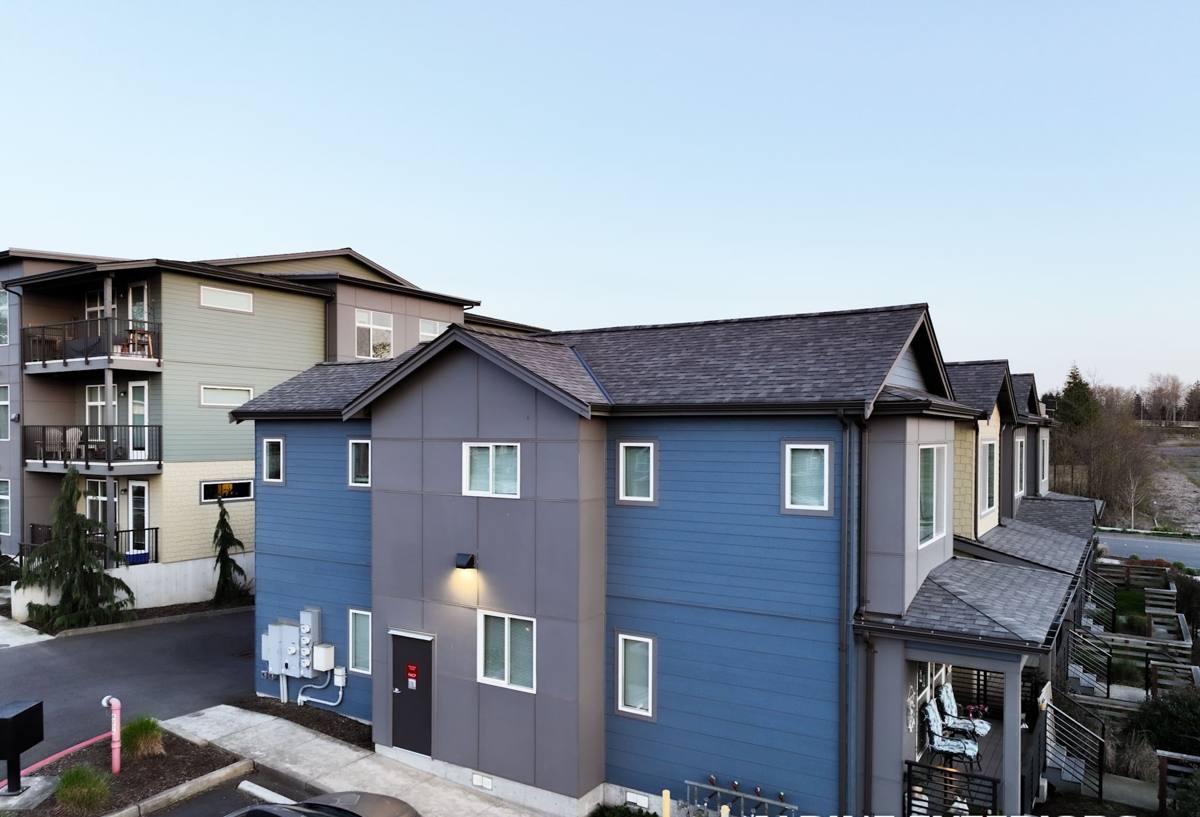
What Custer's Climate Does to Siding
Salt Air
Whatcom County's proximity to Puget Sound and the Strait of Georgia means airborne salt reaches further inland than most homeowners assume, especially on breezy days. Salt accelerates corrosion on exposed fasteners and metal trim, and it can dull or streak paint finishes over time. Siding that isn't sealed and fastened correctly ages faster here than the same product would fifty miles inland.
Driving Rain
Rain in this part of Whatcom County rarely falls straight down — wind pushes it sideways into wall assemblies, which is exactly the condition lap siding and its flashing details are supposed to handle. When a joint, a butt seam, or a piece of trim flashing is even slightly off, driving rain finds it. That's the difference between a house that sheds water and one that slowly absorbs it behind the cladding.
Moss and Sustained Moisture
The extended damp season around Custer keeps north- and shade-facing walls wet for days at a stretch. That's ideal moss and algae growth conditions, and it also means any small gap in the siding stays wet longer instead of drying between rain events. Moisture that sits is far more damaging than moisture that comes and goes quickly.
Common Repair Calls We See in This Area
- Buckled or bowed panels where trapped moisture has swollen the substrate underneath
- Soft or crumbling trim boards at corners, window casings, and rooflines
- Cracked or split panels from impact, settling, or old age
- Failed caulking at butt joints and penetrations that's let water track behind the siding
- Moss and algae staining on north-facing and shaded walls
- Rust streaking from corroding fasteners, especially on older installations
- Gaps or separation at corner boards and trim where original installation wasn't sealed correctly
How We Diagnose a Repair
Before we talk about fixing anything, we want to know why the damage happened, not just where it shows. A soft spot on a wall is a symptom. The cause could be a flashing detail above it, a caulk joint that failed years ago, a downspout dumping water against the wall, or trapped moisture from a totally different part of the assembly. Repairing the visible damage without addressing the cause just buys a few more years before the same spot fails again.
What We Check
- The condition of the siding material itself — is it sound enough to repair, or has moisture damage spread further than what's visible
- Flashing at windows, doors, rooflines, and anywhere two planes of the house meet
- Caulking and sealant condition at joints and penetrations
- Fastener condition, especially on older or non-Hardie installations
- Grading and drainage around the foundation that might be pushing moisture up into lower courses
- Whether the underlying water-resistive barrier (house wrap) is intact behind the damaged section
That last point matters more than most homeowners expect. If the barrier behind the siding has failed, patching the visible siding without checking what's underneath is a temporary fix at best.
Repair vs. Replacement: How We Decide
Not every damaged section needs a full re-side, and we're not going to tell you it does. But there's a point where patchwork repair stops making financial sense and a section — or the whole elevation — is better off replaced. Here's roughly how that decision plays out:
| Situation | Usually Repair | Usually Replace |
|---|---|---|
| Isolated panel damage (impact, one bad joint) | Yes | No |
| Moss/algae staining, siding otherwise sound | Yes — clean and reseal | No |
| Damage confined to one wall or elevation | Yes, in most cases | Sometimes, if barrier is compromised |
| Widespread soft spots across multiple walls | No | Yes |
| Original material is a discontinued or mismatched product | Limited — matching gets harder over time | Yes, for a consistent long-term result |
| Water-resistive barrier failed behind siding | No, on its own | Yes — the barrier has to be corrected regardless of cladding |
If a wall's problems are isolated and the water intrusion source is identifiable and fixable, repair is the honest recommendation and what we'll tell you to do. If the damage is spread out, or if pulling one section reveals rot or barrier failure that extends further than expected, we'll say so before we start cutting into more of the wall than necessary.
Matching Materials on a Repair
One of the hardest parts of a siding repair — and one that's easy to get wrong — is matching the new material to what's already on the wall. Lap profile, exposure width, and factory color all have to line up, or the repair reads as an obvious patch instead of a seamless fix.
We install only James Hardie fiber cement siding, which gives us a real advantage here: Hardie's ColorPlus finish and HZ5 product line are consistent and available long-term, so matching an existing Hardie installation is straightforward. If your home has non-Hardie siding — vinyl, LP SmartSide, cedar, or an older fiber cement product — we'll talk through honest options, including whether a repair section in a compatible material makes sense or whether it's a better long-term call to plan a transition to Hardie on that elevation. We won't push a full re-side on a homeowner who just needs a repair, but we also won't pretend a mismatched patch job is a permanent solution.
Why We Standardize on James Hardie
We made a decision to install only James Hardie fiber cement siding, and we bring that same standard to repair work. It's non-combustible, engineered for Pacific Northwest moisture with its HZ5 product line, and finished at the factory with ColorPlus technology, which holds color and resists the fading and chalking that field-painted materials are prone to in a climate like this. It also carries a strong transferable warranty when installed to spec — which matters on a repair, since a poorly matched or poorly flashed patch can undercut the protection the original installation was supposed to provide.
For a Custer home dealing with salt air, driving rain, and a long moss season, that combination — moisture resistance, factory finish durability, and correct flashing detail — is what actually keeps a repair from becoming a recurring problem.
Our Repair Process
- On-site assessment. We look at the damaged area and its likely cause, not just the visible symptom.
- Honest scope. We tell you what needs to be done, what it'll cost, and whether repair or a larger fix is the right call — before any work starts.
- Source correction first. If the damage traces back to a flashing gap, failed caulk, or a drainage issue, we fix that as part of the job, not as an afterthought.
- Material match or upgrade. We match existing Hardie siding precisely, or talk through options if the existing material isn't Hardie.
- Correct installation. Proper fastening, flashing, and sealant detail — the same standard we'd use on a full install, scaled to the repair.
- Cleanup and walkthrough. We show you what was done and why, so you know the repair holds up and what to watch for going forward.
Why Hire a Crew That Already Works Custer
Repair work rewards local knowledge in a way full replacements sometimes don't. Knowing which walls in this area take the worst of the wind-driven rain, how moss establishes on shaded north faces around Custer's tree cover, and how salt exposure varies depending on how exposed a property is to open wind — that's the kind of detail that comes from working this specific stretch of Whatcom County repeatedly, not from a general contractor passing through. It also means we're a known quantity if something needs a follow-up look after the next storm season, rather than a one-time crew that's hard to reach again.
If you've got a soft spot, a buckled panel, or moss creeping across a wall in Custer or anywhere around Blaine, we're happy to take a look and give you a straight answer on what it actually needs. Reach out for a free, no-pressure estimate using the form below.