 Blaine Siding
 Siding Replacement Built for Lynden's Climate
Lynden sits inland from the water compared to some Whatcom County communities, but it still gets the full package of what makes this corner of Washington hard on exterior siding: long stretches of driving rain off the Pacific weather systems, humid air that never fully dries out for months at a time, and a moss and algae season that can run from fall through spring. Add in the salt-tinged air that moves inland from Semiahmoo Bay and the Strait of Georgia on a west wind, and you've got a climate that punishes any siding product with a weak spot in its moisture defense.
We install siding across Whatcom County, and Lynden homes tend to fall into a few recognizable categories: older farmhouses and ranch-style homes with original wood or aging vinyl siding, newer construction on the edges of town with builder-grade product that's showing its age faster than it should, and everything in between. Whatever the starting point, the goal of a siding replacement here is the same — stop water from getting behind the cladding, stop moss and mildew from taking hold, and give the house a weather barrier that will actually hold up over a Whatcom County winter, not just look good the day it goes up.
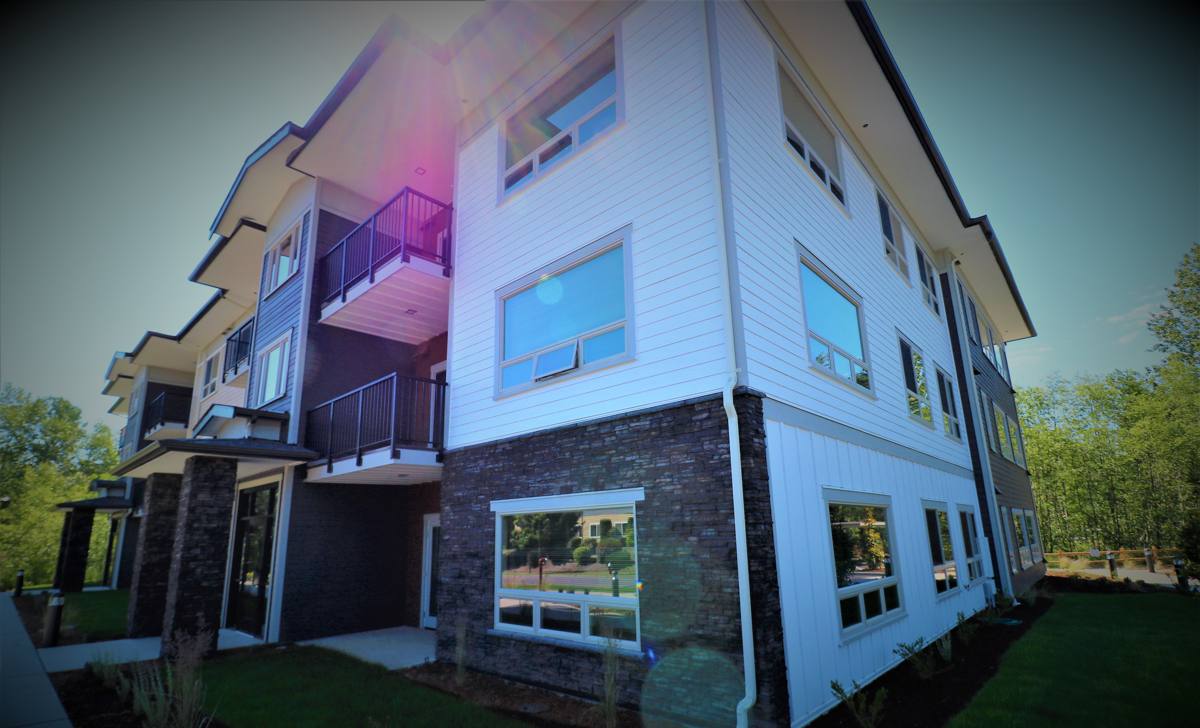
What Lynden's Weather Does to Siding Over Time
It helps to understand the specific ways this climate breaks siding down, because it explains why we make the material recommendations we do.
Driving Rain and Wind-Driven Moisture
Rain here doesn't always fall straight down. Wind-driven storms push water sideways into lap joints, seams, and butt joints — the places where siding is most likely to let moisture through if it wasn't installed with the right flashing and clearances. Over years, that repeated wetting is what causes rot in wood-based products and swelling or delamination in engineered wood siding that wasn't detailed correctly at the seams.
Moss, Algae, and Prolonged Dampness
Whatcom County's moss season is long. Anything that stays damp for extended periods — north-facing walls, areas shaded by trees or fences, low sections near grade — becomes a growth surface for moss and algae if the siding's surface and finish don't resist it. Some materials handle this fine. Others, especially untreated or poorly sealed wood products, absorb moisture and become the perfect host for exactly the kind of growth that stains and eventually degrades the material underneath.
Salt Air and Corrosion
Lynden isn't beachfront, but it's close enough to the Strait and the bay that salt-laden air reaches inland on the right wind pattern. Salt air accelerates corrosion of fasteners and trim metal and can degrade certain paint finishes faster than inland climates would. It's a slower, quieter factor than rain or moss, but it adds up over a couple of decades.
Why We Install Only James Hardie Fiber Cement
We made a deliberate decision to install James Hardie fiber cement siding exclusively — not vinyl, not LP SmartSide, not Cemplank, not Allura, not primed spruce or cedar. That's not a marketing position; it's based on what actually holds up in this climate over the long haul.
Fiber cement is non-combustible, which matters increasingly in Washington. It doesn't expand and contract with temperature swings the way vinyl does, so seams stay tighter over time. And critically for a climate like Lynden's, James Hardie's HZ5 product line is engineered specifically for the Pacific Northwest's freeze-thaw cycles and moisture exposure — it's not a one-size-fits-all product pulled from a warehouse shelf.
The factory-applied ColorPlus finish is a big part of why we standardized on this product. It's baked on in a controlled factory environment rather than field-applied, which means better adhesion and color consistency, less susceptibility to peeling, and a finish that's backed by its own warranty separate from the substrate warranty. In a climate where paint failure is one of the most common siding complaints we see, that matters.
We're honest that this isn't the cheapest siding option on the market, and it's not the only good product a homeowner could choose. But when we're the ones installing it and standing behind it, we install what we trust to perform here — not what's easiest to sell.
What a Correct Siding Replacement Job Actually Involves
Siding replacement isn't just pulling off old panels and nailing up new ones. A correct job addresses everything underneath the visible surface, because that's where most siding failures actually start.
- Full removal of the old siding and inspection of the sheathing underneath for rot, soft spots, or existing moisture damage
- Repair or replacement of any compromised sheathing before new material goes up — never siding over a problem
- Installation of a code-compliant weather-resistive barrier (housewrap) with correctly lapped and taped seams
- Proper flashing at every window, door, and roofline intersection — the single most common source of hidden leaks
- Correct fastener placement and spacing per manufacturer specification, not just "close enough"
- Rain screen or drainage gap detailing where appropriate, to let any incidental moisture drain and dry rather than sit against the wall
- Proper clearance between siding and grade, decks, and roof lines to prevent wicking and splash-back moisture
- Caulking and sealing only at the joints that should be sealed — over-caulking can trap moisture rather than shed it
Every one of those steps matters more in a climate like Lynden's than it would somewhere dry. Skip the flashing detail at a window head, and you won't see the consequence for a year or two — but eventually water finds its way behind the siding and into the wall assembly, and by the time it shows up as a stain or soft spot, real damage has already happened.
Our Process, Start to Finish
1. On-Site Assessment
We start with a walk-around of the home to look at the current siding condition, check for signs of moisture intrusion, note trouble spots (shaded walls, low-clearance areas, existing rot), and talk through what the homeowner wants out of the project — color, trim style, budget range.
2. Detailed Estimate
We put together a written estimate that spells out material, labor, and scope so there's no ambiguity about what's included. If sheathing repair turns out to be needed once the old siding comes off, we flag that as a possibility up front rather than surprising anyone later.
3. Tear-Off and Inspection
Old siding comes off, and we inspect the sheathing and framing underneath before anything new goes up. This is the point where hidden problems — old water damage, inadequate original flashing — actually get found and fixed.
4. Weather Barrier and Flashing
Housewrap goes up correctly lapped, and flashing gets installed at every penetration and transition. This step is invisible once the job is done, which is exactly why it's the step that separates a durable installation from one that fails early.
5. James Hardie Installation
Panels or lap siding go up to manufacturer spec — correct fastener pattern, correct gaps, correct nailing into structural framing, not just sheathing.
6. Trim, Caulk, and Final Walkthrough
Trim work gets finished, sealing is applied only where it should be, and we walk the finished job with the homeowner before calling it complete.
Comparing Siding Options for a Lynden Home
| Factor | James Hardie Fiber Cement | Vinyl | Engineered Wood / LP-Type |
|---|---|---|---|
| Moisture resistance in wet climates | Strong — non-organic, engineered for PNW exposure (HZ5 line) | Fair — seams and expansion joints can let water track behind panels | Moderate — vulnerable at cut edges and seams if not sealed exactly right |
| Moss/algae resistance | Good, especially with factory finish | Fair — can host growth in shaded, damp areas | Fair to poor — organic wood content is more susceptible |
| Fire rating | Non-combustible | Combustible | Combustible |
| Finish durability | Factory-baked ColorPlus finish, separate warranty | Color molded in, can fade and chalk over time | Field or factory-primed, repaint cycles needed |
| Installation sensitivity | Moderate — correct fastening and flashing required | Low — more forgiving, but expansion gaps must be right | High — edge sealing and flashing details are critical to longevity |
| Typical lifespan when installed to spec | Multiple decades with proper maintenance | Long but appearance degrades sooner | Shorter without diligent maintenance |
This isn't a claim that other products can't work anywhere — it's a summary of why, for the specific conditions Lynden and the rest of Whatcom County deal with, we settled on one product we're confident standing behind.
Signs Your Lynden Home Needs Siding Replacement, Not Just Repair
Not every siding problem means a full replacement. But there are signs that point toward it being the right call rather than another round of patching.
- Soft or spongy spots when you press on the siding, especially near the bottom courses or below windows
- Persistent moss or algae staining that returns within a season of cleaning
- Visible warping, buckling, or separation at seams
- Paint that's peeling or bubbling repeatedly in the same spots despite repainting
- Interior signs like peeling paint, musty smell, or staining on walls that share an exterior wall with a siding problem area
- Siding that's simply original to a decades-old home and has never been replaced
If you're only seeing one or two isolated spots, a repair might genuinely be the right, more affordable answer. We'll tell you that if it's true — a full tear-off isn't always necessary, and we'd rather earn a repeat customer than oversell a job.
What Affects the Cost of a Siding Replacement in Lynden
Every home is different, but a few factors consistently move the price on a project like this.
| Cost Factor | Why It Matters |
|---|---|
| Home size and wall complexity | More square footage and more corners, gables, and dormers mean more material and labor |
| Condition of existing sheathing | Hidden rot found during tear-off adds repair cost, but skipping it is how future failures happen |
| Siding profile and trim detail | Board-and-batten, wider trim, and custom detailing take more time than a straightforward lap siding job |
| Story height and access | Two-story walls and steep or obstructed lots require more staging and time |
| Window and door count | Every opening needs its own flashing detail, which adds labor |
We'd rather walk your specific home and give you real numbers than throw out a broad estimate that doesn't match your situation — every Lynden property is different enough that ballpark figures online tend to be more misleading than helpful.
Why Hiring a Crew That Already Works Whatcom County Matters
Siding installation isn't just about the product — it's about whether the crew understands the conditions the product has to survive. A crew that's worked homes throughout Whatcom County already knows which walls in this area tend to stay damp longest, how much clearance to leave at grade given how wet the ground stays through winter, and where moss tends to establish first. That local pattern recognition doesn't replace following manufacturer spec — it adds to it, because it means we're not learning the region's quirks on your home for the first time.
It also means we're not disappearing after the job. If a question comes up two years down the road about a seam, a trim detail, or how the finish is holding up, we're still working in the area and can come take a look.
Get a Free, No-Pressure Estimate
If your Lynden home's siding is showing its age — moss that keeps coming back, paint that won't hold, soft spots you've noticed near the bottom of a wall — we're happy to come take a look and give you a straightforward assessment of what it needs. There's no cost and no pressure to move forward; use the form below to request your free estimate.