 Blaine Siding
 Storm Damage Roofing in Sumas: Why This Job Isn't the Same Everywhere
Sumas sits in a part of Whatcom County that takes weather differently than most of the region. It's close enough to the natural low gap between the Cascade foothills and the Fraser Valley that winter storms often arrive here with more wind behind them than homes just a few miles south ever see. Add in the long, wet stretch of fall through spring that keeps roofs damp for months at a time, and you've got a climate that's genuinely hard on roofing — not because any one storm is catastrophic, but because the cumulative wear adds up faster than most homeowners expect.
We work storm damage calls across the county, and Sumas roofs tend to show a specific pattern: wind-lifted or creased shingles along exposed slopes and ridgelines, water intrusion at flashing points that got jarred loose rather than obviously torn off, and moss colonies that took hold in a soft spot and have been quietly holding moisture against the deck ever since. None of that looks dramatic from the ground. That's exactly why it gets missed.
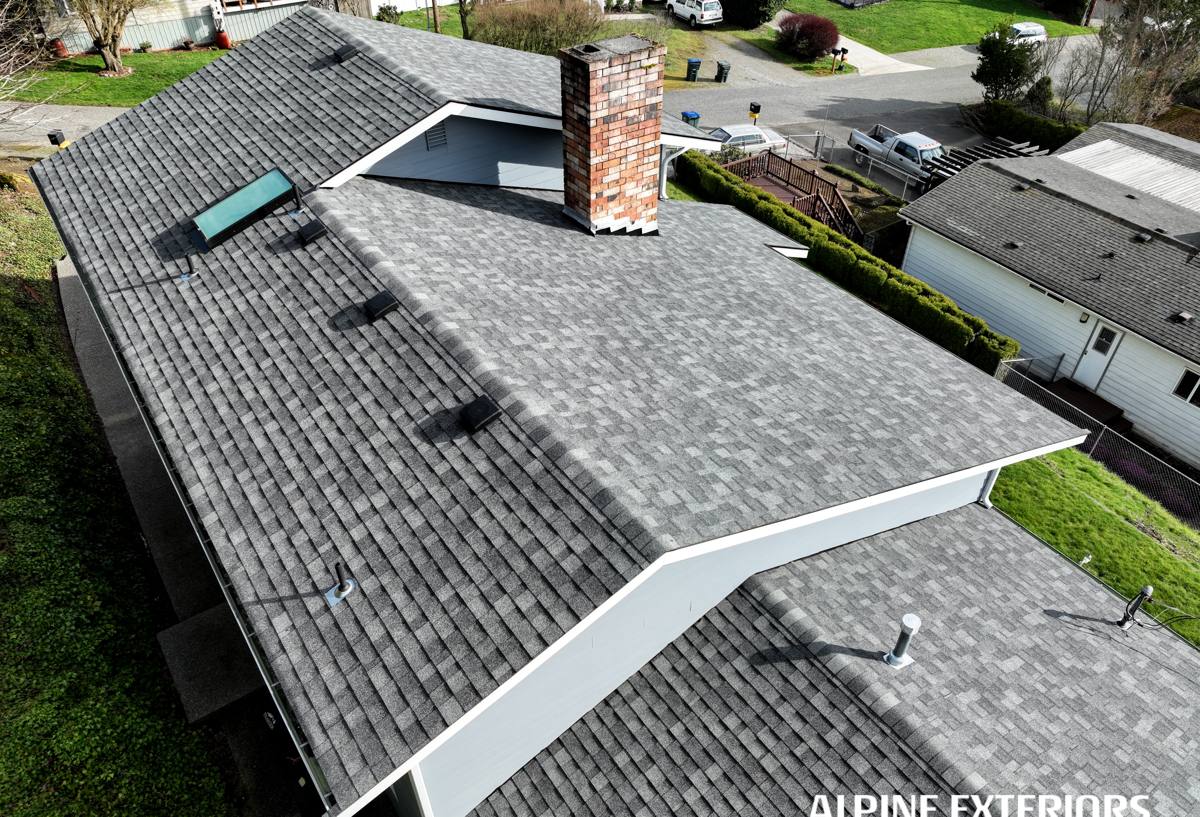
What Whatcom County Weather Actually Does to a Sumas Roof
Wind
When cold air pushes down out of the Fraser Valley in the winter, it can funnel through the lower gaps near Sumas with more force than the surrounding terrain sees. Roofs built or repaired without that in mind — nails set slightly high, shingle tabs not sealed down properly, ridge caps under-fastened — are the ones that lose material first. A gust doesn't need to tear a whole section off to cause a leak; it just needs to break the seal on a handful of tabs.
Driving rain
Storms here rarely come straight down. Wind-driven rain gets pushed sideways and upward under laps, ridge vents, and flashing edges that would be fine in calm rain. Once water finds a path under the roofing material, it can travel a surprising distance before it shows up as a stain on a ceiling — which means the visible damage point and the actual entry point are often not the same spot.
Moss and prolonged moisture
Whatcom County's long wet season gives moss and lichen months of uninterrupted growing time on north-facing and shaded slopes. Moss doesn't just sit on top of shingles — it lifts edges, holds water against the granule surface, and accelerates the exact kind of wear that turns a minor storm into a leak. A roof with an established moss problem is more vulnerable to storm damage than a clean one, not less.
What a Correct Storm Damage Repair Actually Involves
A lot of storm repair work we get called to fix wasn't done wrong on purpose — it was done fast, without checking for the underlying cause. Patching the spot where a leak shows up, without finding where the water actually got in, is the most common shortcut we see. It buys a few dry months and then fails again in the next hard rain.
A repair we stand behind covers:
- Tracing the actual water path, not just patching the ceiling stain or the obvious tear
- Checking the roof deck underneath for soft spots, rot, or delamination before any new material goes down
- Inspecting and re-securing flashing at chimneys, valleys, vents, and wall intersections — the points that fail most often in wind-driven rain
- Replacing damaged shingles or sections with matching material, properly nailed and sealed for our wind conditions
- Clearing moss and treating the area so the repair isn't undermined by the same growth that likely contributed to the problem
- A check of gutters and downspouts near the repair area, since backed-up water is a common secondary cause of "storm" leaks
Skipping any one of those steps doesn't save real money — it just moves the cost to next winter.
Repair vs. Replacement: How We Make That Call
| Situation | Usually Repairable | Usually Needs Replacement |
|---|---|---|
| Age of roof | Under roughly 12-15 years, isolated damage | Near or past expected lifespan, damage widespread |
| Extent of damage | Localized to one slope, valley, or flashing point | Multiple slopes affected, or damage found on inspection beyond the storm event |
| Deck condition | Solid, dry deck under the damaged area | Soft, rotted, or delaminated decking found on inspection |
| Moss/moisture history | Minor, treatable growth | Long-standing moss with granule loss across large areas |
| Shingle match availability | Matching material available or blend is acceptable | Discontinued product, visible patchwork unavoidable |
We'll tell you honestly which category your roof falls into, including when a repair is the right call even though a full replacement would be more profitable for us. Most storm damage we see in Sumas is legitimately repairable if it's addressed before a second or third storm compounds it.
Insurance and Documentation
Storm damage claims move faster and get approved more consistently when the documentation is thorough from the first visit. We photograph the damage, the likely cause, and the surrounding roof condition before any repair work starts, and we can walk you through what's typically covered versus what falls under maintenance (like moss removal on its own, which most policies treat differently than acute storm damage). We're not your insurance adjuster and won't promise a specific claim outcome, but we've been through this process enough times with Whatcom County homeowners to know what documentation actually helps.
Why It Matters That We Already Work in Sumas
A roofing crew that mostly works drier, calmer parts of the state will size up a Sumas roof the same way they'd size up any other roof — and that's how repairs end up under-built for what actually happens here. Knowing that this area gets sharper wind events than its neighbors, that moss takes hold faster on shaded slopes in a wet county, and that flashing failures here tend to show up at specific, predictable points changes how we inspect and how we repair. We're not guessing at what "enough" looks like for this climate — we've seen what holds up and what doesn't, storm after storm.
Being local also means we're not driving hours to get back out for a callback, and we're not disappearing after the invoice clears. If something about a repair doesn't sit right in the next hard rain, we're close enough to come look at it.
Signs Your Sumas Roof Needs a Storm Damage Inspection
- Shingles that look curled, cracked, or missing granules after a windstorm
- Visible gaps, lifted tabs, or debris (branches, moss clumps) on the roof after weather events
- Water stains on ceilings or upper walls, especially near chimneys or valleys
- Granules collecting in gutters or at downspout outlets
- Daylight visible through the attic roof deck
- Moss buildup that's noticeably thicker than in past years
- Any leak that appeared during or right after a wind or rain event
What to Do Right After a Storm
If you notice damage or a new leak, the most useful thing you can do before a crew arrives is minimize interior damage — a bucket under an active leak, moving anything valuable out from underneath it — rather than climbing onto a wet roof yourself. Storm-damaged roofing is often more slippery and less stable than it looks, and a second injury on top of roof damage is a bad trade. Get it inspected promptly, though; a small leak left through a second or third storm tends to turn into a deck replacement instead of a shingle repair.
Our Process for Sumas Storm Repairs
- Inspection: We walk the roof and the attic where accessible, document damage and likely cause, and check for issues beyond the obvious complaint.
- Honest assessment: You get a plain explanation of what's damaged, what caused it, and whether repair or replacement makes sense — with the reasoning, not just a number.
- Written estimate: Scope and cost factors laid out before any work starts, including material availability if a match is needed.
- Repair: Deck checked and repaired if needed, flashing resecured, matching material installed and properly sealed for wind exposure, moss treated in the affected area.
- Final check: We confirm the repair holds under close inspection, not just visually from the ground.
A Straightforward Note on Cost
Storm damage repair costs vary widely depending on how much material is affected, whether the deck needs work, and how accessible the roof is. A small flashing repair is a modest job; a repair involving deck replacement and a full slope of shingles is a bigger one. What we won't do is give you a number over the phone without seeing the roof, or pad a small repair into a bigger job than it needs to be. We'll always separate "this needs to be fixed now" from "this is worth watching" so you're spending money where it actually matters.
If you've got storm damage on a Sumas roof — or you're not sure whether what you're seeing is storm damage or just wear — we're glad to come take a look. The estimate is free, there's no pressure to book anything on the spot, and you'll get a straight answer either way.